



Volkswagen Tayron 150TSI Elegance 2026 review
The sweet spot of the three-row Tayron lineup, the 150TSI Elegance grade restores Volkswagen’s ‘premium for the people’ value pitch to strong form
A few years ago, it felt like Volkswagen was nailing its market niche, providing buyers with premium-feeling vehicles without an outrageous uplift in price over mid-market rivals. The brand’s Australian sales, which peaked at 60,225 in 2015, reflected strong local interest.
A recession to 36,480 local sales in 2024 encapsulated changes in the market, including increased competition — but this was also a reflection of Volkswagen forgetting some of the things that made it special.
Driving dynamics remained polished but cabins felt cheaper and became harder to use.
We’ve missed the ‘old’ Volkswagen…which is why we have felt cautiously optimistic about recent VW releases passing through the Chasing Cars garage. The Mk 8.5 Golf facelift corrected some big misses; then the third-generation Tiguan impressed our testers with a cabin quality renaissance and great handling.
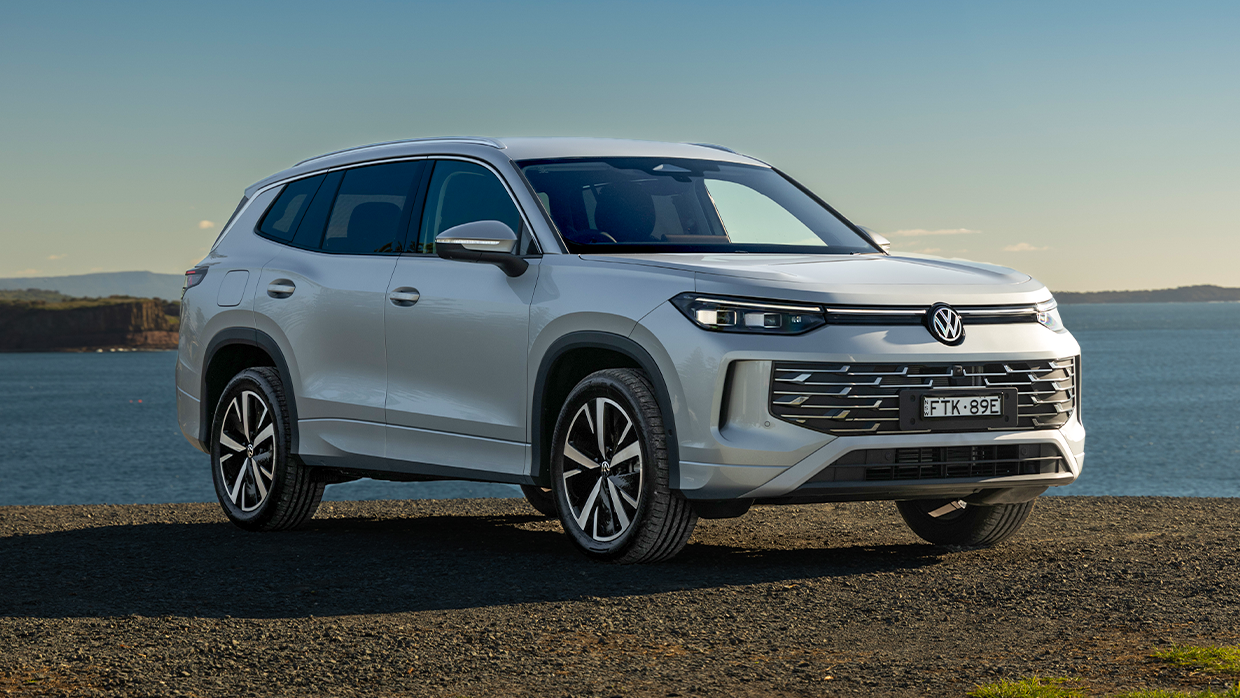
But it’s the release of the new Tayron that has us more convinced that Volkswagen is now firmly on an upswing. Closely related to the Tiguan, the three-row Tayron replaces the outgoing Tiguan Allspace. The new model is larger, more useful and more distinct.
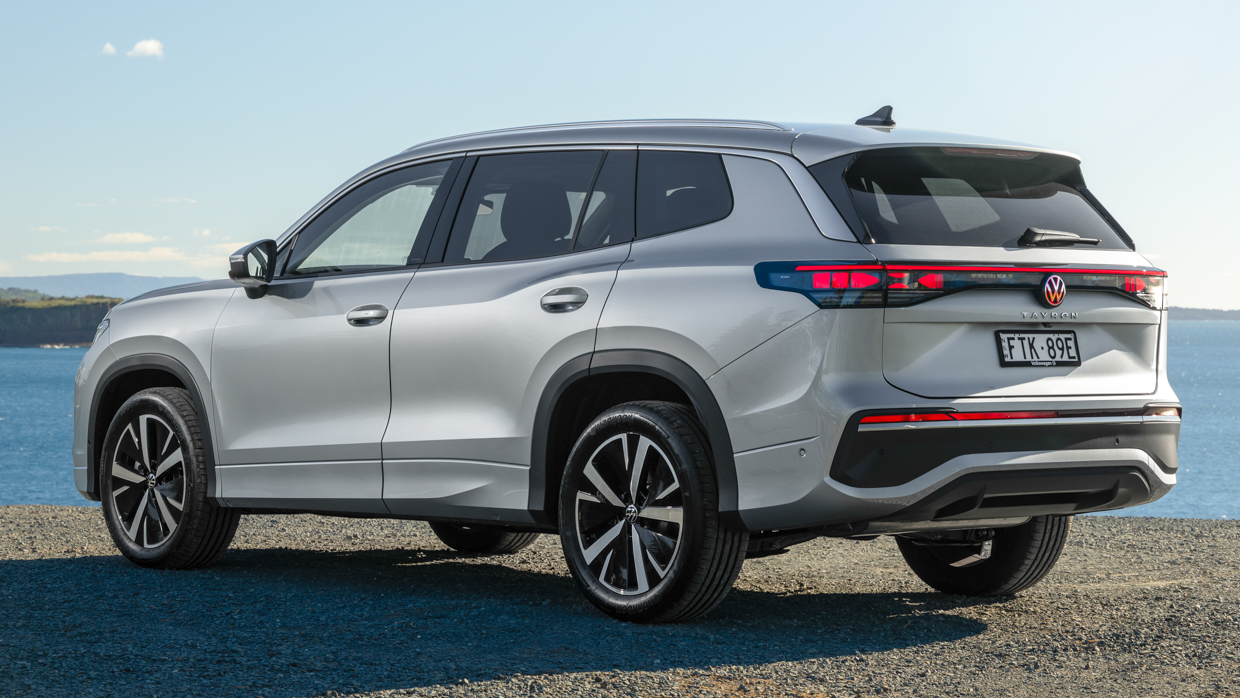
Like the smaller Tiguan, the Tayron retains familiar turbo petrol engines for now, but adopts an updated platform providing superior semi-autonomous driving smarts, snappier in-cabin tech, and the room for big plug-in hybrid batteries — and two PHEVs will be released in 2026.
While Volkswagen lacks a truly large seven-seat SUV in Australia (the full-size Touareg is limited to two rows), the Tayron demonstrates this brand’s packaging capabilities. It is smaller than a Hyundai Santa Fe (our reigning Car of the Year), Kia Sorento or Mazda CX-80 yet it has a larger boot, and a livable third row.
Volkswagen Australia knows the Tayron is crucial to a plan to rebuild sales, and as a result the range is broad (even incorporating a big-booted two-row model aimed at rural buyers). It is also aggressively priced, opening under $50,000 plus on-road costs for a 110TSI Life.
Our coverage commences with the sweet spot and expected volume-seller of the Tayron range, the 150TSI Elegance, which costs $59,490, before on-road costs.
What are the Tayron’s features and options for the price?
Including the 150TSI Elegance on test, the Tayron lineup at launch consists of four variants with another two trims set to be added when PHEV technology arrives in 2026. One trim grade (the 150TSI Life) is a five-seater with a particularly large boot; all others have seven seats across three rows.
The entry point to the Tayron lineup is the sole front-wheel drive grade — the 110TSI Life ($48,290, all prices below are before on-road costs).
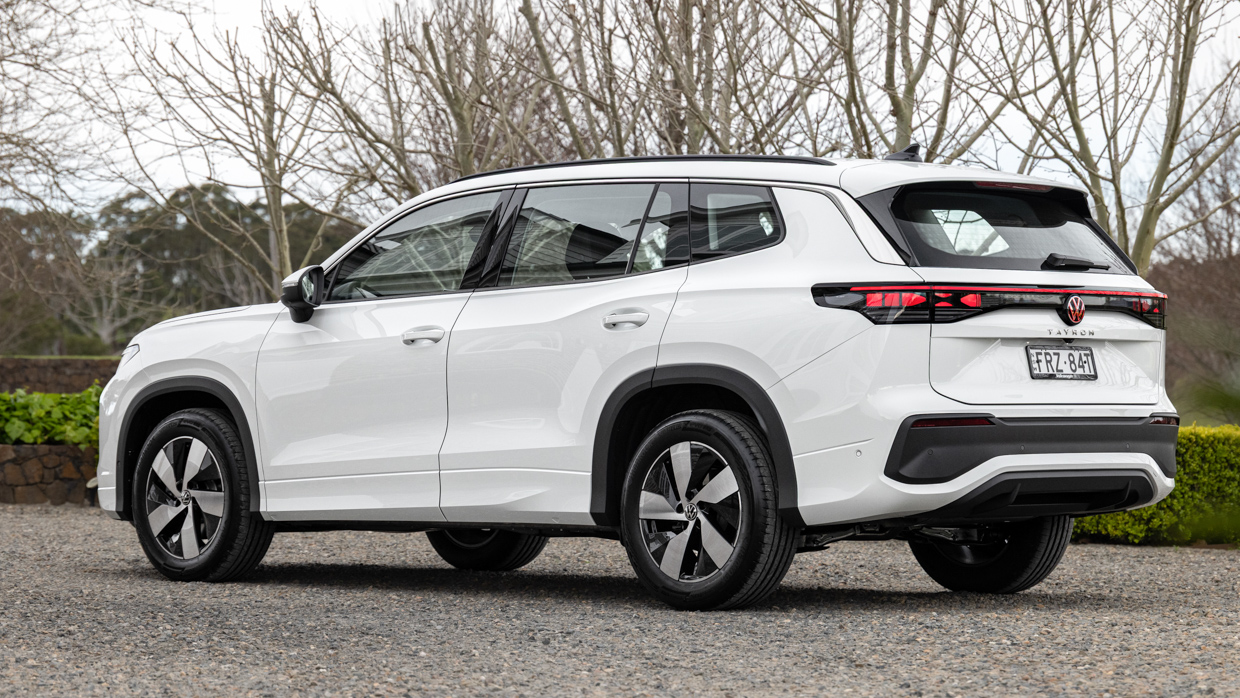
Pictured: 2026 Volkswagen Tayron 110TSI Life
Standard equipment includes cloth/leatherette seat upholstery, manually adjustable front seats with power lumbar, leather steering wheel, 12.9-inch touchscreen, digital cockpit, and wireless Apple CarPlay/Android Auto.
Further inclusions from the base grade take in 18-inch alloy wheels, auto LED headlights, full keyless entry/start with power tailgate, dual wireless phone chargers, three-zone climate control, 360-degree camera, and 10-colour interior ambient lighting.
It is a $5700 step into the five-seat 150TSI Life ($53,990) which adds performance (+40kW/+70Nm), all-wheel drive and 15-stage adaptive dampers and larger cargo space but otherwise mirrors the 110TSI Life for equipment.
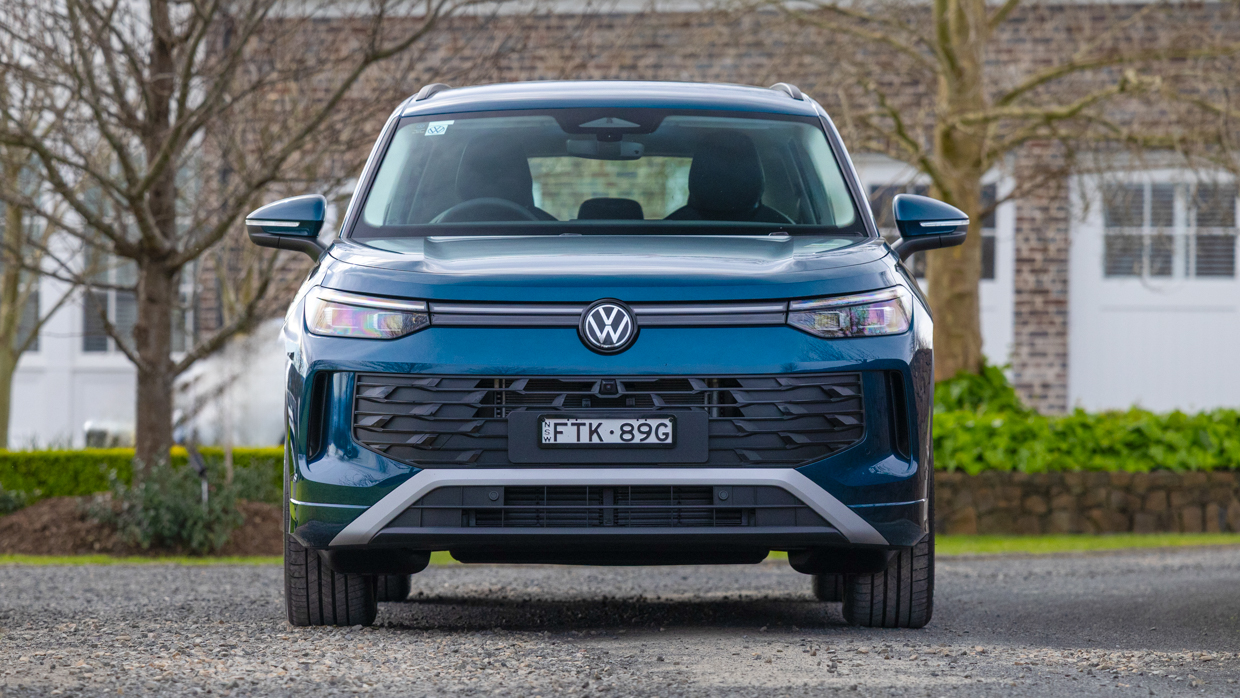
Pictured: 2026 Volkswagen Tayron 150TSI Life
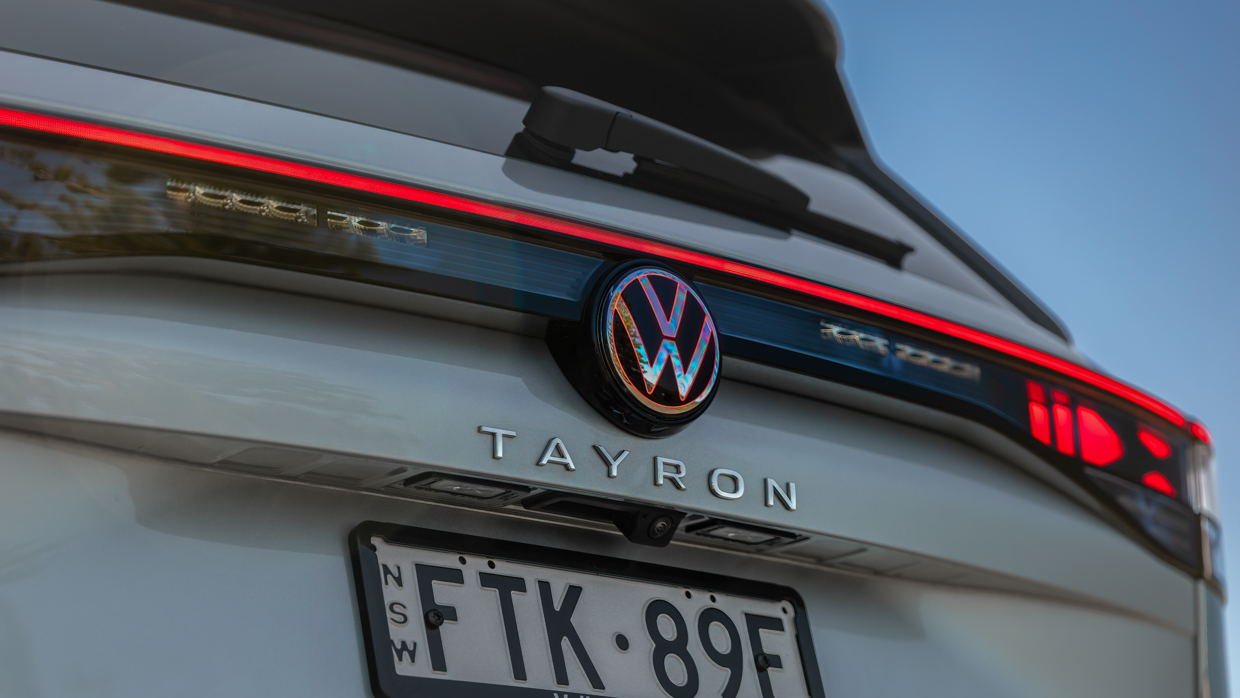
Then it’s up to to the $59,490 150TSI Elegance, which gains genuine leather upholstery, 12-way power front seats with heating/cooling/massage, heated outboard rear seats, heated steering wheel, 19-inch wheels, chrome exterior trim, 30-colour ambient lighting, and premium LED taillights.
For Elegance buyers, an optional Sound & Vision Package ($4200) adds HD matrix LED headlights, dynamic indicators, 15-inch Discover Pro Max touchscreen, head-up display and a 700-watt, 16-speaker Harman-Kardon stereo.
Finally, the $73,490 195TSI R-Line adds the Sound & Vision Package as standard alongside 20-inch wheels plus unique, sportier styling — which can be darkened via a $1500 Black Style Package.
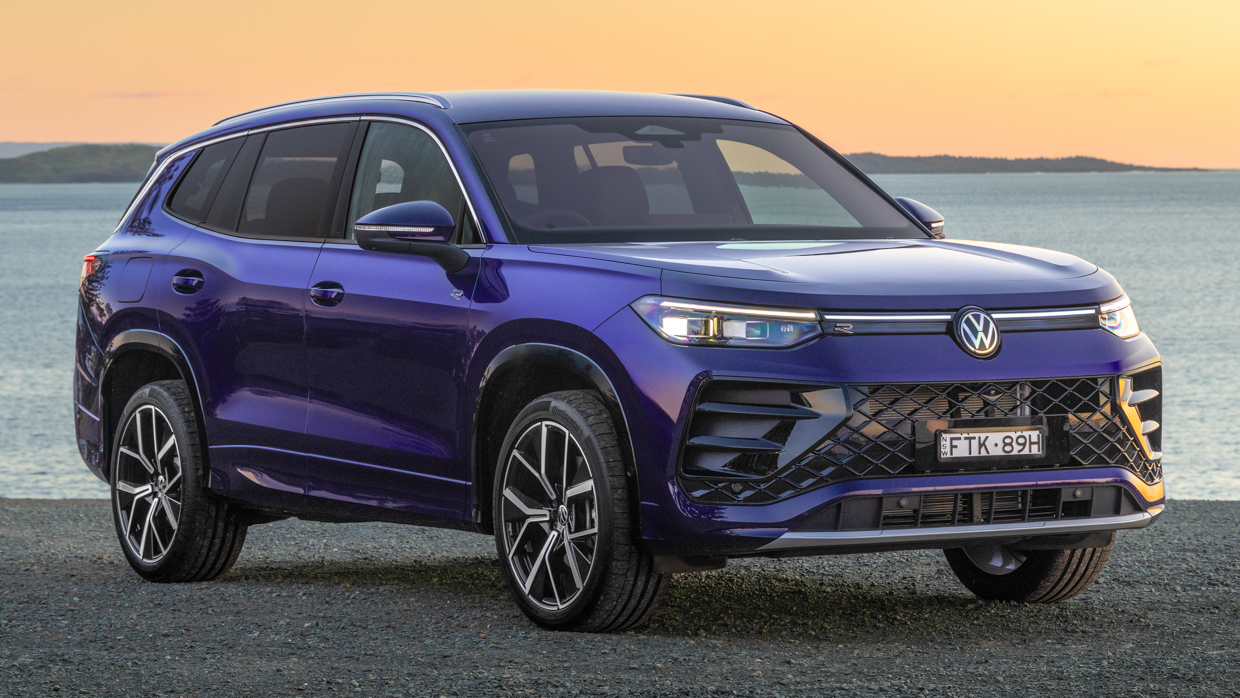
Pictured: 2026 Volkswagen Tayron 195TSI R-Line
Both the Elegance and R-Line can be further optioned with an opening panoramic glass sunroof ($2100). Across the range, Pure White (solid) is the ‘free’ colour, with Oyster Silver, Dolphin Grey, Grenadilla Black and Nightshade Blue metallics costing $800.
Ultraviolet metallic, the hero colour, is available rangewide for $1100.
How does the Tayron drive?
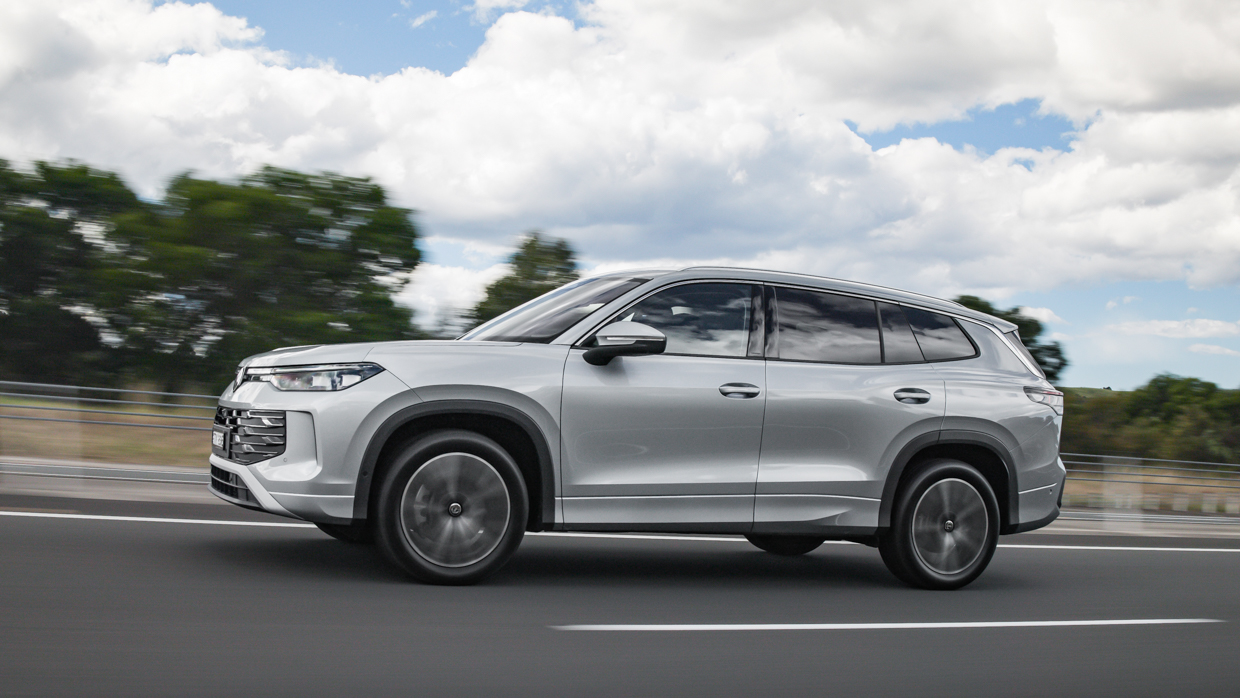
The Tayron is nearly as polished to drive as the brilliantly executed new Tiguan.
Like-for-like the bigger, heavier Tayron is a touch slower, though its range of three turbocharged petrol four-cylinder engines punch above their weight (literally).
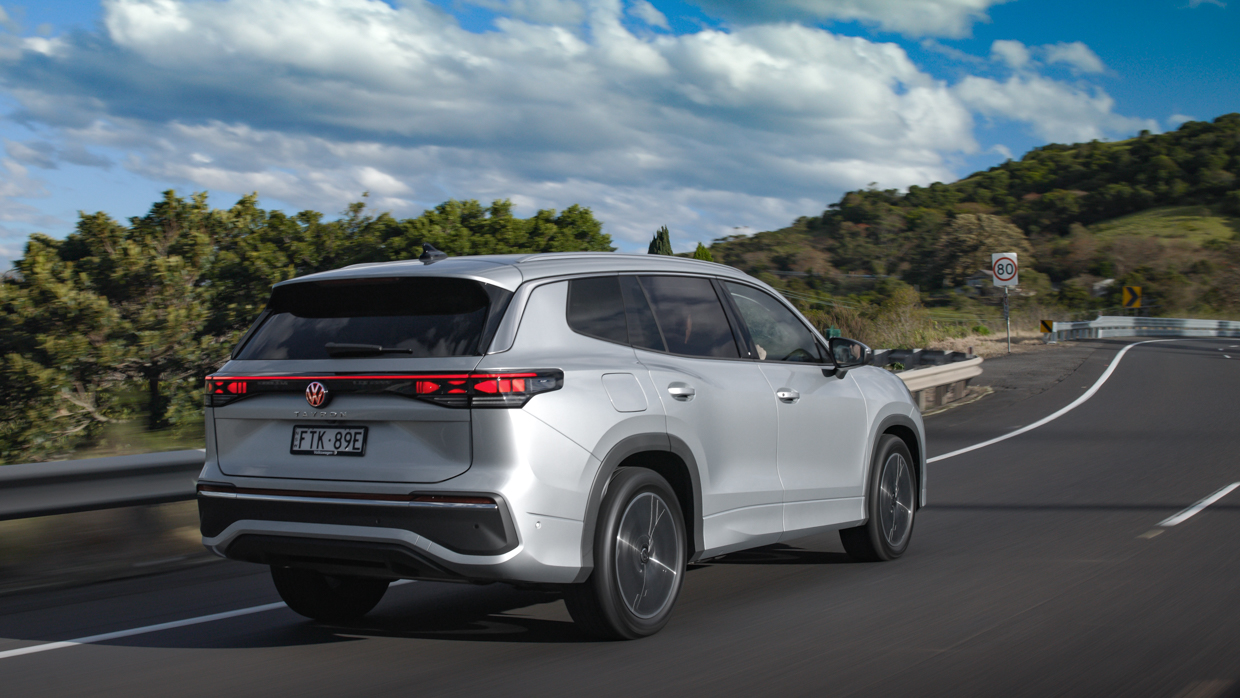
The front-wheel drive, 1.4-litre 110TSI (110kW/250Nm) is a touch workmanlike in a heavier-duty vehicle like this, though it will still dust most dual-cabs from the lights; at the other end of the range, the 2.0-litre 195TSI AWD (195kW/400Nm) is punchy.
In the middle sits the 150TSI powertrain (2.0-litre, AWD, 150kW/320Nm). At the risk of sounding clichéd, it’s the Goldilocks engine for now. It’s quick enough (including with a load onboard) while being quite a bit more affordable than the 195TSI.
Next year’s PHEV options (both front-wheel drive but available in 150kW or 200kW power outputs) might supplant the 150TSI as our recommended engine but it will come down to price and real-world dynamics. We’re yet to test the hybrids.
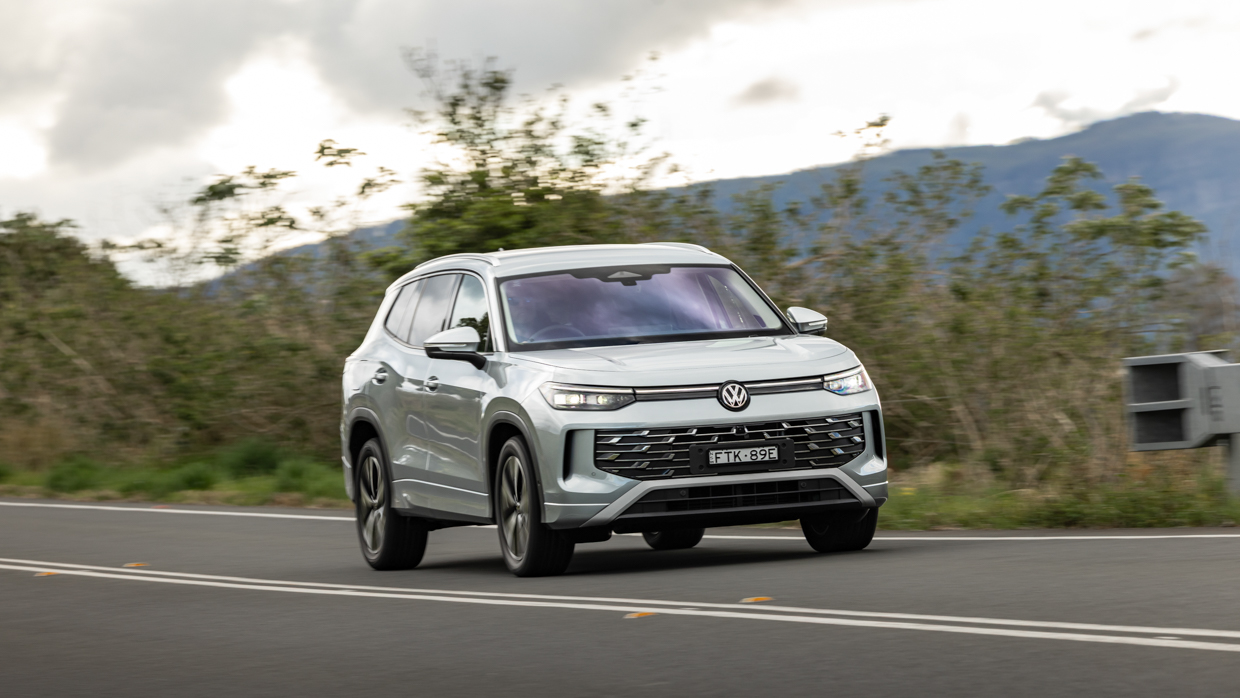
A real surprise is that the Tayron loses little of the Tiguan’s zeal for cornering. The light front end, unencumbered by large engines, dives for corners with heaps of grip and the steering (with adjustable weight) feels true.
For family buyers that don’t want to succumb to numb, bland SUV motoring, the Tayron is a fantastic antidote. Few will rag this crossover to its (remarkably high) limits but pleasant and keen handling stands out against nearly all rivals.
Where the Tayron struggles a bit in comparison to the Tiguan is in its ride quality. All-wheel drive versions (150TSI and 195TSI) have standard DCC Pro twin-valve adaptive dampers, but while there are 15 stages of damping force, finding the right setting is a touch fickle.
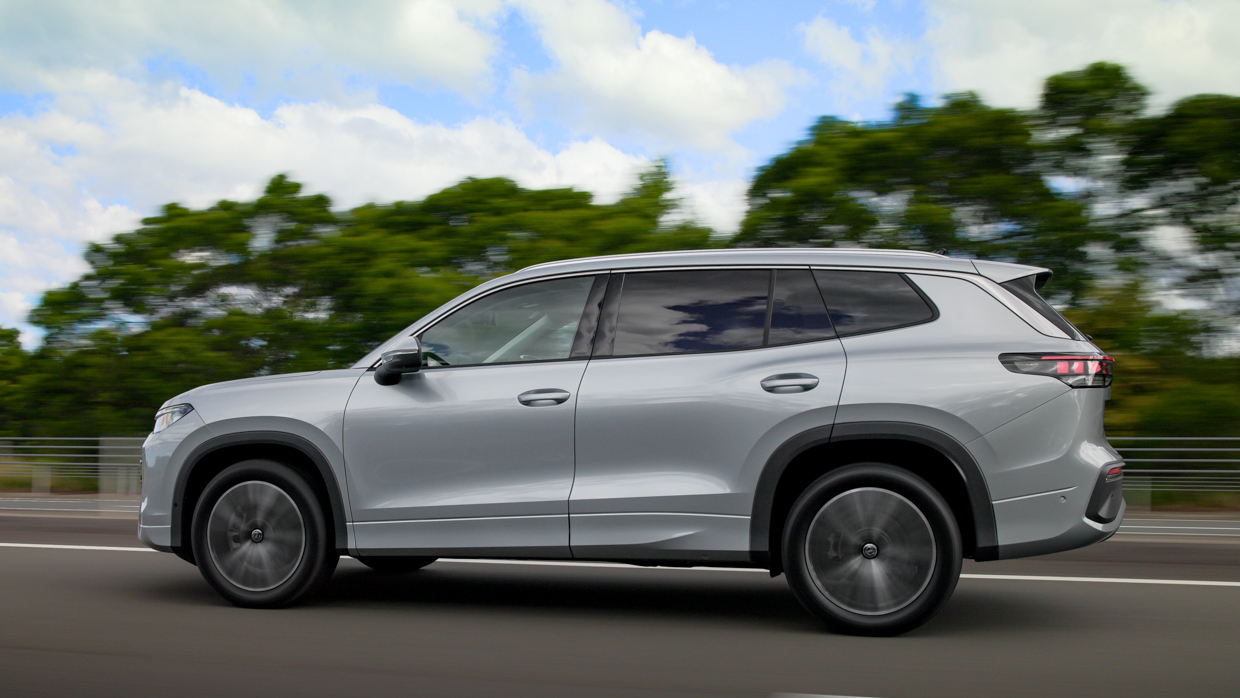
Most of the time, what we’d call ‘ultra-comfort’ (the damping slider in fact goes past ‘comfort’) is suitable for commuting and highway driving, ironing out the impact of expansion joints and road crud. But this setting does induce some head toss.
Ultra-comfort doesn’t suit country-road driving. This environment demanded something closer to the halfway point of damping force, which absolutely eliminates any head toss but induces some fidget to the ride and, notably, suspension noise as it works for its keep.
We’re being picky here because the Tayron is otherwise very polished, and we’re not quite convinced the ideal tune has yet been found for DCC Pro on this model. The smaller Tiguan is closer to ideal, and some variants of the old Tiguan Allspace rode more naturally.
What is the Tayron’s interior and tech like?
The finer points of ride quality can be debated, but where the Tayron is unequivocally head-and-shoulders ahead of the old Tiguan Allspace is in the cabin. What a transformation!
There was perhaps no better example of Volkswagen’s infamous dip into meaner perceived cabin quality than the old, second-gen Tiguan and Allspace, which covered secondary surfaces in shiny and scratchy materials that felt down-market.
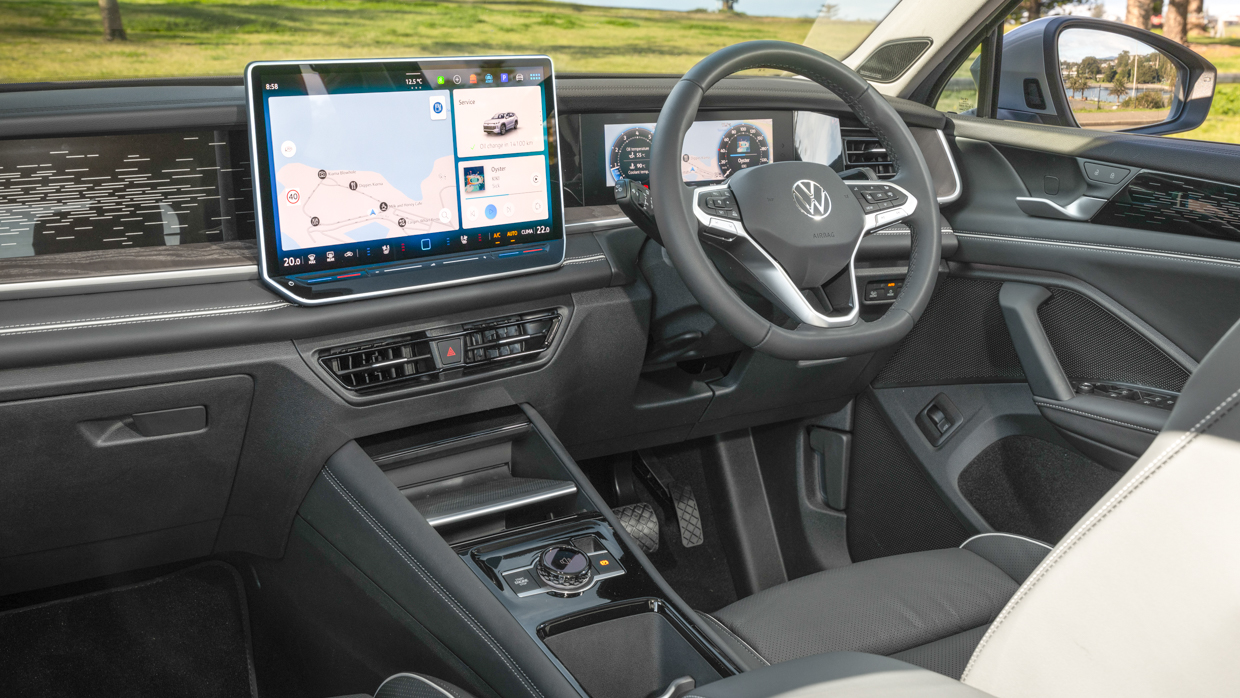
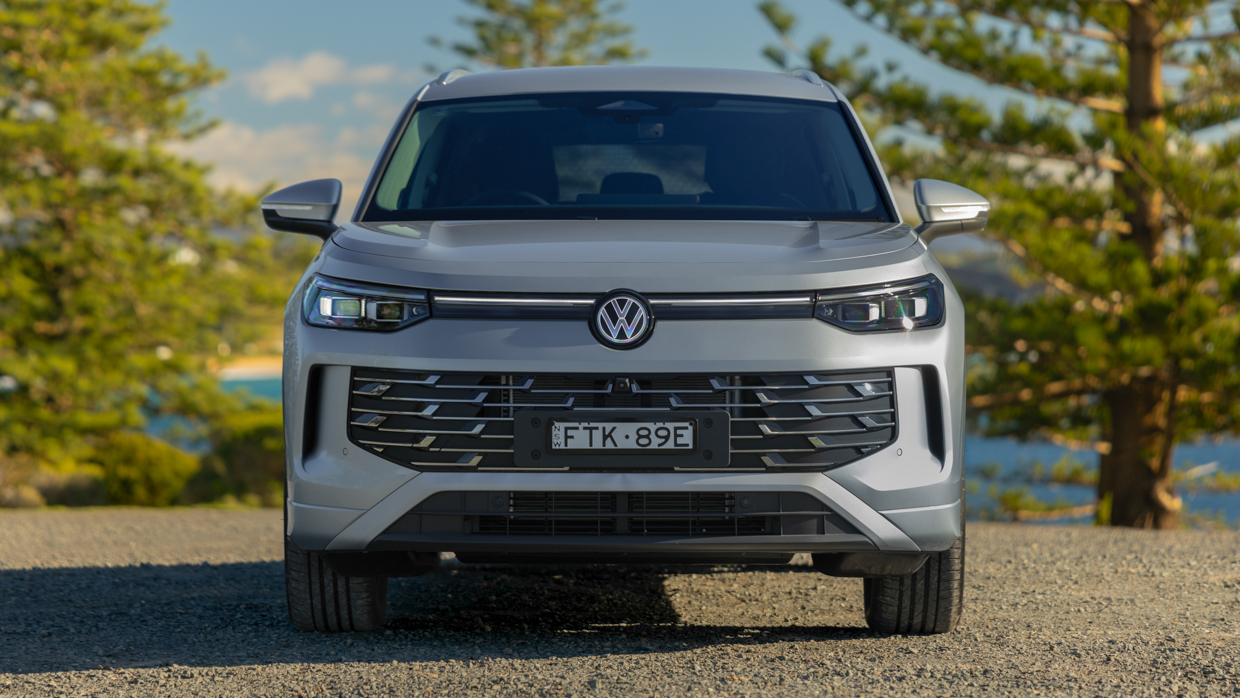
Volkswagen has consigned that choice to the history books with the new Tiguan and Tayron siblings — the pair debuts a warmer, richer cabin aesthetic that tries hard to remind buyers that this brand is meant to sit above, not alongside, mid-market competitors.
While entry-level Life variants have hardy seat materials, there is a big upswing in premium feel in the 150TSI Elegance, which swaps cloth/leatherette for swathes of genuine Varenna leather on the seats along with lush open-pore wood across the width of the dashboard.
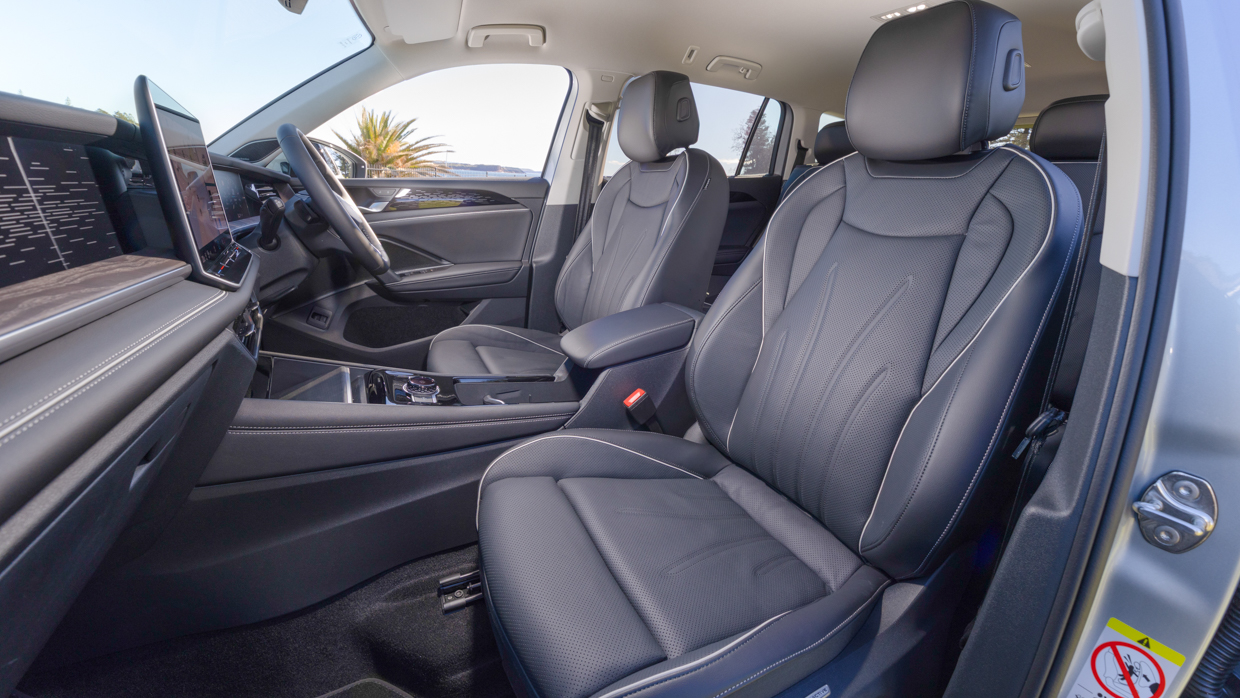
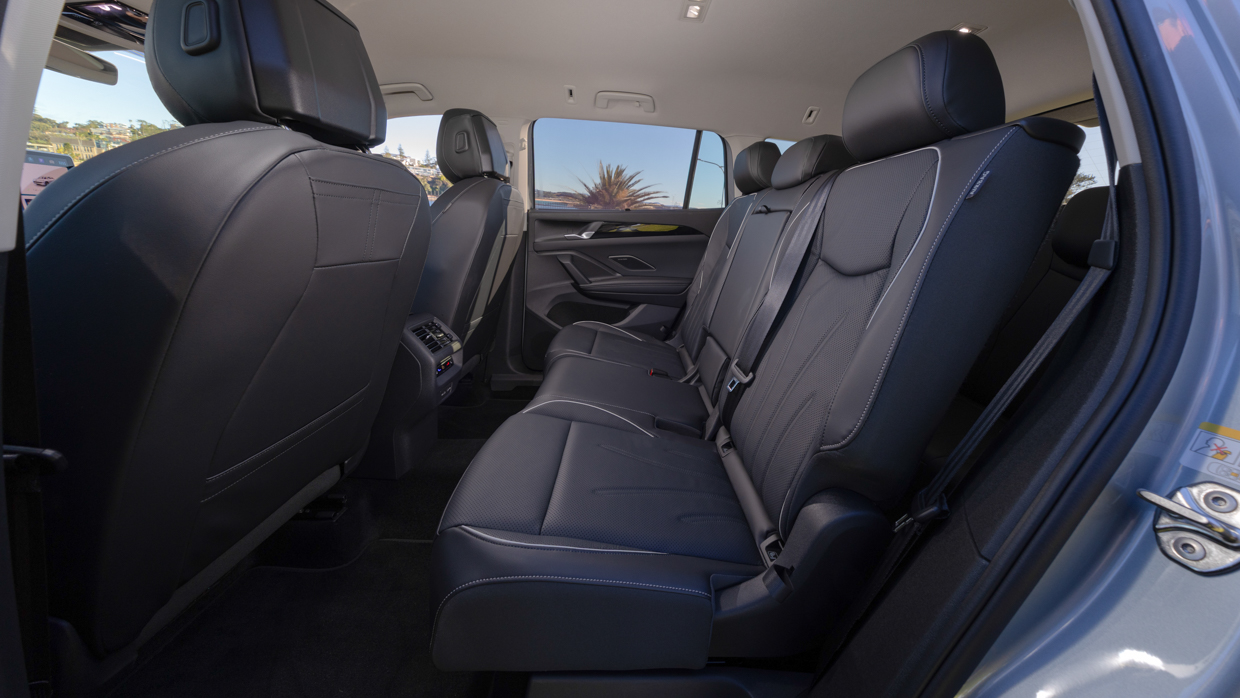
The front seats themselves are very comfortable and supportive with 12 directions of power adjustment (for both pews — the passenger is not a second-class citizen) while heating and cooling is standard up front; seat heating is fitted for row two’s outboard seats as well.
Importantly, surfaces below the beltline are now softer and more welcoming. This includes spots like the kneepads where the driver’s leg comes to rest (previously rock hard) while the door skins are now far more presentable, even if the ‘grabs’ remain a bit low rent.
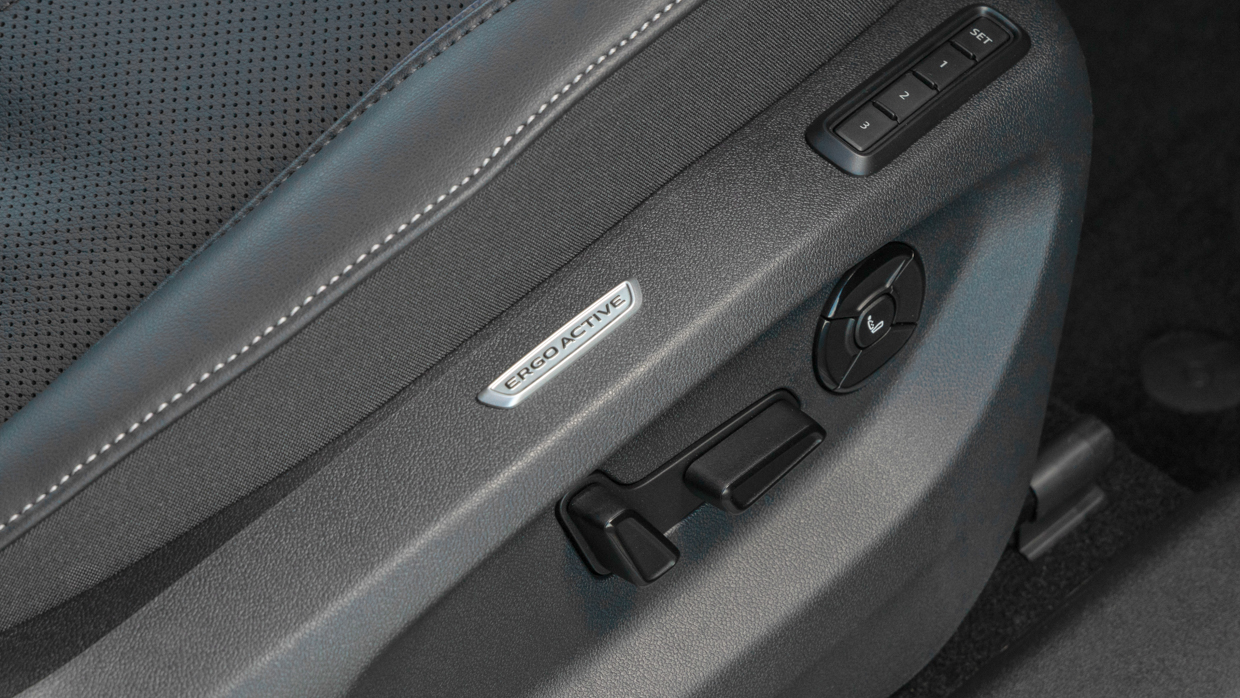
Build quality and fit and finish seemed good in our testers, which meant it was a slight letdown that two Tayrons on the car’s local launch had some faint rattles driven over (admittedly very broken-up) coarse-chip terrain. On the highway the cabin was quiet…
…And in any case, we were happy to turn up the volume of the lovely Harman-Kardon stereo (bundled in the $4200 Sound and Vision Package) to compensate.
That stereo is linked to a tech stack that feels modern but is a bit easier to use than recent Volkswagen efforts from the last few years. A 12.9-inch (15.0-inch with S&V Package) touchscreen rules the roost but it responds fast and climate controls are ever-present.
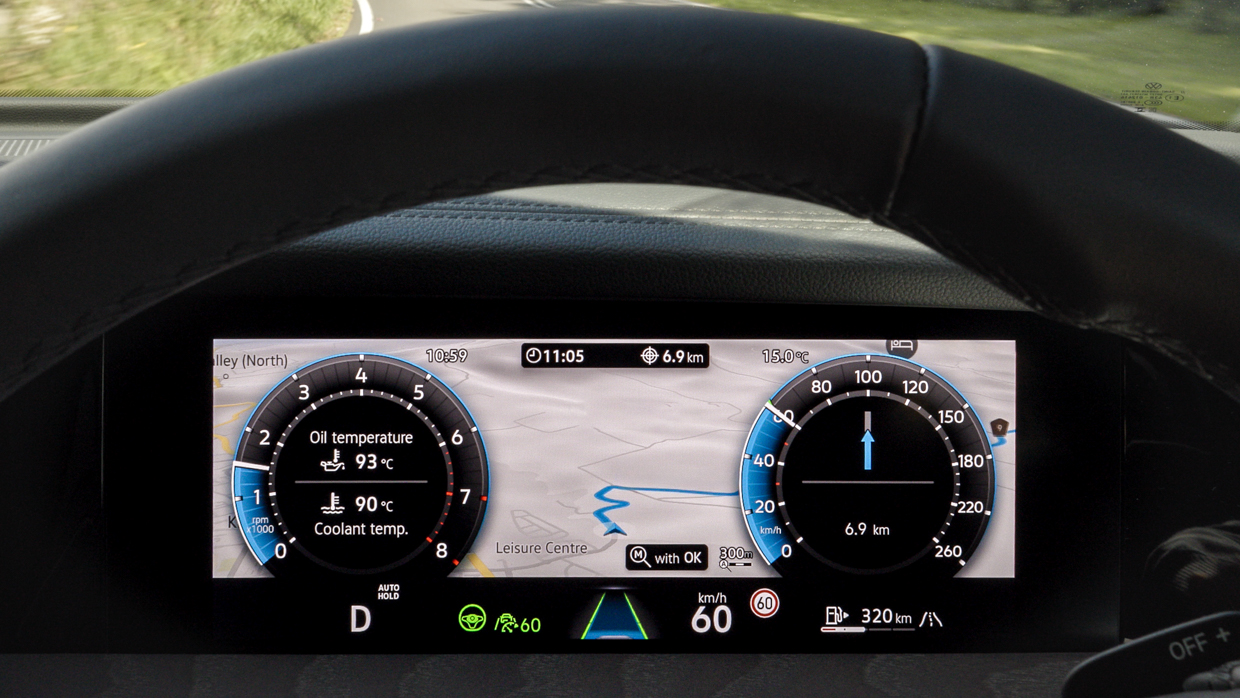
The driver’s instrument display is highly customisable while wireless Apple CarPlay/Android Auto look good, though unlike some rivals, smartphone maps don’t carry across to the virtual cockpit. Online connectivity remains unavailable for Australia, which is frustrating.
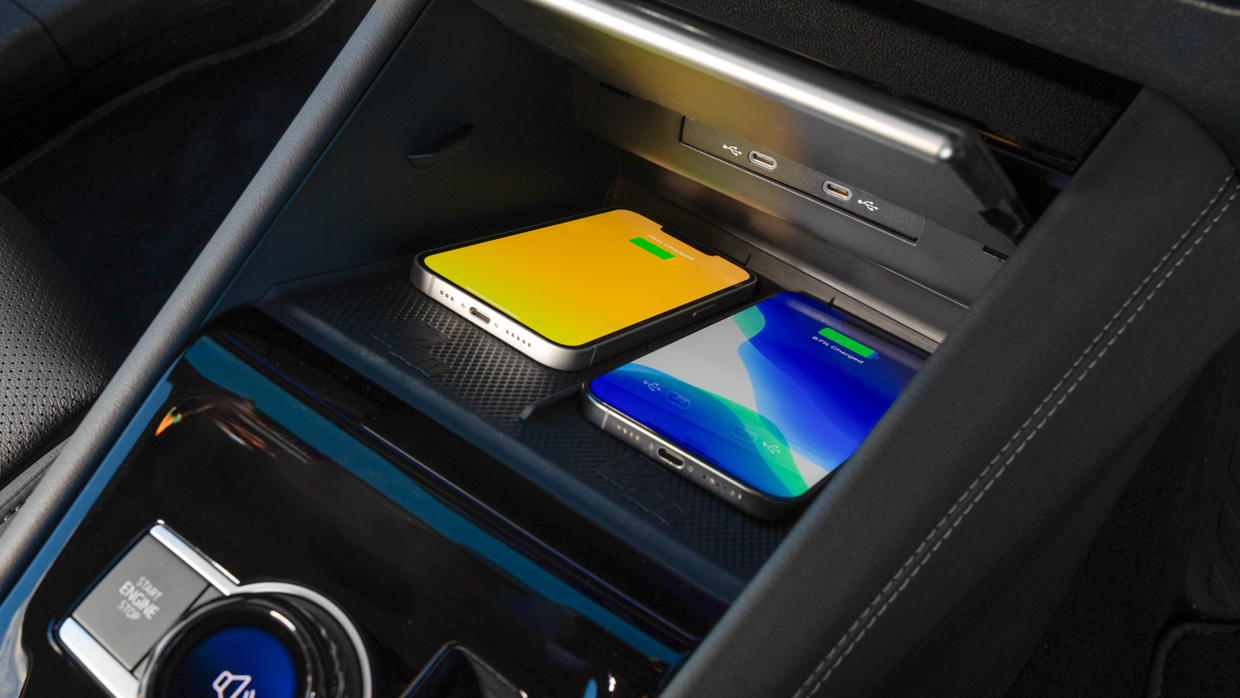
Ergonomics are improved from the Tiguan Allspace, which had a weirdly minivan-aping steering wheel kilter. Niceties like an adjustable armrest and flock-lined door bins reappear, while storage is solid. Dual, cooled wireless phone chargers are a pleasant addition.
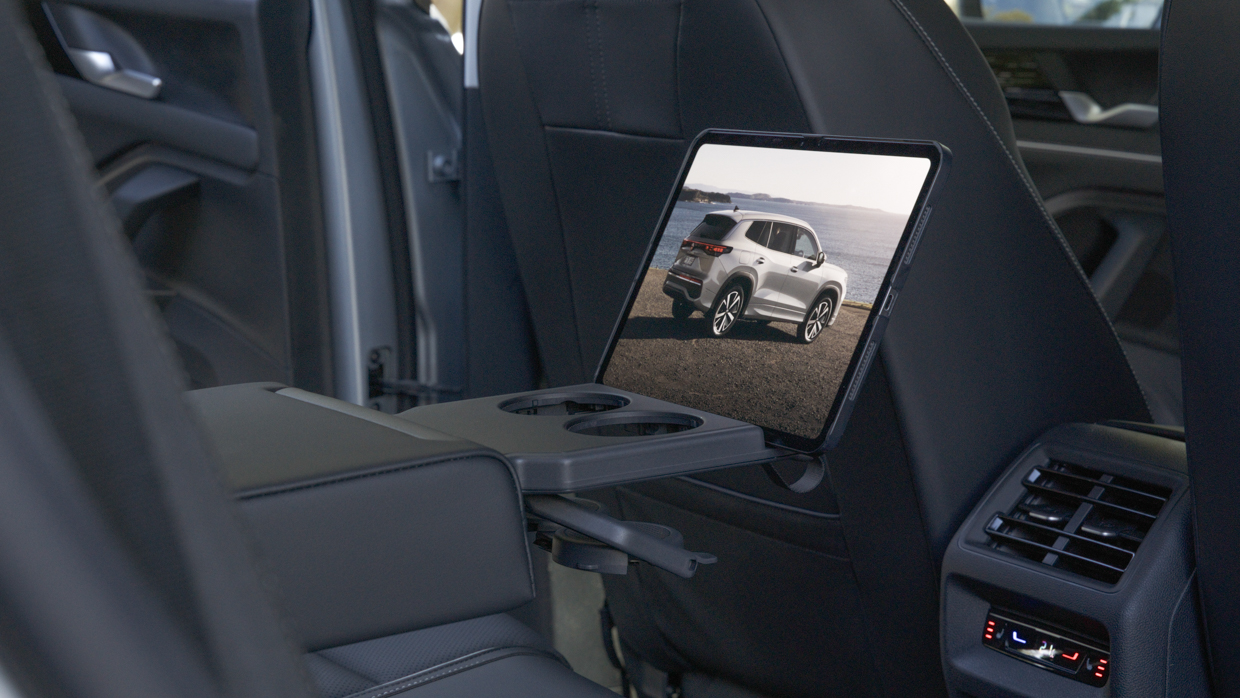
Moving to the back seats, we find a pretty good amount of flexibility. The roomy second row offers plenty of space, plus its own climate zone and USB ports; it’s also on sliders, allowing space to be made for the legs of people in the third row.
Accessing the third row could and should be easier; the second-row tilts and slides forward but access width is tight and the slide is not spring-loaded as it is in some rival SUVs. Still, once you’re back there, anybody up to about 5’9” will have few complaints…except for the lack of air vents and USB ports. Airbag coverage is to all three rows.
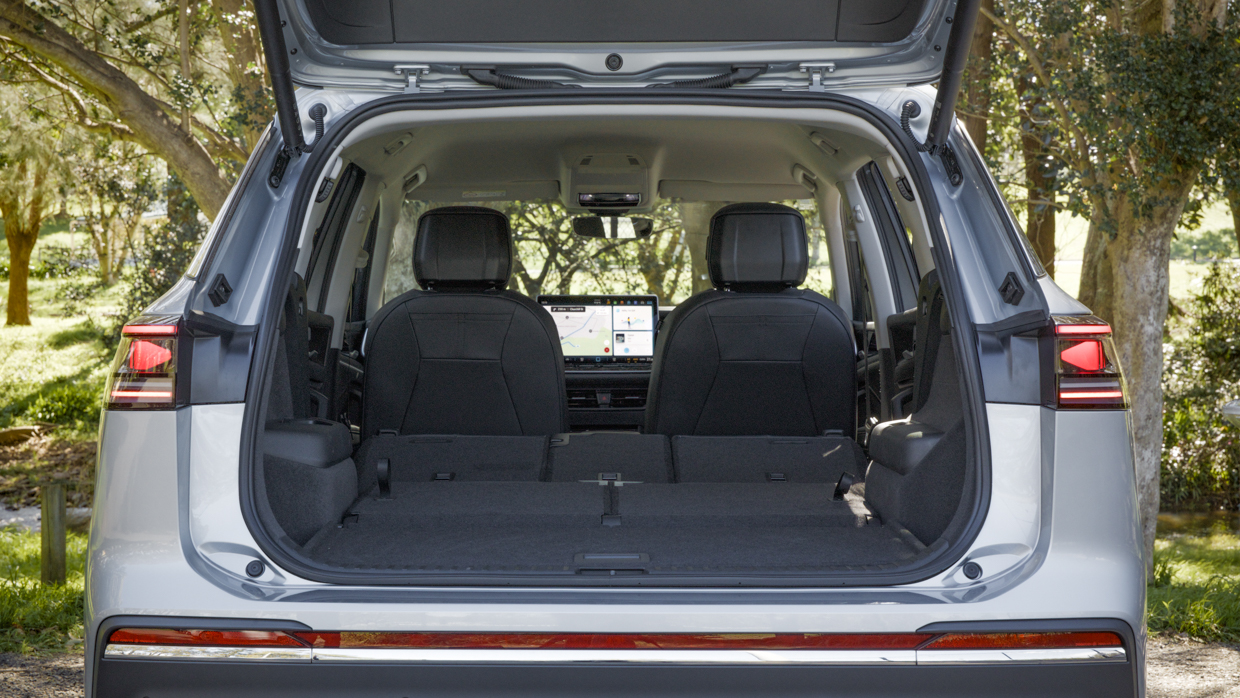
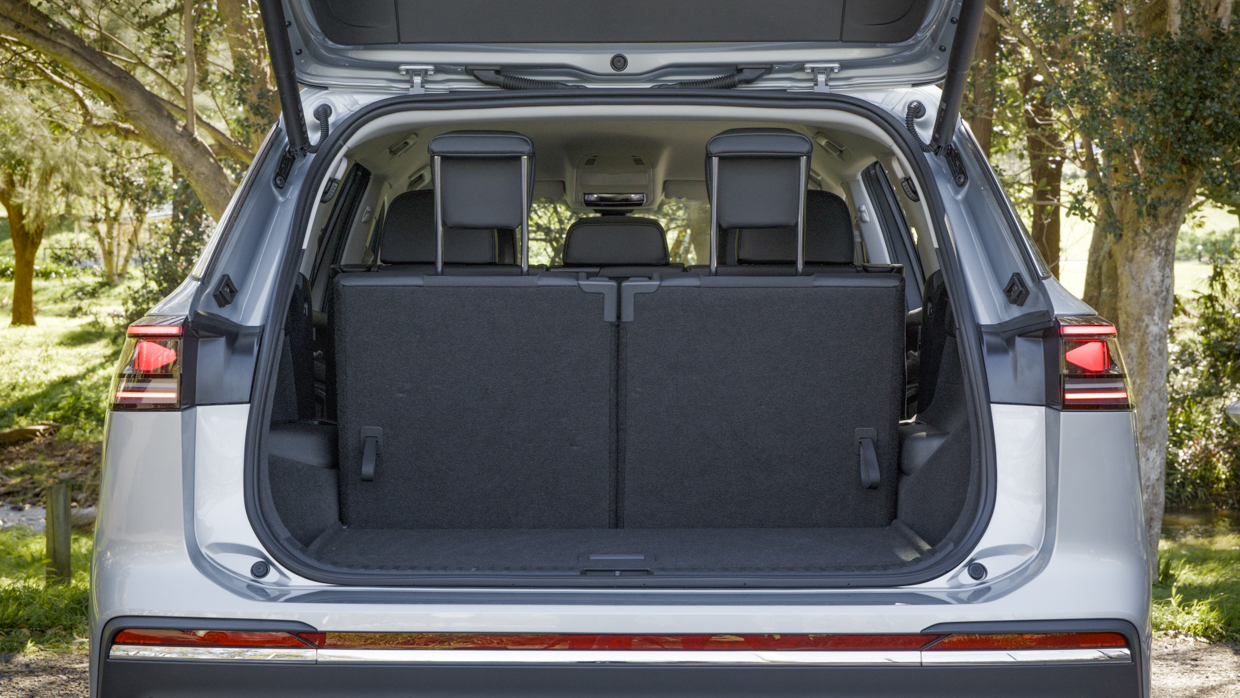
Still, we don’t complain much because the Tayron is so much smaller outside than key rivals yet manages to fit a very serviceable third row. The VW is just 4792mm long (a Santa Fe is 4830mm). As a result the Volkswagen will simply fit in more parking spaces.
Boot capacity behind the kick-open power tailgate is also remarkably good even with all three rows in place (at 345 litres, there’s more room than a Mazda 3 hatch), and with five seats up, cargo room swells to a vast 855 litres. A space-saver spare wheel and tyre is standard and the cargo blind fits under the boot floor. Nicely done.
Is the Tayron a safe car?
While the Volkswagen Tayron has not yet received an Australian safety rating, the SUV was granted a five-star score by Euro NCAP based on 2025 protocols.
Volkswagen Australia strongly expects that local crash and safety body ANCAP will extend a five-star rating to the Tayron which will be critical for, among other things, fleet customer take-up.
The following safety features are fitted as standard on all Tayrons:
- Autonomous emergency braking with pedestrian and cyclist detection
- Travel Assist (strong adaptive cruise control and lane centring)
- Side assist (blind spot monitoring)
- Rear cross-traffic alert
- Exit warning
- 360-degree parking camera, front and rear parking sensors
We like the fact that the Tayron’s adaptive safety features are largely well-tuned and even where they can be a touch invasive are easy to defeat. Audible speed limit warnings stay off permanently.
Adaptive cruise control worked smoothly and correctly on the highway in conjunction with Travel Assist, which amps up the strength of the lane-centring system, and which can drive for long distances with just a light touch on the steering wheel.
On country roads, lane-keep can be a bit much and we preferred to turn it off in this environment. The resolution of the 360-degree parking camera could also be better.
What are the Tayron’s ownership costs?
The Tayron is not the cheapest SUV in its class in terms of running costs — though the arrival of next year’s plug-in hybrid models will slash fuel spend for buyers that are able to charge a PHEV up at home or work.
For now, the turbo petrols are all competent but their fuel economy really depends on how, and where, you drive them. On the highway, the Tayron is quite efficient (we managed 6.9L/100km in the 150TSI) but in town fuel use tends to balloon to more like 11-12L/100km.
An extended run that included some town and some country-road driving saw economy settle at a balanced 9.2L/100km, with all Tayron engines requiring at least 95 RON petrol.
Servicing can be purchased in advance and at a discount with a ‘Care Plan’, with a five year/75,000km package costing $2910 (110TSI) or $3550 (150TSI and 195TSI), averaging a pricey $710 per visit for the latter all-wheel drive versions.
The warranty for the Volkswagen Tayron is five years/unlimited kilometres.
The honest verdict on the Tayron
The Volkswagen Tayron should be closely considered for families needing a three-row SUV — and wanting something that feels a bit special.
Simply put, the Tayron is far more engaging to drive than most of its rivals. Not all buyers care about keen handling in the family-hauling segment but crisp steering, sorted dynamics and reasonably good ride quality make a massive difference.
Add to those dynamic attributes the leap in perceived interior expense over the old Tiguan Allspace — all while retaining fairly stable pricing in a segment that has become considerably dearer on average — and it’s obvious the Tayon is an aggressive play by Volkswagen.
Some buyers will want a vehicle that is larger and wider but particularly for buyers who live in the inner-city or have a tighter parking space, the Tayron is a hero of clever packaging with a roomy and polished cabin.
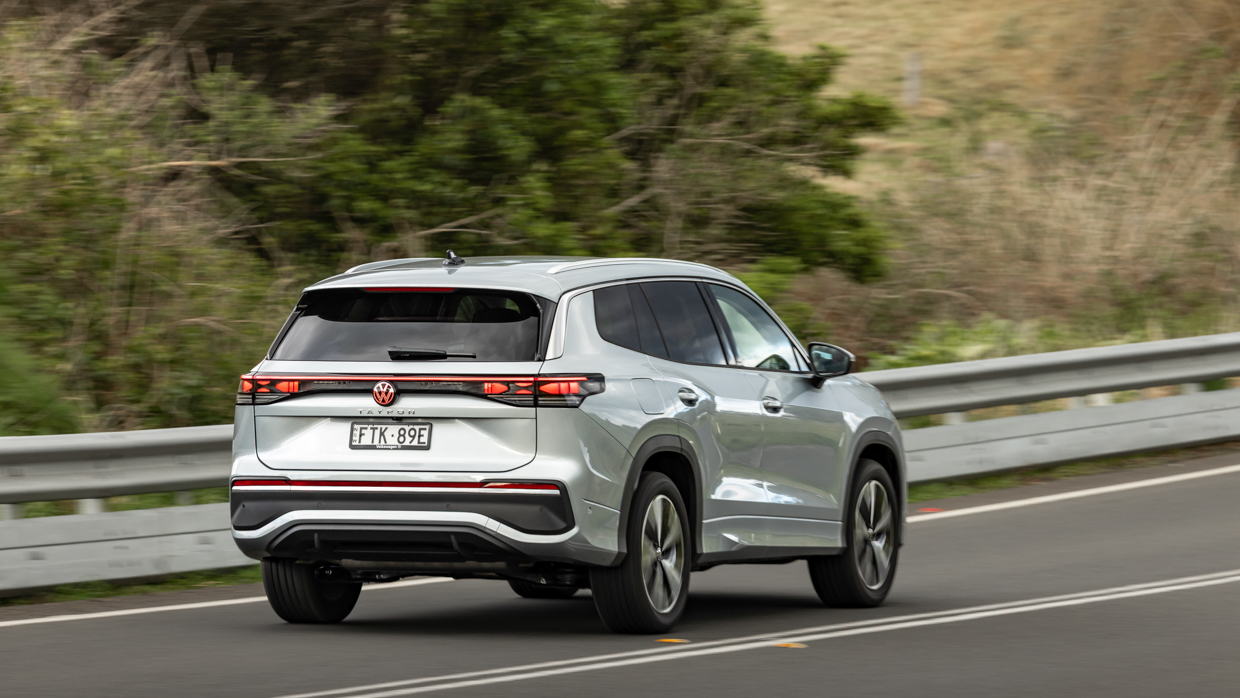
We suspect next year’s plug-in hybrid Tayron engines could be even more impressive with 100km-plus EV range and fuel economy gains even on a ‘dead’ battery — but we’ll have to wait a bit longer to assess those cars.
For now, the Tayron 150TSI Elegance is a high achiever.
Renault Duster Techno 2026 review
1 month ago

Good news! The SUV that became a running gag on UK’s Top Gear is now available in Australia – and the Romanian-built Duster is a vehicle worth taking seriously
Good points
- 4×2’s torquey four-cylinder
- Ruggedly handsome design
- Cabin construction
- Impressive ride and handling
- Unobtrusive driver aids
Needs work
- Evolution missing blind spot system
- Basic (non-adaptive) cruise control only
- Average cabin storage
- Mild torque steer
- No auto for 4×4 variant
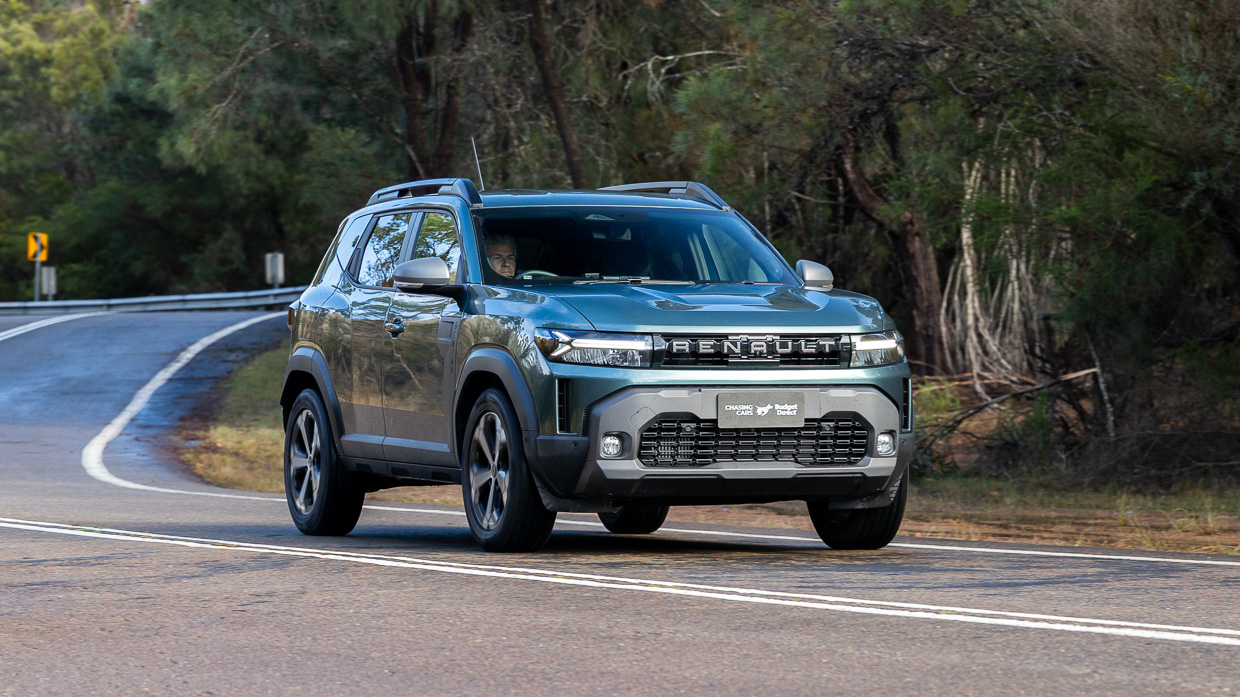
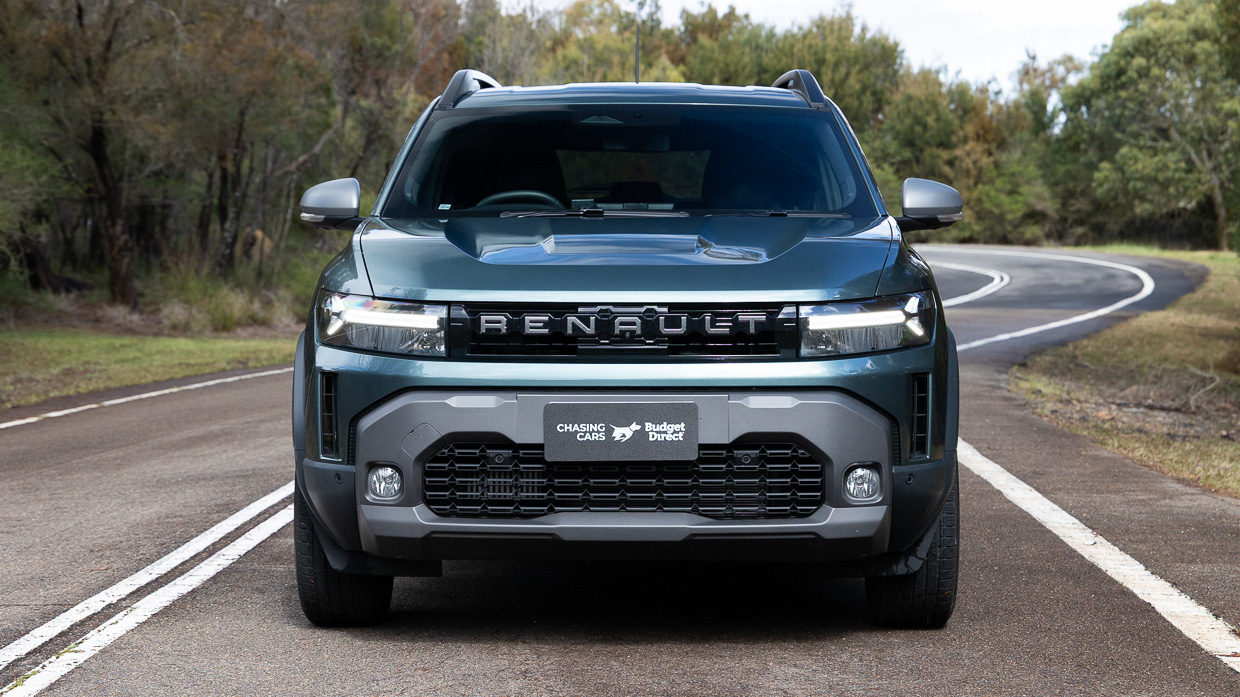
We haven’t been this excited about a new Renault for many years. This is the Duster, a compact SUV that’s targeting anything from a Chery Tiggo 4 to a Suzuki Jimny.
It’s more well known as the Dacia Duster, which became a good-hearted running ‘Good News!’ joke for James May on the UK version of the Top Gear television show.
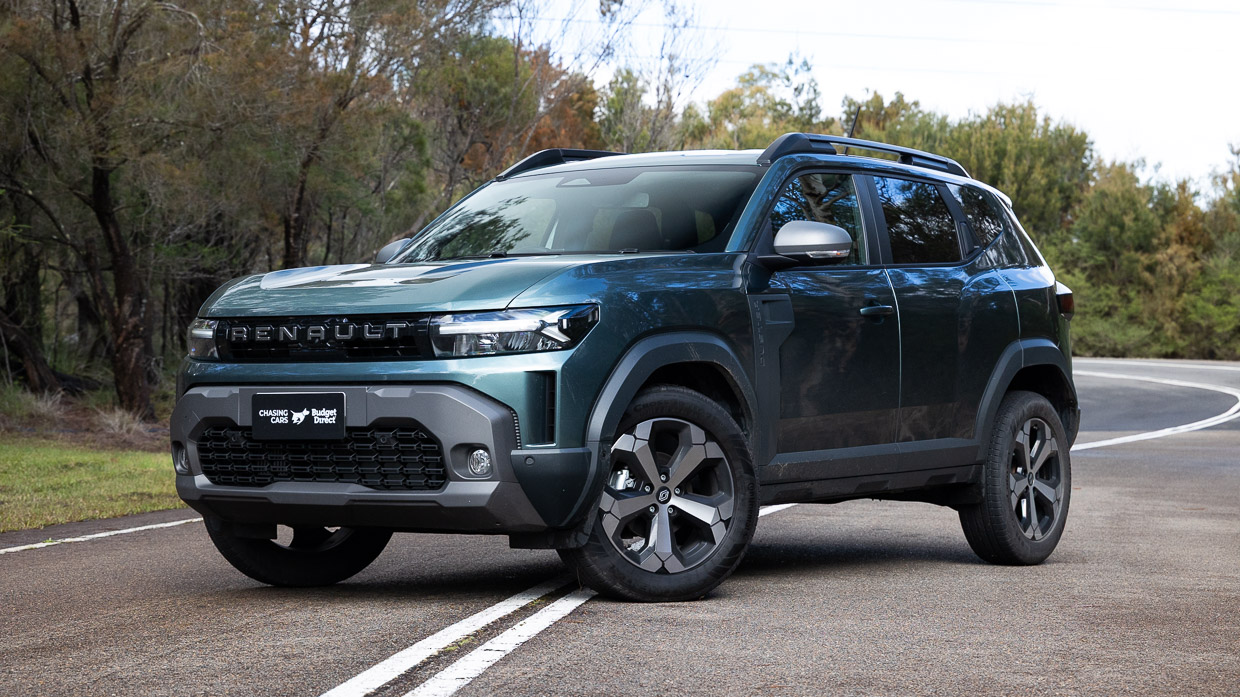
Although more Dusters are sold (in Europe) wearing the Dacia badge, it wears the badge of parent company Renault in most markets – including its latest country, Australia.
Pricing is in keeping with the reputation of European super-budget brand Dacia, with the Duster starting from $31,990 before on-road costs.
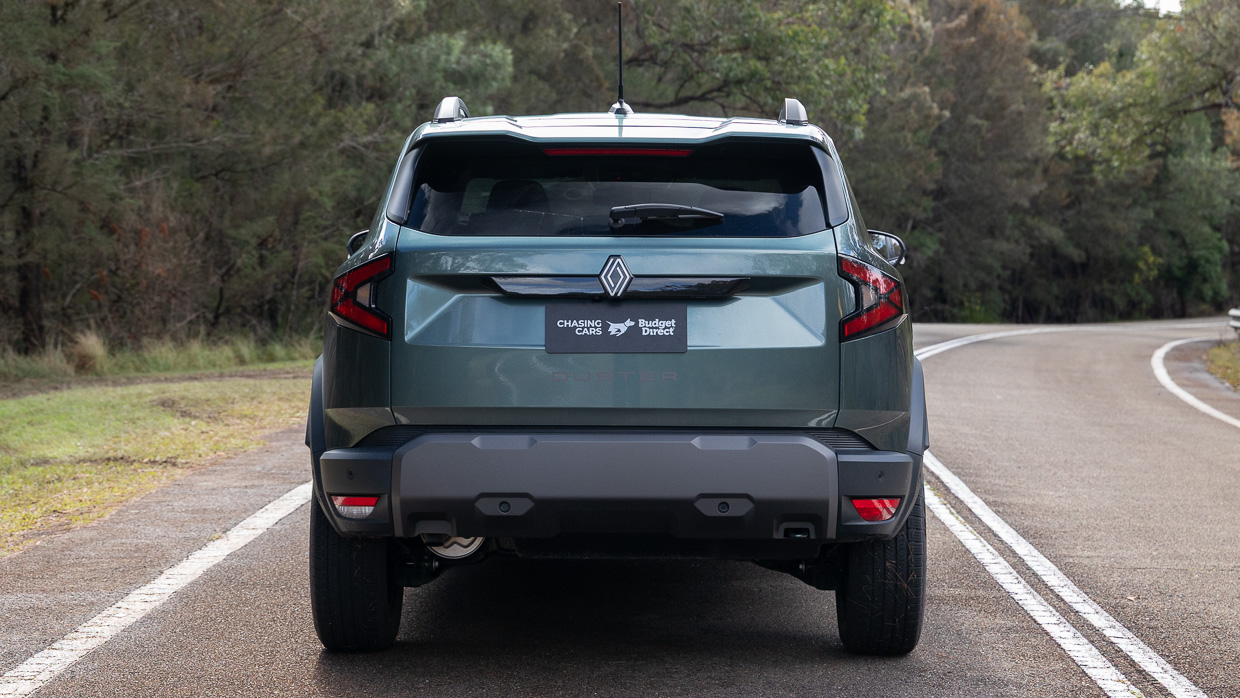
The Duster is beloved in Europe – which has accounted for most of the SUV’s 1.7m sales since the first-generation model debuted in 2010 – but will Australia embrace the latest, third-generation version?
Our first review of the Duster is the front-drive 4×2 in higher-spec Techno form.
What are the Duster’s features and options for the price?
Entry to this Romanian-built, French-badged SUV starts from $34,990 drive-away (‘special offer’ until 30th September, at least).
The RRP jump to the all-wheel-drive 4×4 Evolution is $4500 – not a small premium considering you lose an auto transmission (it’s a six-speed manual!) and the engine is smaller and less powerful, if including mild-hybrid tech.
There are a few gains, such as hill-descent control, terrain modes, and a more sophisticated rear suspension (multi-link versus 4×2’s torsion beam).
The Duster range kicks off with the Evolution 4×2 at $31,990 ($34,990 drive-away) before stepping up to the Evolution 4×4 at $36,490 ($39,906 D/A).
From here, it’s a small step up to the higher-grade Techno 4×2 on test here at $36,990 ($40,421 D/A) before reaching the flagship Techno 4×4 $37,990 RRP ($41,451 D/A), with all drive-away pricing calculated from a Sydney postcode.
All exterior colours cost $750 with the exception of no-cost Solid White. Deliveries of the 4×4 Techno grade start from December 2025.
Key features for the Evolution include:
- Cloth seats
- Dual-zone climate
- Seven-inch digital driver display
- 10.1-inch infotainment touchscreen
- Wireless smartphone integration and charging
- Arkamys audio
- Auto wipers
- LED low-beam headlights (halogen full beam)
- 17-inch alloy wheels
- Fixed roof rails
Key features for the Techno grade include:
- ‘Premium’ fabric seats
- Rear privacy glass
- Blind spot monitoring
- Multi-view camera
- Front sensors
- Smart key card and Starter button (instead of flip ignition key)
- Walk-up unlocking and walk-away locking
- Auto high beam
- Split-level boot floor (4×2 only)
- 18-inch alloy wheels
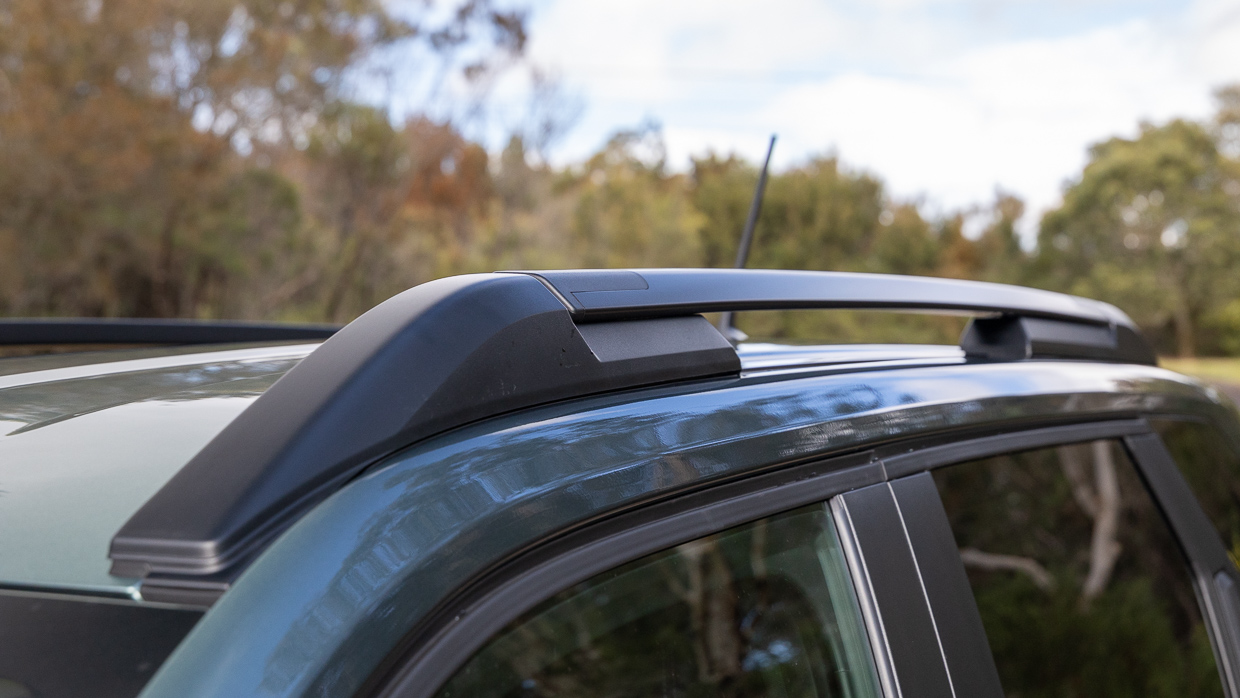
- Modular roof rails with integrated cross bars
As the Duster 4×4 versions are claimed to have genuine off-road ability, the SUV is also offered with a variety of adventure accessories that include a rooftop tent, awning, platform kit, roof basket and side steps, as well as more conventional SUV lifestyle extras such as bike racks and roof pods.
There are also cabin accessories available for what Dacia/Renault call its YouClip system, which brings multiple interior anchor points for items such as cupholders, lamps, and seatback smartphone/tablet holders.
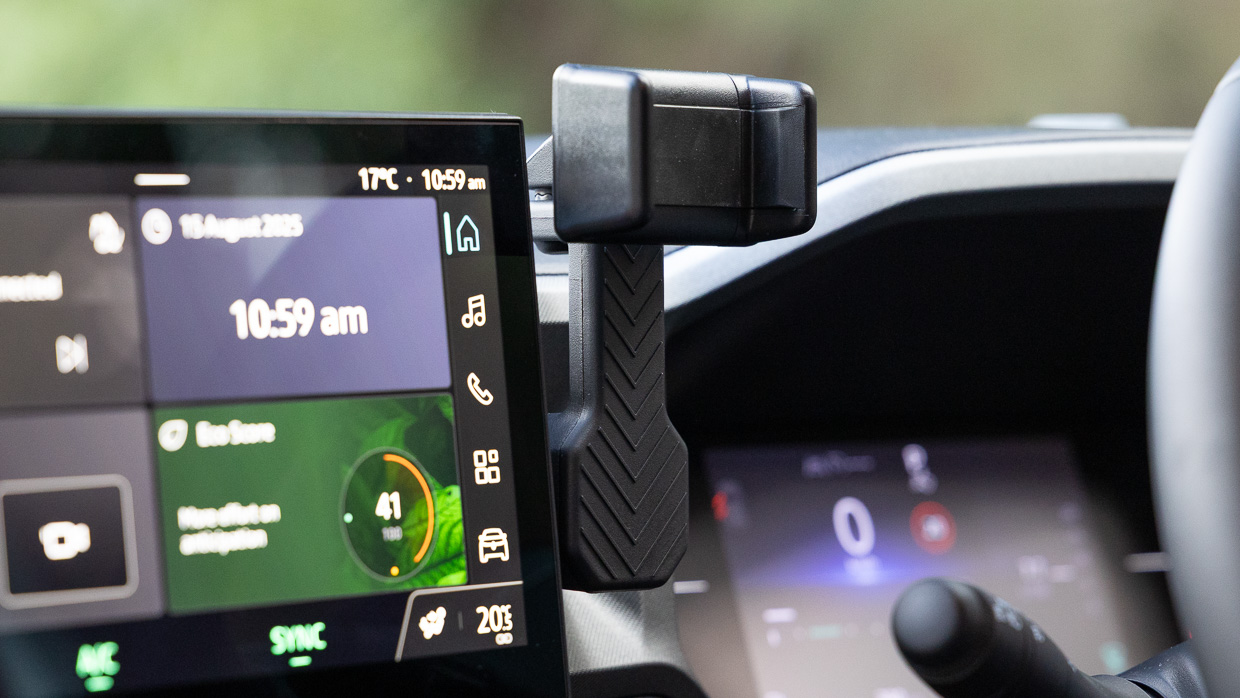
Evolution models provide four accessory points – on the rear centre console, two in the boot, and one on the inside of the tailgate. Techno models add a smartphone-holder dashboard mount.
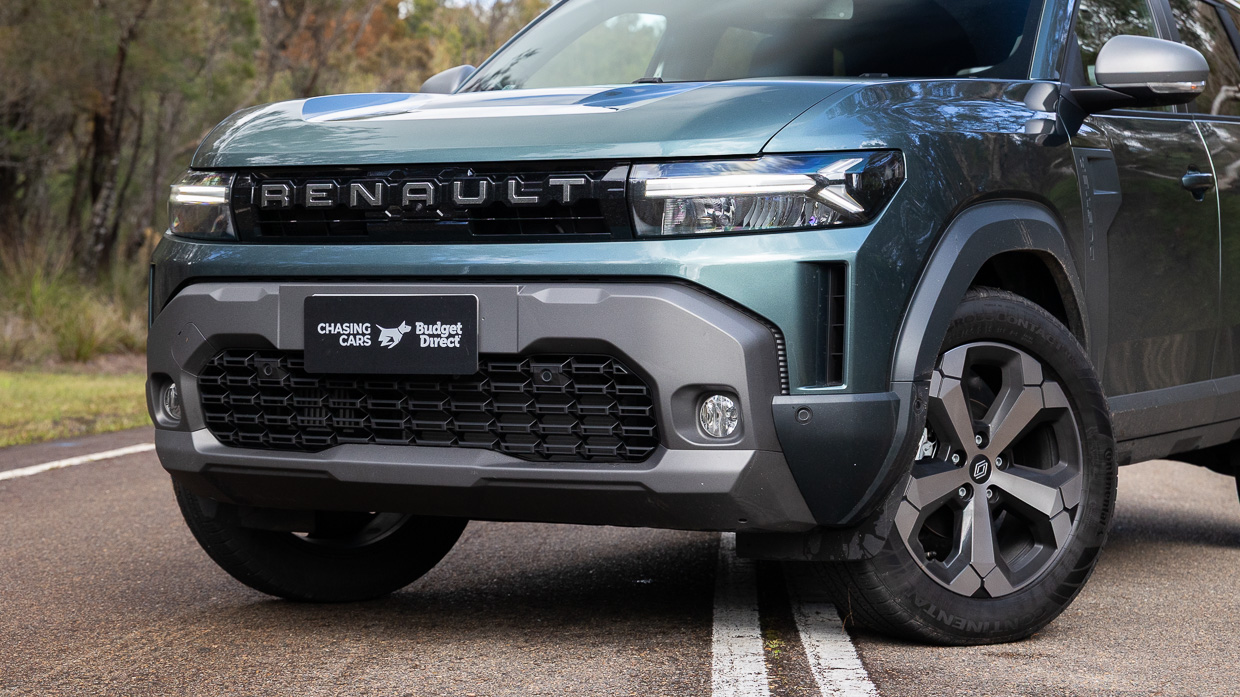
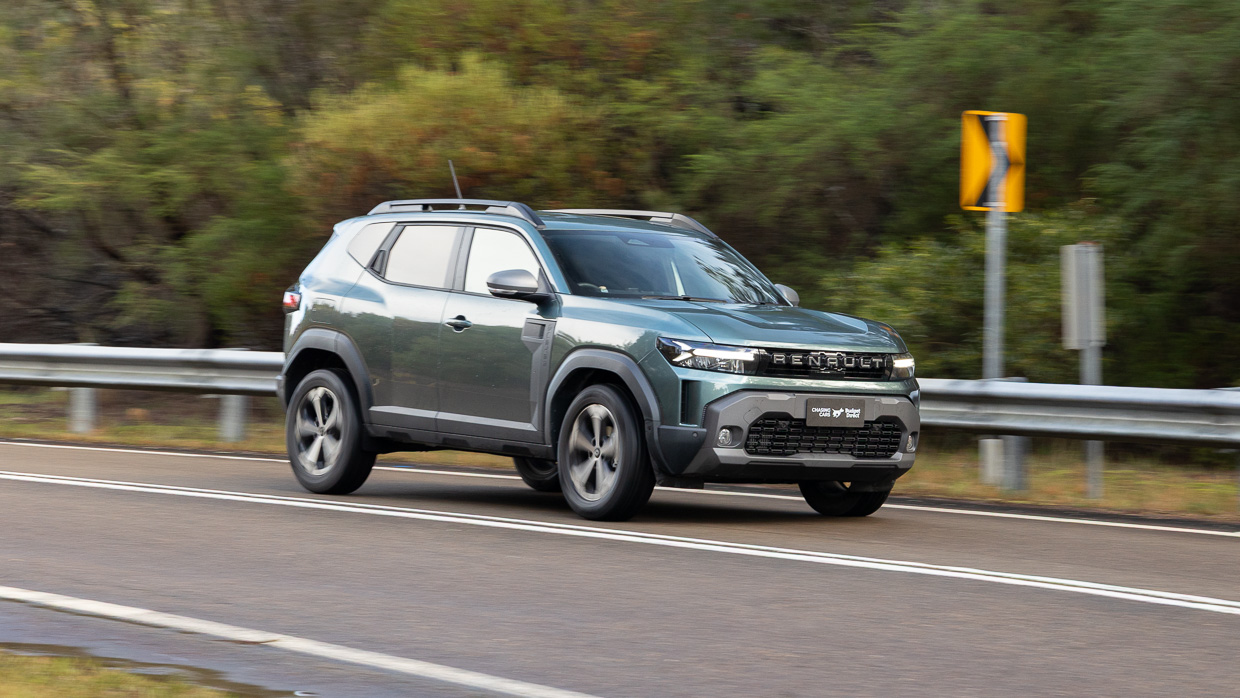
All Dusters borrow from the Subaru Outback school of design with protective cladding for the wheelarch flares, lower doors, and a Duster-logo door section. The speckled cladding is dubbed Starkle and is scratch and fade resistant, and contains 20 percent recycled plastic.
How does the Renault Duster drive?
The Dacia Sandero (Europe’s best-selling car) is one of the best vehicles this reviewer tested in 2024, and the Duster shares many positive characteristics with that hatchback (in addition to the platform underneath).
Romanians clearly value a good driving experience because the Duster impresses on the road.
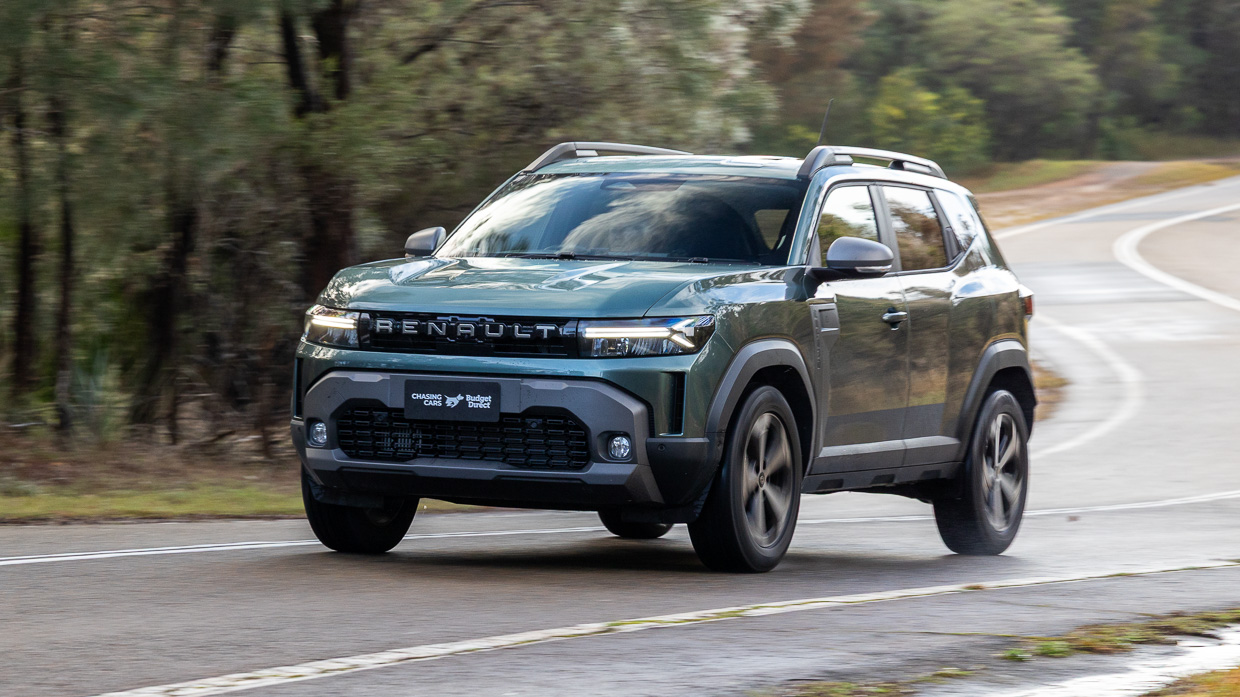
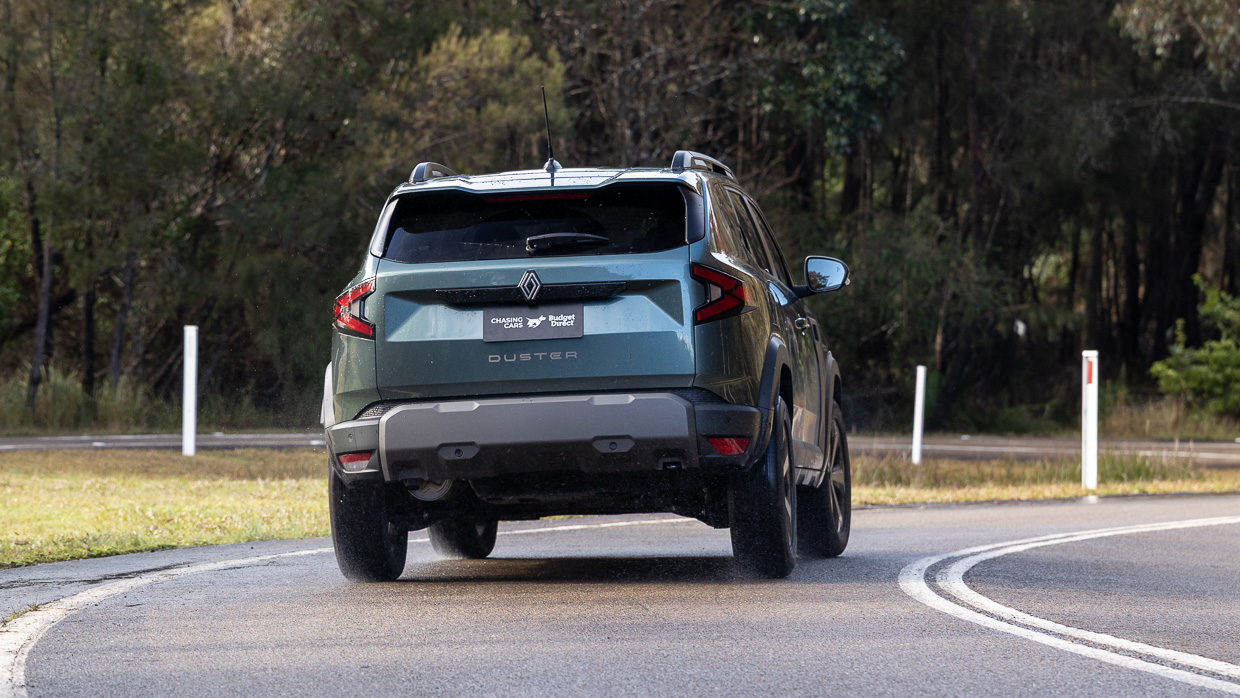
The 4×2 Techno’s ride is firm around town yet it’s also compliant, while the suspension is properly relaxing at higher speeds on the freeway.
The light steering is satisfyingly smooth and accurate, and would be close to faultless if not for the mild torque steer that greets any eager/urgent use of the front-drive Duster’s throttle pedal – most noticeable on damp/wet roads.
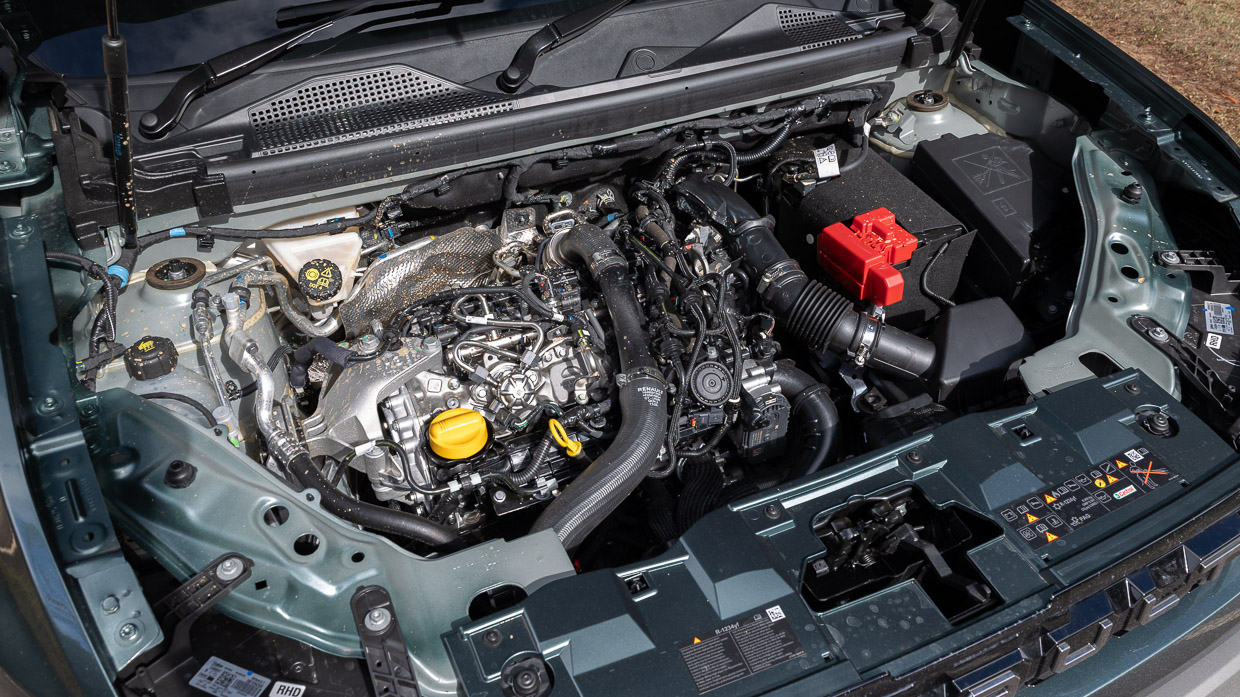
This is also related to good news on the drivetrain front, as the 4×2 Duster’s 1.3-litre turbocharged four-cylinder engine offers a healthy dose of torque – with a 270Nm maximum generated at 2250rpm. Power is 113kW.
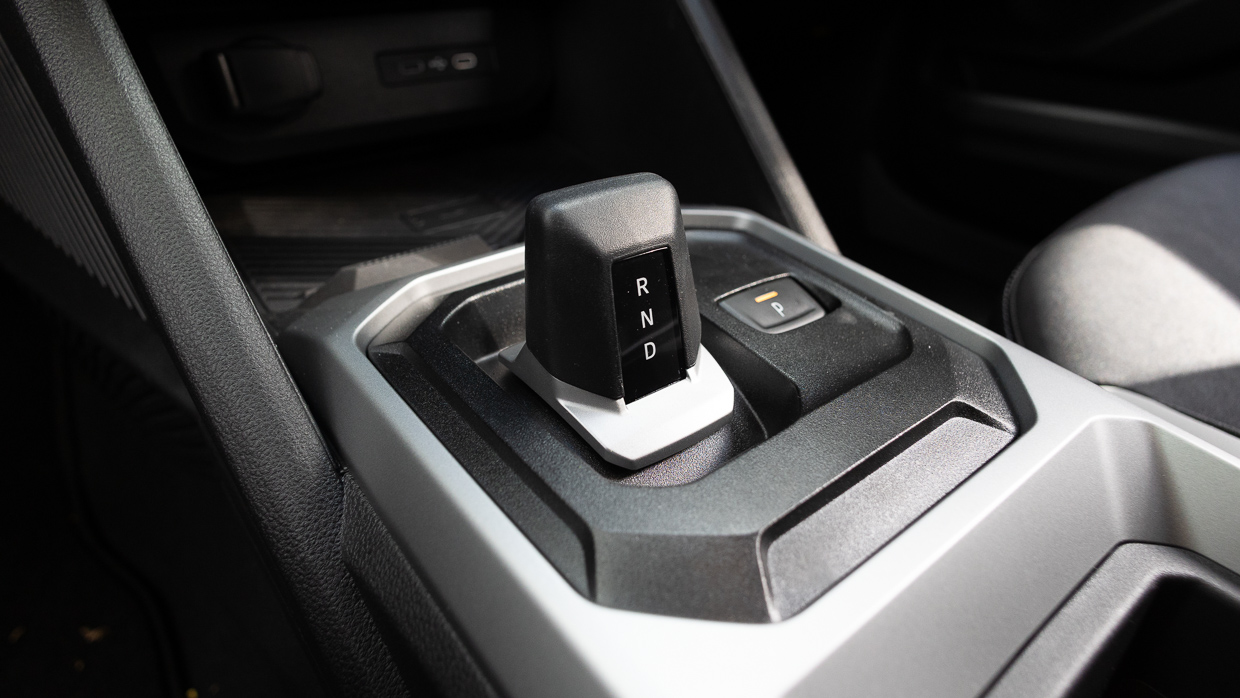
It’s mated to a seven-speed dual-clutch auto that is very much in keeping with the typical form of this type of automatic transmission – a little hesitant off the mark but then offering excellent shift speed and timing as soon as momentum is achieved.
Renault quotes 9.2 seconds for the 4×2 Duster’s 0-100km/h acceleration, comfortably ahead of the 4×4’s 11 seconds.
The 4×4, intriguingly, comes with a six-speed manual, which is also mated to a smaller and less powerful engine – a 1.2-litre turbo three-cylinder with 96kW/230Nm.
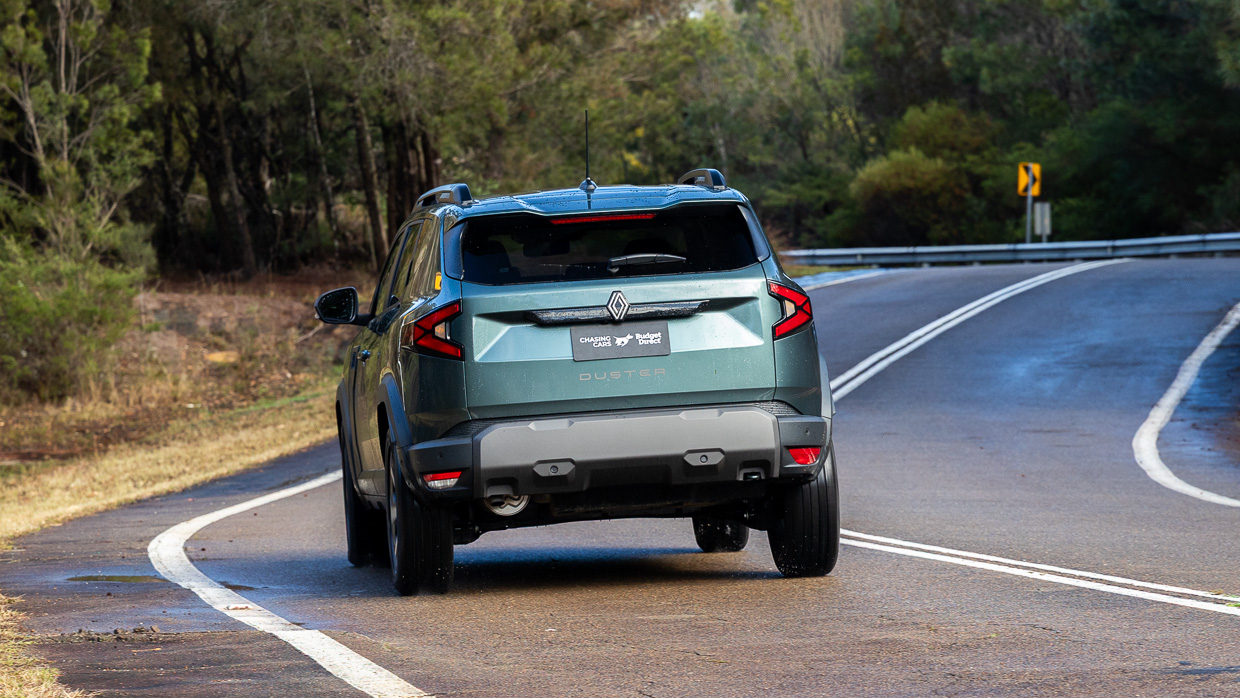
There wasn’t a 4×4 auto Duster available anywhere until very recently – though this newly revealed drivetrain is a petrol-LPG hybrid that doesn’t seem likely for Australia (though we have asked the question).
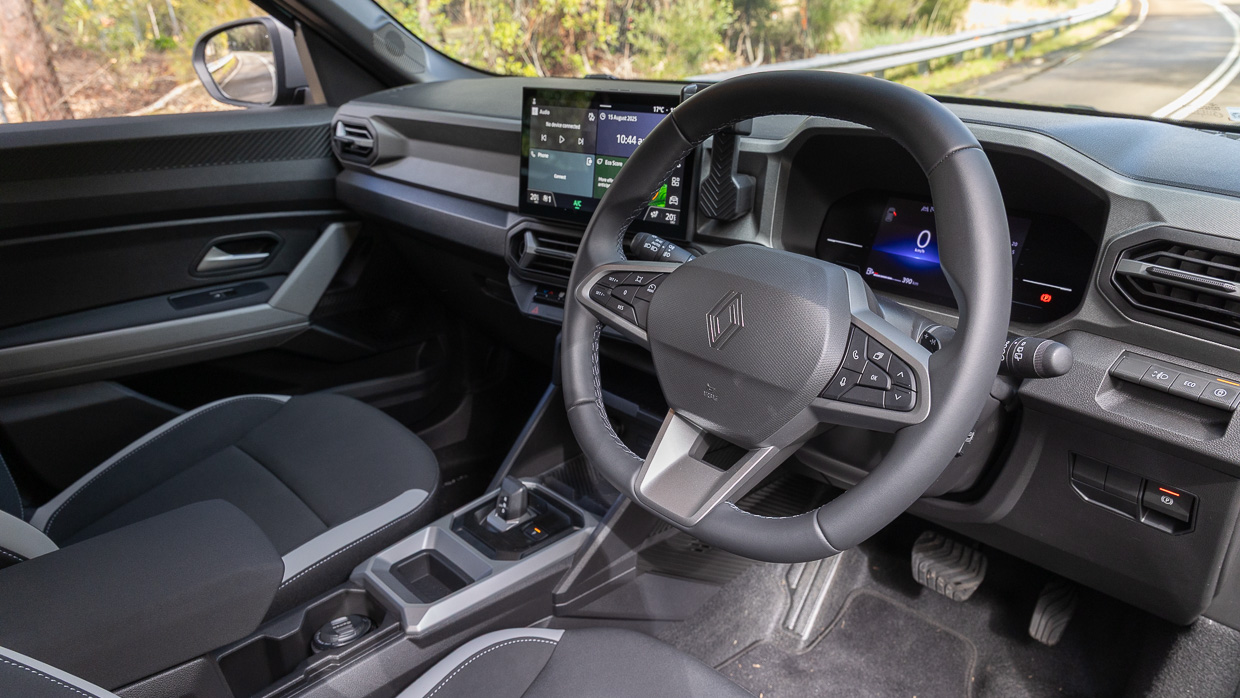
Another key factor completes enjoyable motoring in the Duster. Its driver assistance systems are refreshingly inconspicuous.
Yet there’s also an option to use a My Persona button to access a touchscreen set-up, which allows specific aids to be turned off/on. And turn them off and they stay off. If only all car makers would use this approach.
It’s a shame the Duster’s cruise control isn’t adaptive, however.
What is the Duster’s interior and tech like?
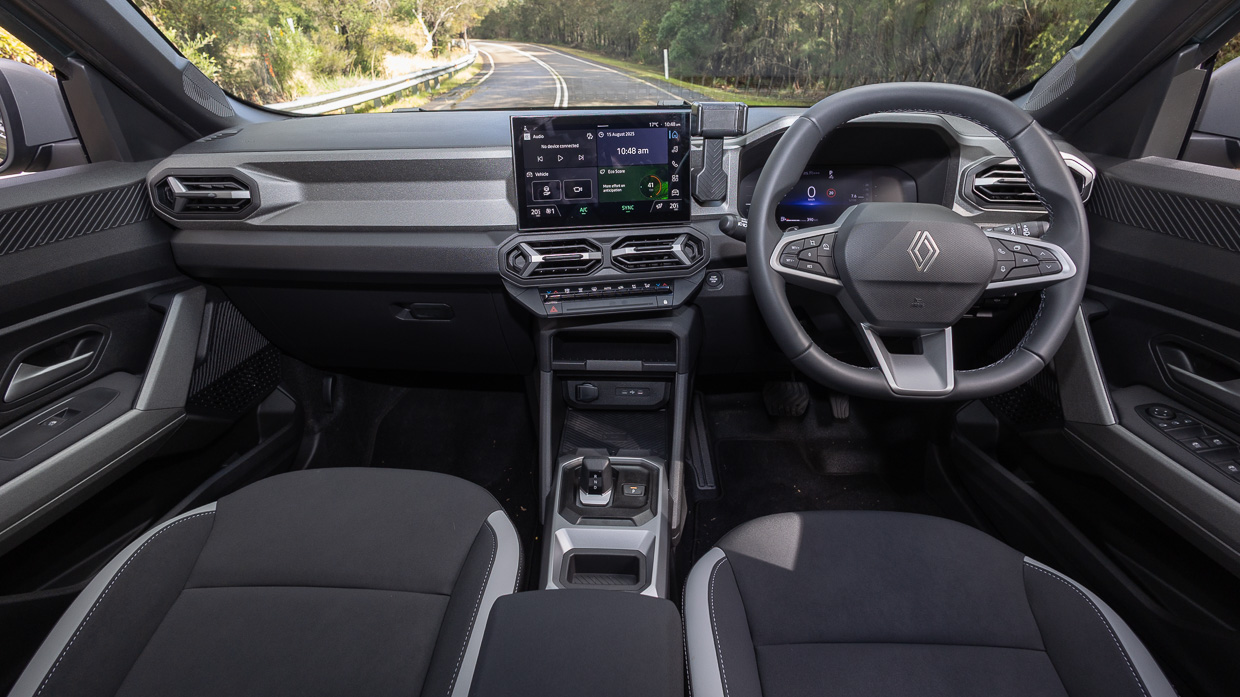
The first thing of note is that soft-touch materials are extremely scarce… Door armrests and the centre armrest are about it.
Lots of variably textured surfaces at least go some way to compensating for all the hard plastics.
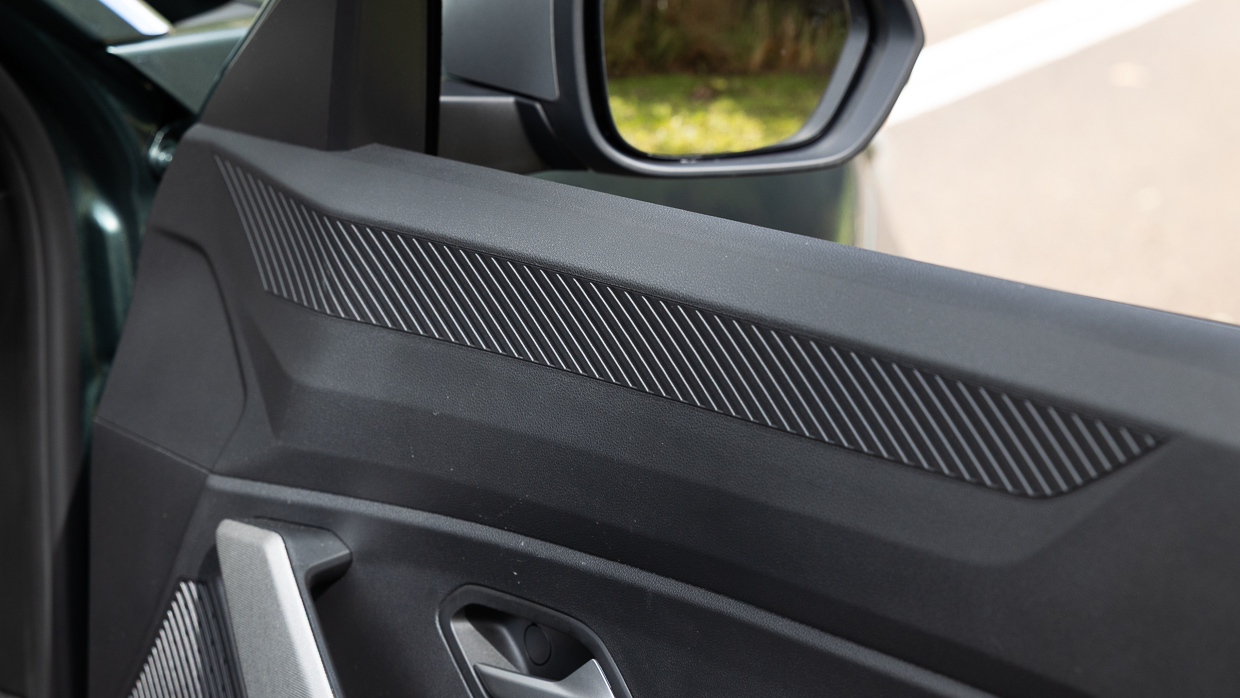
The quality of how well everything is put together is also showcased by the precise open/close action of the glovebox, as well as the console bin that shuts with a satisfying snick.
Storage isn’t great, however. Regular-size coffee cups almost get lost in the deep cupholders, and narrow door pockets won’t fit larger bottles.
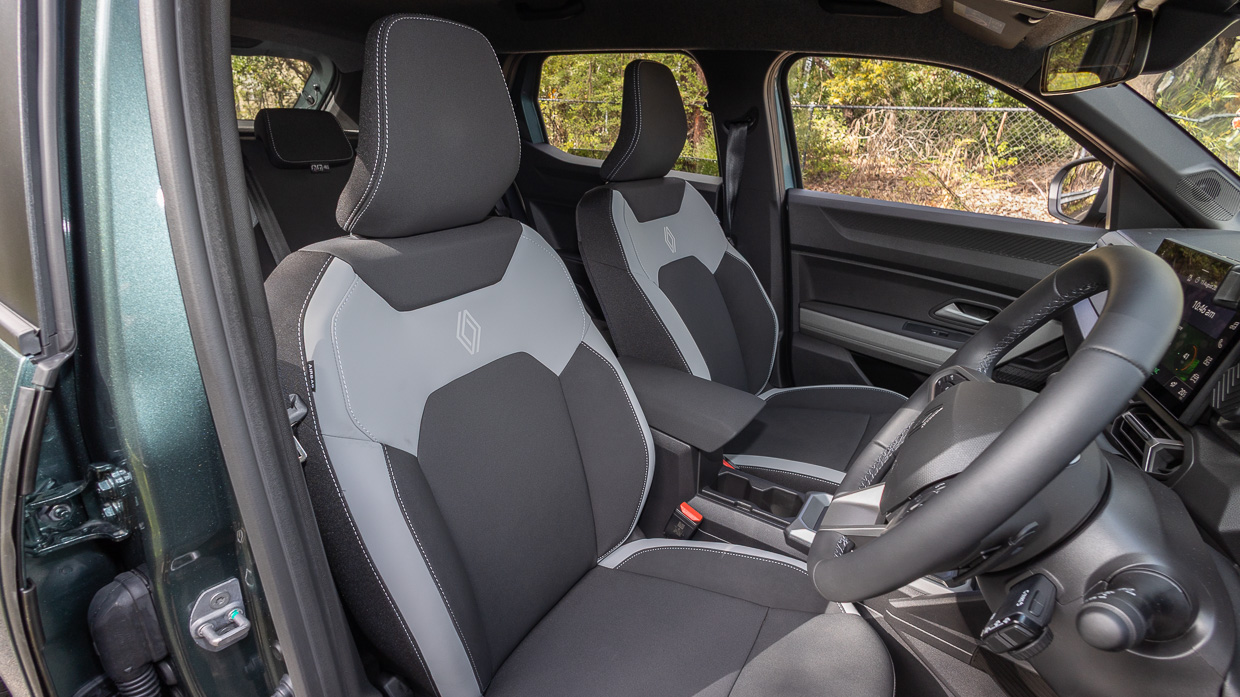
Top-spec Techno grades feature two-tone seats in a wetsuit-like fabric, though there’s still manual seat adjustment only. They could be more supportive, and cushion angle adjustment would be useful.
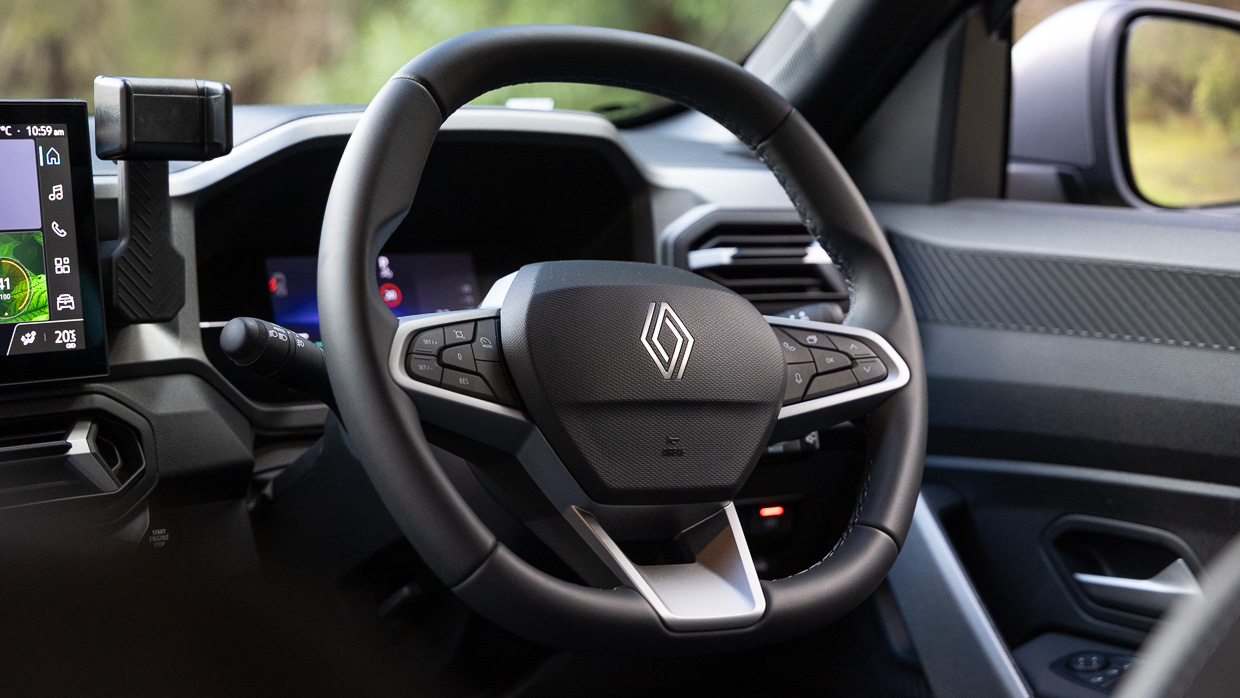
The touchscreen system is decently sized and presented, with the option of wired or wireless phone connectivity for those who prefer Apple or Android menus. Wireless device charging is also standard regardless of trim grade.
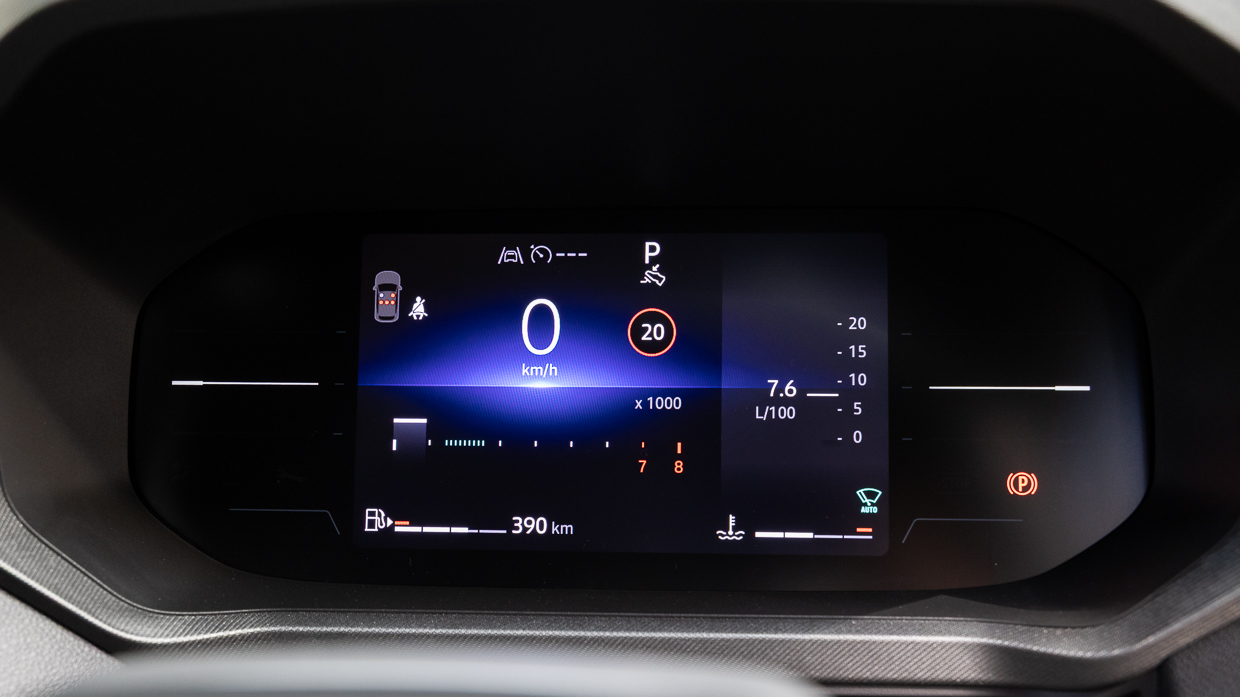
There’s a digital driver cluster as well, though it’s extremely basic.
Hidden rear door handles (which help make space for the Duster’s muscular rear haunches) access the back seat.
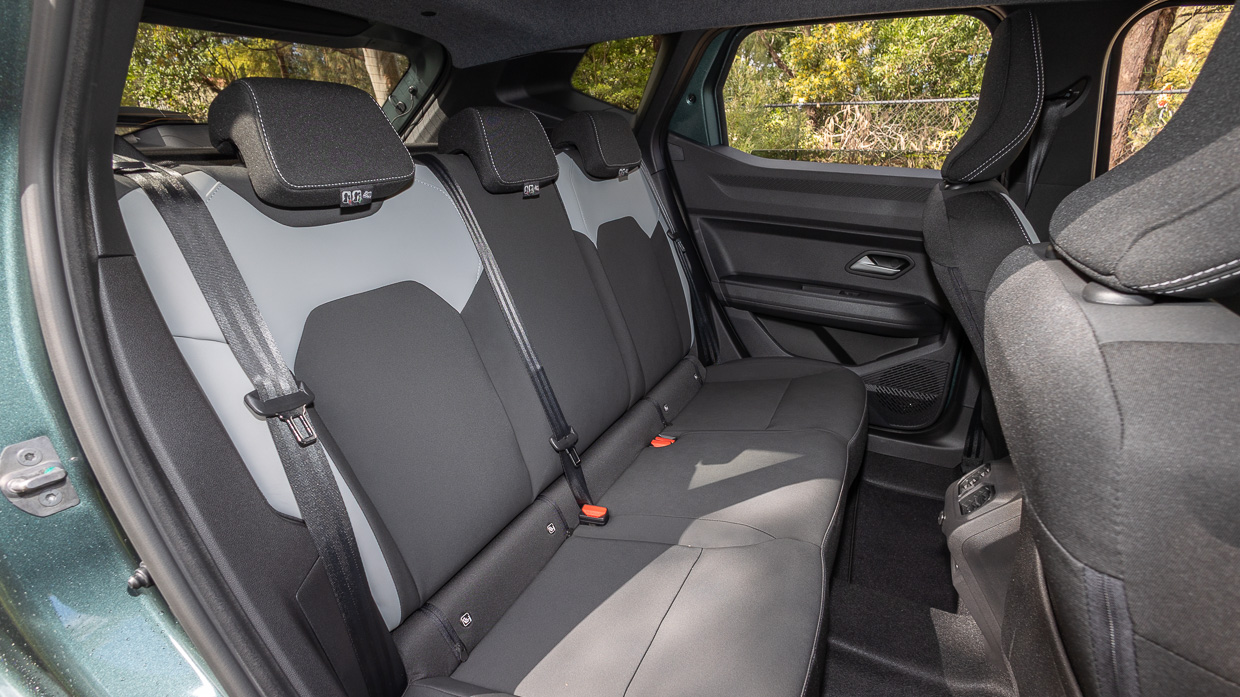
Although the 4.3-metre-long Duster isn’t a packaging marvel, most adults will be satisfied with the amount of legroom on offer as well as the bench comfort itself.
Headroom is generous, though there’s no sunroof available, even for the top-spec Techno – and it would help lighten the Renault’s dark cabin.
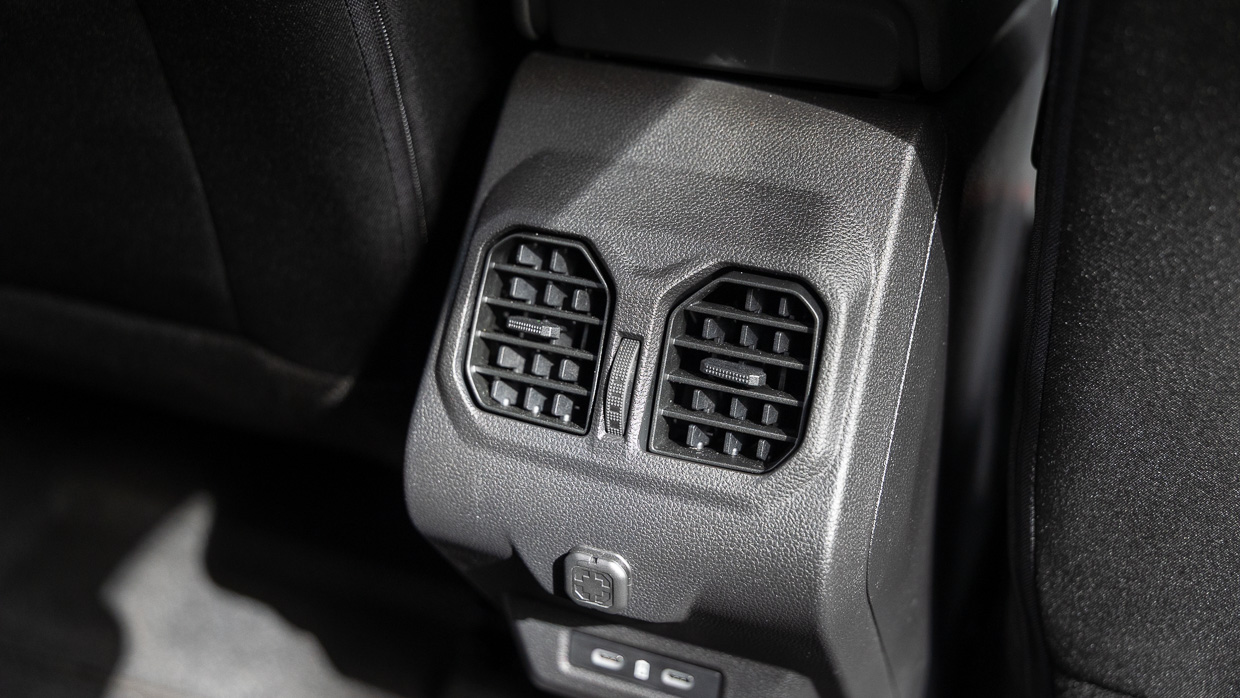
There are vents and dual USB-C ports, though storage options are average – not helped by narrow door pockets and the lack of a centre armrest with cupholders.
There’s another YouClip anchor point on the rear of the centre console that allows for a single cupholder accessory, while buyers can also opt for seatback YouClip anchors for phone/tablet holders.
How much boot space does the Duster offer?
Boot capacity varies between 4×2 and 4×4 Dusters. The front-drive model not only offers the biggest cargo space in the range but the entire small-SUV segment, with a quoted 472 litres. Drop the 60-40 split seatbacks and this expands to a quoted 1564L.
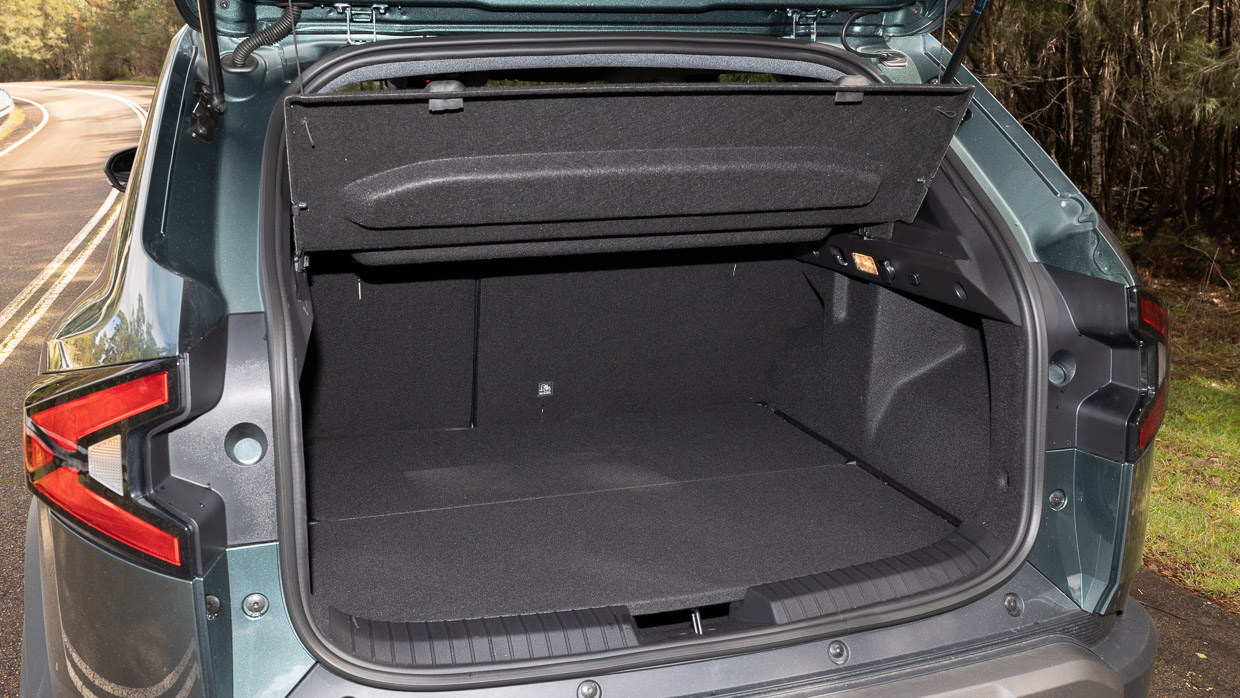
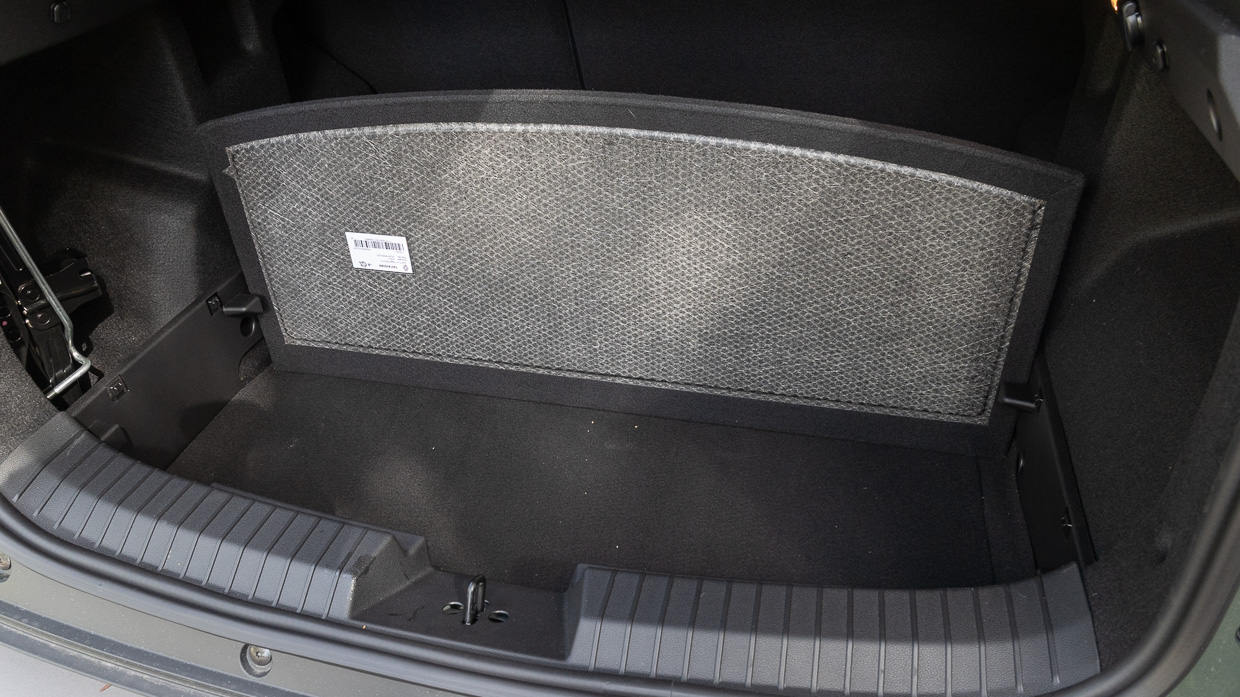
Luggage space drops markedly to 358 litres for the Duster 4×4 – a consequence of its independent ‘multi-link’ rear suspension (compared with the 4×2’s torsion beam rear) and bracing for the all-wheel-drive model’s rear differential mounting.
The 4×4 Techno model we tested provides the additional bonus of a split-level floor to provide the option of underfloor storage or a deeper boot.
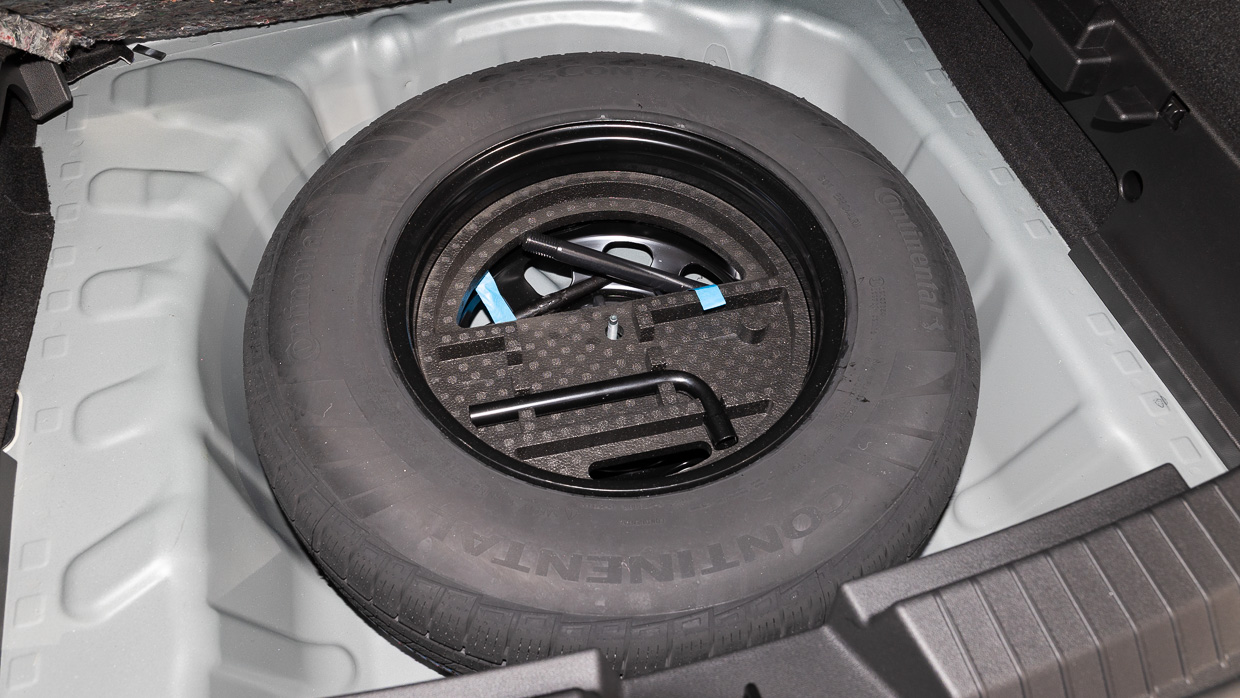
Another three YouClip anchor points are in the boot – one either side, plus one of the inside of the tailgate. Accessories for here include extra hooks and a mini lamp. Additional boot accessories include a rubber floor tray and storage net.
All Dusters come with a temporary spare wheel.
Is the Renault Duster a safe car?
The Duster is yet to receive a rating from Australiasian NCAP but it was given only three out of five stars by Euro NCAP in Dacia form.
The increasingly complicated approach the NCAP bodies are taking to scoring means a lower score doesn’t necessarily suggest a particular vehicle performs poorly in a crash test.
Duster primarily struggled in the Vulnerable Road Users and Safety Assist categories. It scored relatively well for Child Occupant protection (84 percent), and its 70 percent score in Adult Occupant protection, while not great, would still achieve five stars in that category.
The airbag count is basic, just six all up with no knee airbags or a centre airbag for front occupants.
There are also omissions for the Evolution grade, which misses out on the Techno’s blind-spot monitoring, front/side sensors, and multi-view camera. Techno models also gain auto high/low beam and front foglights.
The quality of the rear-view camera standard on both grades could also be better.
Duster’s cruise control is also basic, missing the adaptive functionality common on most new cars today.
The Evolution safety features include:
- Six airbags
- Forward collision warning
- Forward AEB with pedestrian and cyclist detection
- Traffic sign recognition
- Driver-attention monitoring
- Lane-keep assist
- Lane-departure warning
Meanwhile, the Techo’s additional safety features are:
- Blind spot monitoring
- Front and side sensors
- Multiview camera
- Auto high/low beam
- Front fog lights
What are the Renault Duster’s ownership costs?
The all-wheel-drive Duster is actually the more economical variant courtesy of its mild-hybrid tech, with official combined fuel consumption rated at 5.7 litres per 100km compared with 6.5L/100km for the front-driver.
However, that difference is at least partly offset by the 4×4’s turbo three-cylinder wanting more expensive premium unleaded where the 4×2’s turbo four-cylinder can run on 91 unleaded.
Our longest test drive on a mix of roads including freeways resulted in an indicated 6.7L/100km on the trip computer. That figure inevitably climbs the more time is spent in daily urban driving.
Servicing intervals are every 12 months or, based on mileage, double the industry norm at 30,000km. Five-year pre-paid plans save money and are $2100 for the 4×4 Duster or $2150 for the 4×2 Duster. Pay as you go for the same period and the costs increase to $2475 and $2685, respectively.
Keeping our focus on the 4×2 tested, that works out at either $430 or $537 per visit, depending on whether you pay in advance or pay as you go.
For comparison, here are five-year servicing cost totals for a selection of rivals include Chery Tiggo 4 ($1445 petrol, $1495 hybrid), Kia Seltos ($2094 2.0L, $2303 1.6L) and Subaru Crosstrek ($2424).
Renault Australia’s factory warranty for the Duster is five years, unlimited kilometres. Roadside assistance is included for that period.
The honest verdict on the Renault Duster
The Renault Duster has been a long time coming, but this ruggedly handsome compact SUV has been worth the wait despite some imperfections that include a few equipment omissions across the range, average cabin storage, and the lack of an auto gearbox for the 4×4 variant.
That’s countered by multiple positives, such as the 4×2 Duster’s strong engine, the quality of its cabin construction (if short on soft-touch materials), its larger-than-average boot, and a comprehensive range of practical and adventure accessories.
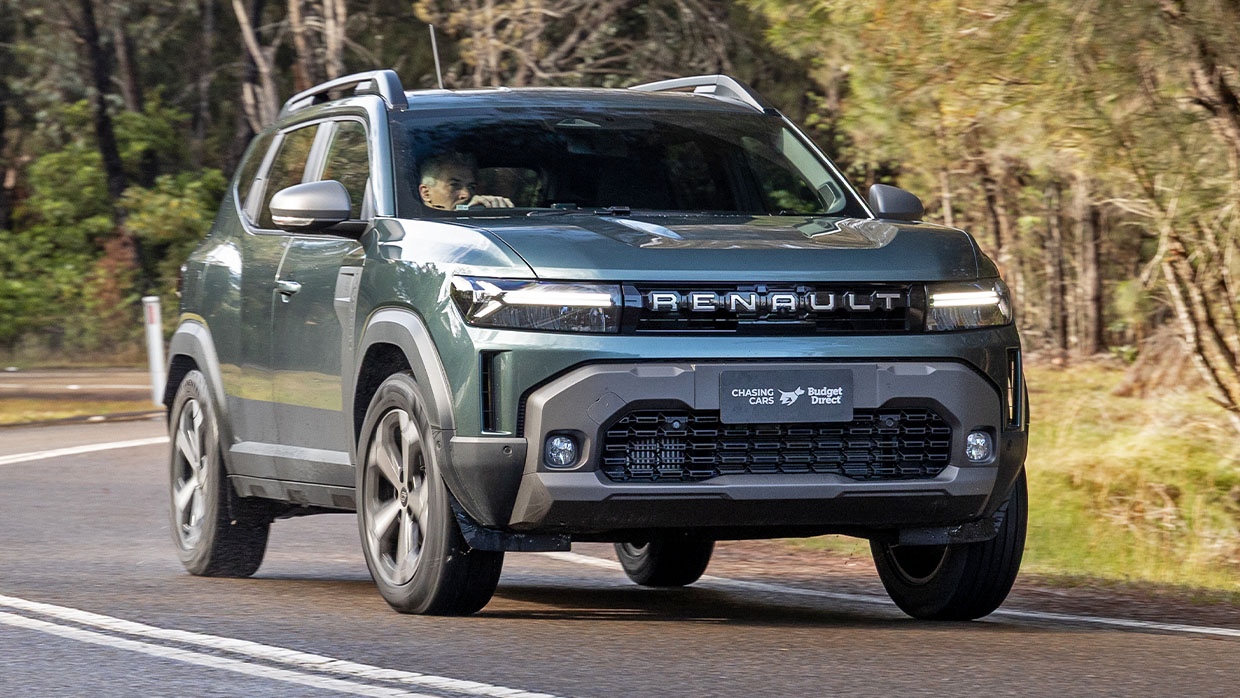
The Duster also immediately installs itself into the leading group of best-driving small SUVs on the market.
While we can’t wait to try the 4×4 manual, this 4×2 variant already demonstrates that Romania has built and engineered what we reckon is the best Renault SUV yet.