



2023 BMW M4 CSL First Drive Review: Focused, Raw, and Exciting
The standard BMW M4 is already a wildly capable car.
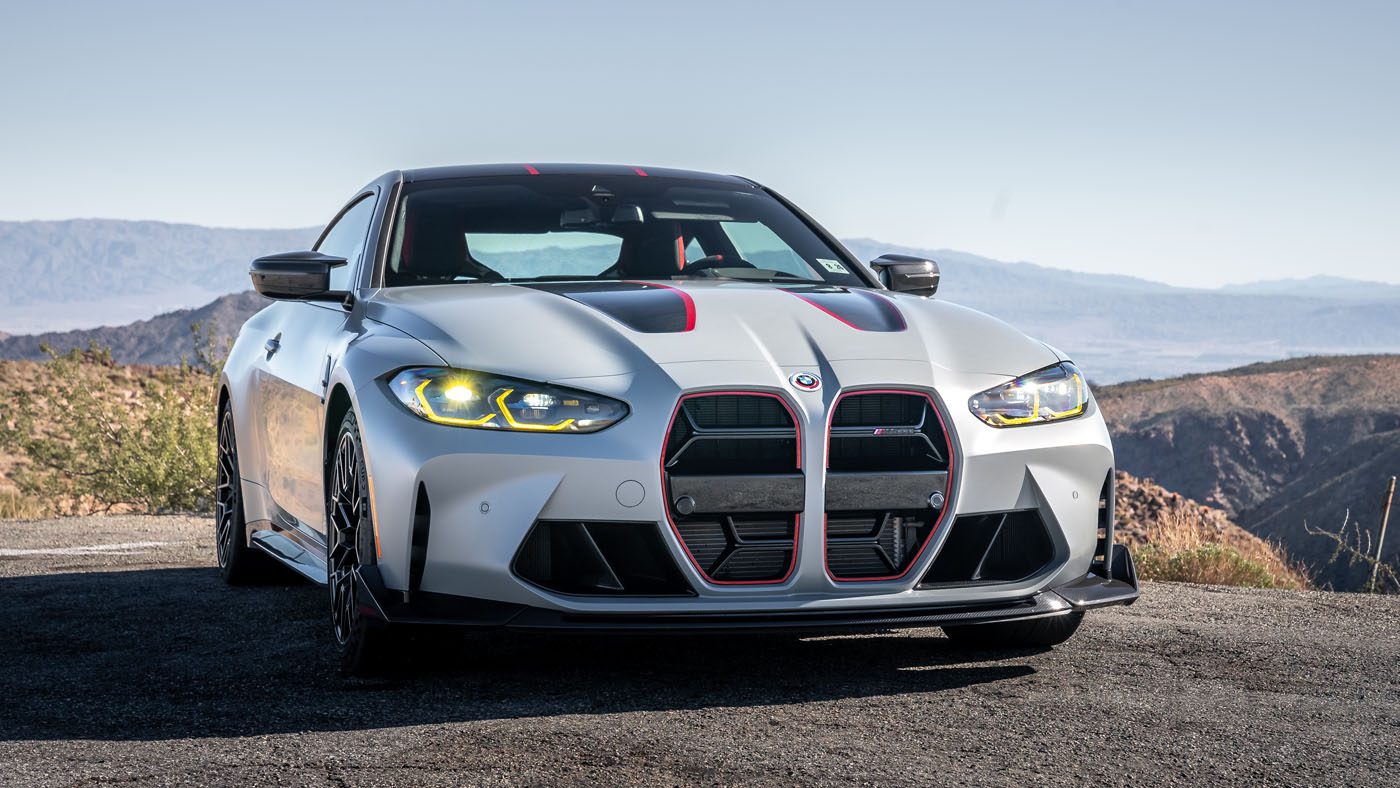
Despite its sizable footprint and hefty curb weight, it has enough power, suspension, and brakes to eat up a canyon road. However, BMW felt it left performance on the table and decided to push on. The result is the 2023 BMW M4 CSL, a hardened, lightened, track-focused special edition variant that ditches all notions of daily driving comfort in favor of outright speed and performance.
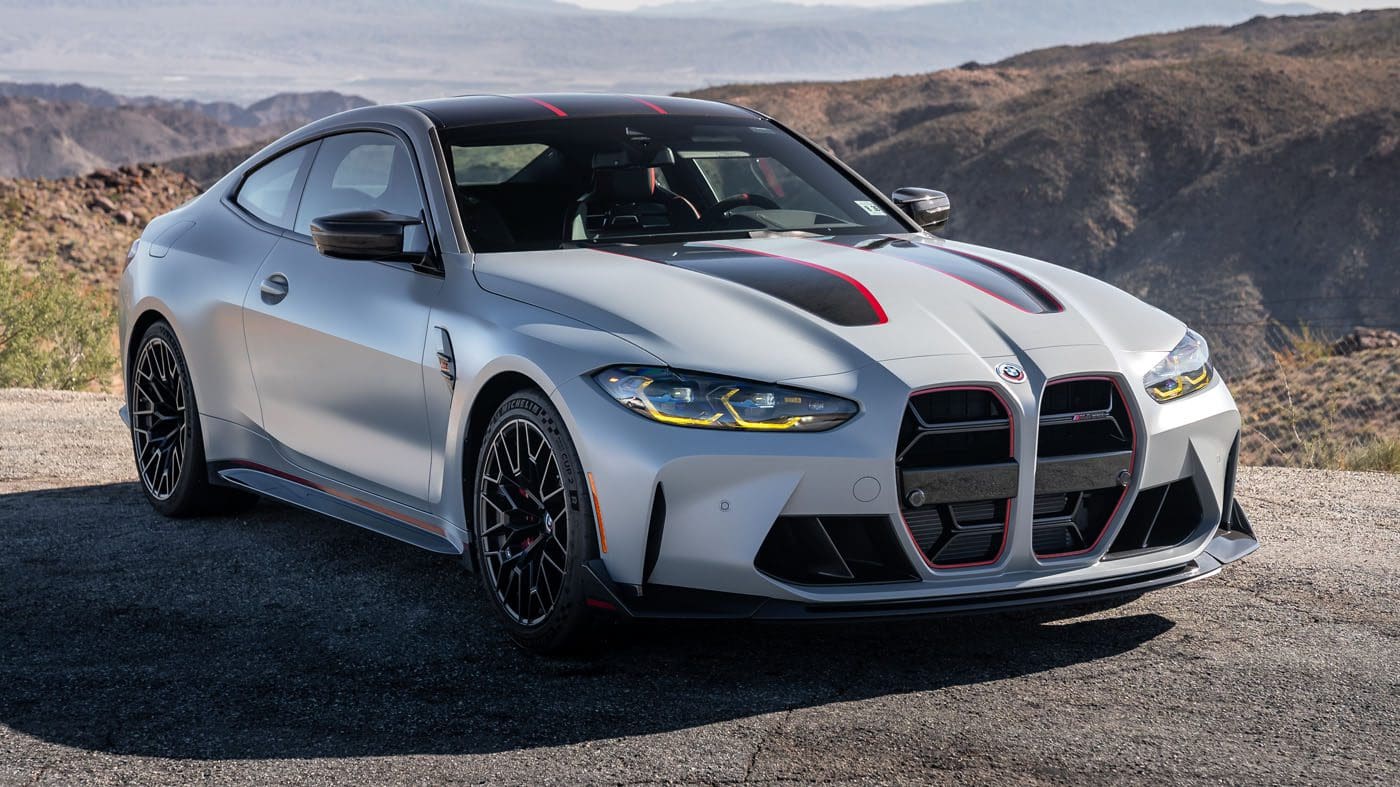
With a starting price of $140,895, the CSL is a whopping $61,300 more than an M4 Competition. Therefore it has to offer an incredible driving experience to live up to that price tag. It may already hold the title for the quickest production BMW ever to lap the Nürburgring, but what matters here is how much of that raw speed translates to fun in the hands of someone without a racing license. And after hustling it up a canyon road, it’s clear that the CSL has more than enough theatrics to back up its hefty price tag.
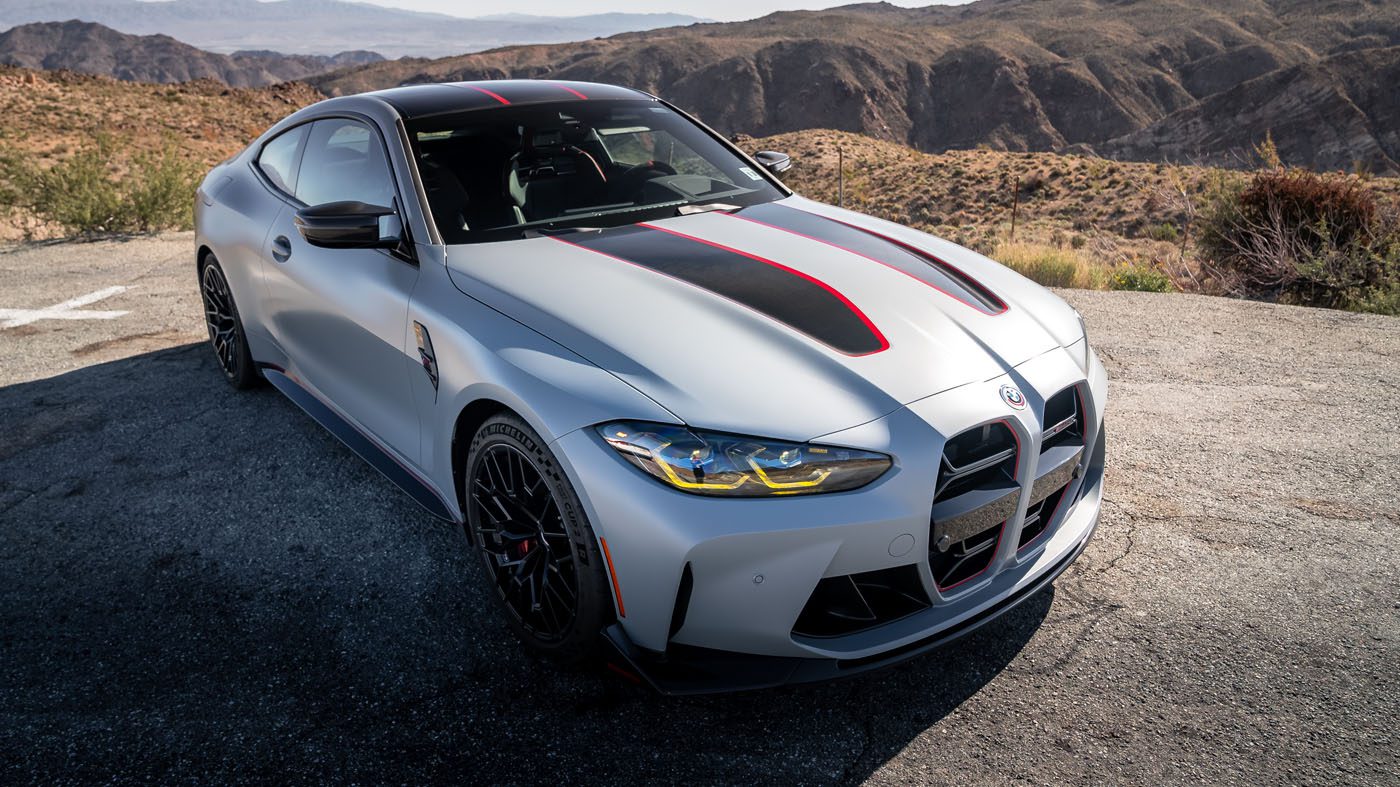
The CSL, in its name, used to stand for Coupe, Sport, and Lightweight, a moniker used only twice before it made it onto the back of this M4. It first appeared in the 3.0 CSL of the mid-1970s, then on the e46 M3 CSL of the early 2000s. Today, however, the German carmaker wants to replace the meaning of that first letter with “Competition,” mainly as a nod to this latest car’s incessant pursuit of lightness and performance.
The CSL starts with a pair of manually adjustable M Carbon bucket seats which eliminate 53 lb while also removing its rear seats and accompanying hardware to save an additional 46 lb. This special M4’s unique wheels, springs, struts, and carbon-ceramic brakes save another 46 lb, while a significant reduction in sound deadening cuts a further 33 lb.
2023 BMW i7 First Drive Review: Better With Batteries
The M4’s diet doesn’t stop there, however. It may look far more aggressive than the car upon which it’s based, but its carbon-fiber-reinforced plastic roof, hood, and trunk lid are mainly there to remove weight. With its molded rear lip spoiler, the trunk saves 15 lb by itself. Combine these weight-saving efforts, and the CSL’s curb weight shrinks to 3,640 lb. Although still hefty by sportscar standards, it’s 240 lb lighter than an M4 Competition.
The other side of the CSL’s equation is its beefed-up output. Thanks to revisions to its engine management system and boost pressure up from 24.7 psi in the Competition to 30.5 in the CSL, its twin-turbocharged 3.0-liter straight six now develops 543 hp and 479 lb-ft of torque. These figures come in at the same 6,250 rpm and 2,750 rpm, respectively, as they do in the Competition, but thanks to this car’s updated throttle calibration, they come in much more aggressively.
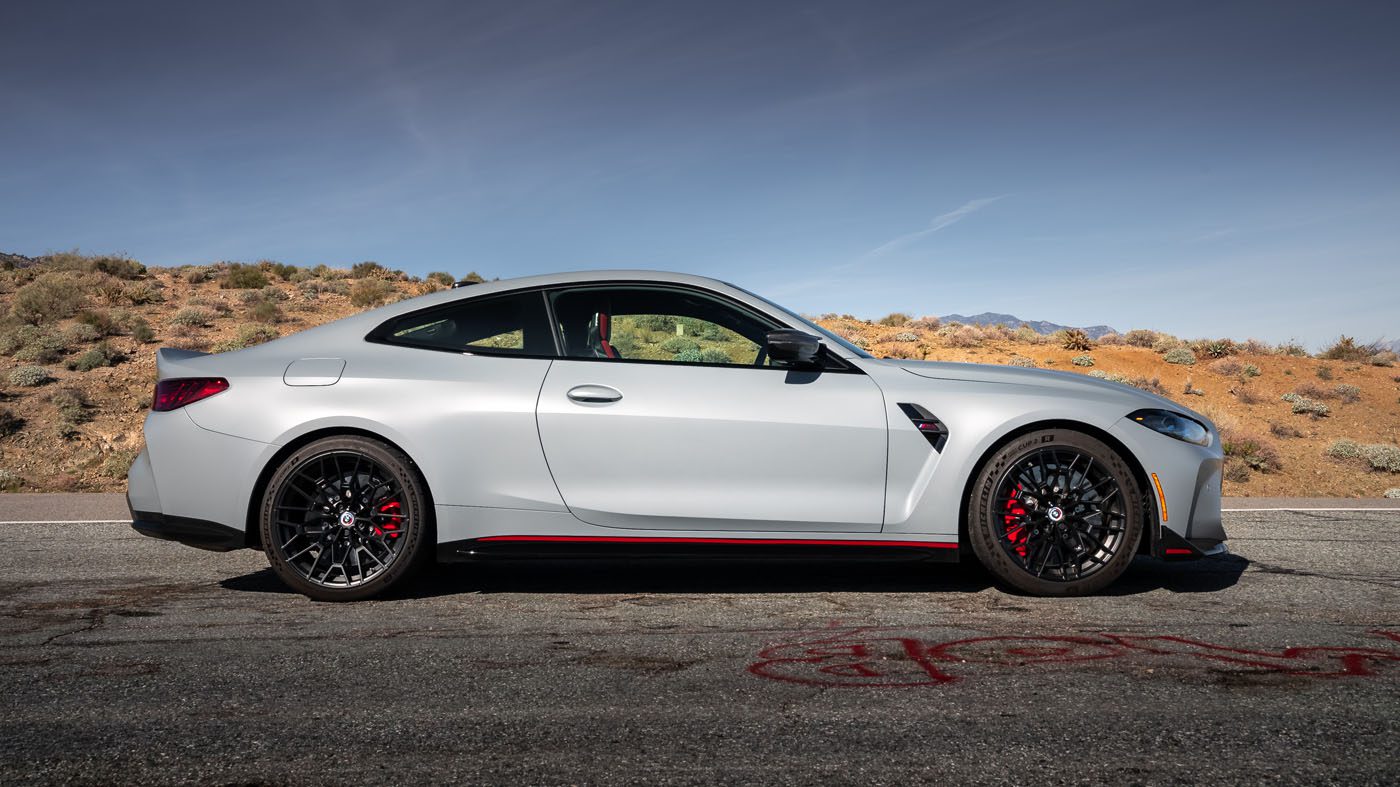
Like the e46 M3 CSL that preceded it, this latest interpretation is only available with a ZF eight-speed torque-converter automatic transmission. Power also only goes to the rear wheels, making the CSL’s run to 60 mph 0.2 seconds slower than an xDrive-equipped M4 Competition, at 3.6 seconds. As it’s free from an electronic limiter, this sporty coupe tops out at 191 mph, whereas the standard car stops pushing at 155 mph.
From the instant you press its red start button and its straight six’s blaring cold start roars through the cabin, the CSL doesn’t let you forget that it’s special. With little sound deadening to protect your ears, its raspy exhaust note is always present, with no need to pipe it in digitally. This car is not concerned with quietness or comfort, it’s built for fast driving, and that’s all it wants to do.
2022 Mercedes-Benz S580 4MATIC Review: Punching Way Above Its Class
Thanks to its solid engine and transmission mounts, the CSL vibrates far more than any M4 before it. It retains the same drive modes, Comfort, Sport, and Sport+ modes, as the standard car, except that the first only slightly eases up the CSL’s firmed-up suspension. It’s harsh around town, but that’s what we’d expect from a track-ready sports car.
The CSL’s tight suspension delivered a composed and neutral drive up a twisty canyon road. There’s no body roll to speak of, and this beefed-up M4 confidently puts all of its power down. Since its lightweight wheels and brakes significantly reduce its unsprung weight, it’s not surprising that it is also quick on its feet to turn into a corner. Plus, with its Michelin Pilot Sport Cup 2 R tires brought to proper operating temperature, it delivers a substantial amount of grip, pushing its limits far beyond what I can explore on a public road.
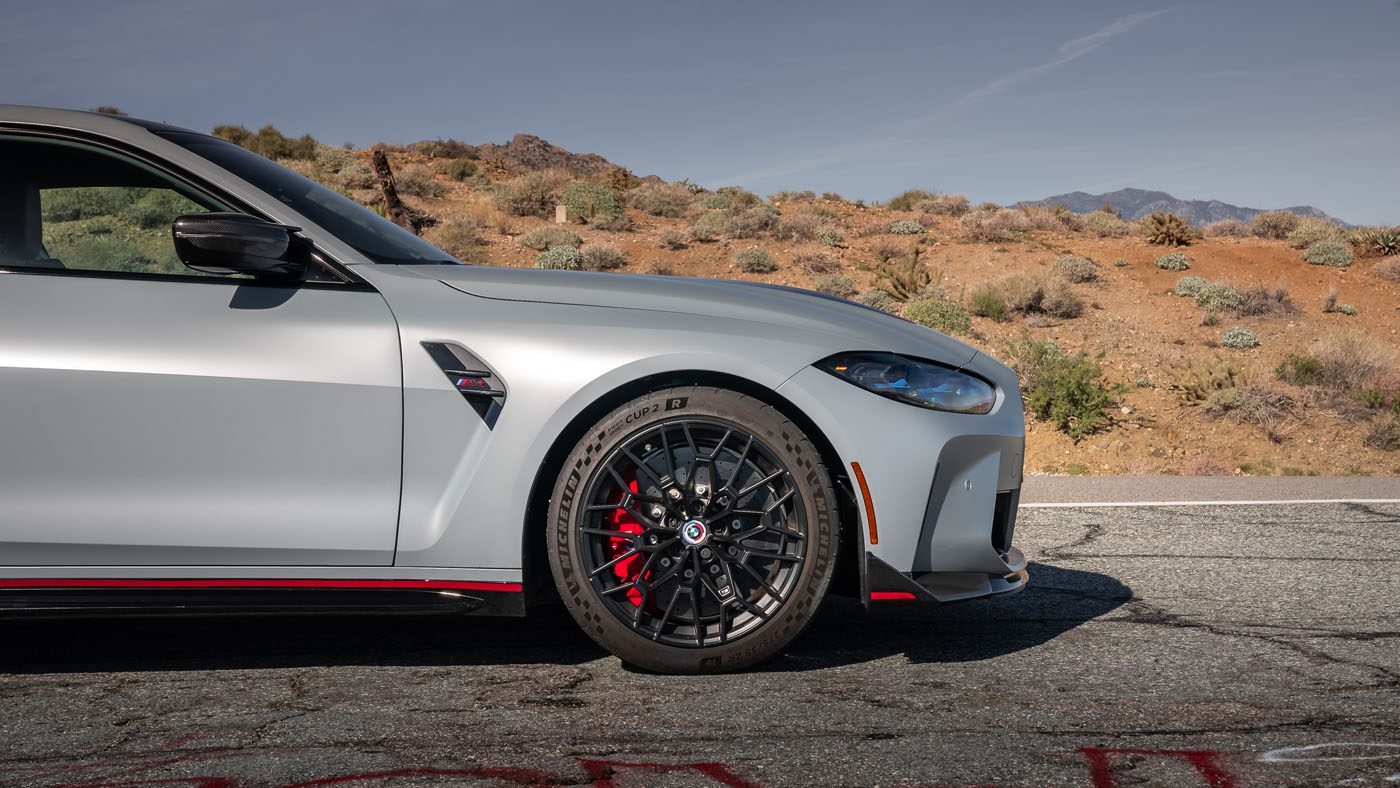
Like in the M4 Competition, the CSL’s steering is far from talkative but is impressively fast. Even subtle wheel movements result in substantial direction changes. It’s the type of steering that rewards thoughtful inputs while punishing ham-fisted maneuvers. Driving this car at speed requires your total concentration. It may be incredibly capable, but drive it aggressively, and it can easily bite back.
Its powertrain is in part to blame for its on-edge nature. It may have peak power and torque figures as an M4 Competition, but its throttle calibration is more of an on/off switch, which is great for a hot lap on a track, but tricky for on-road use. This is also evident around town, where the CSL can be jerky out of full auto mode, lurching forward like an early 2000s supercar. Combine the quick steering with near-instant power delivery, and you get a sports car that is both exciting and a bit terrifying.
Thankfully, the M4 CSL’s carbon-ceramic brakes offer plenty of stopping power and are surprisingly easy to modulate around town. They are perhaps the most docile part of the car.
A new titanium silencer saves a further 9 lb and adds more noise and tone to the M4’s already raspy note. Like the rest of the car, it sounds much more aggressive than standard, as it fully uncorks the CSL’s straight-six. It’s over the top and fits the car’s character perfectly.
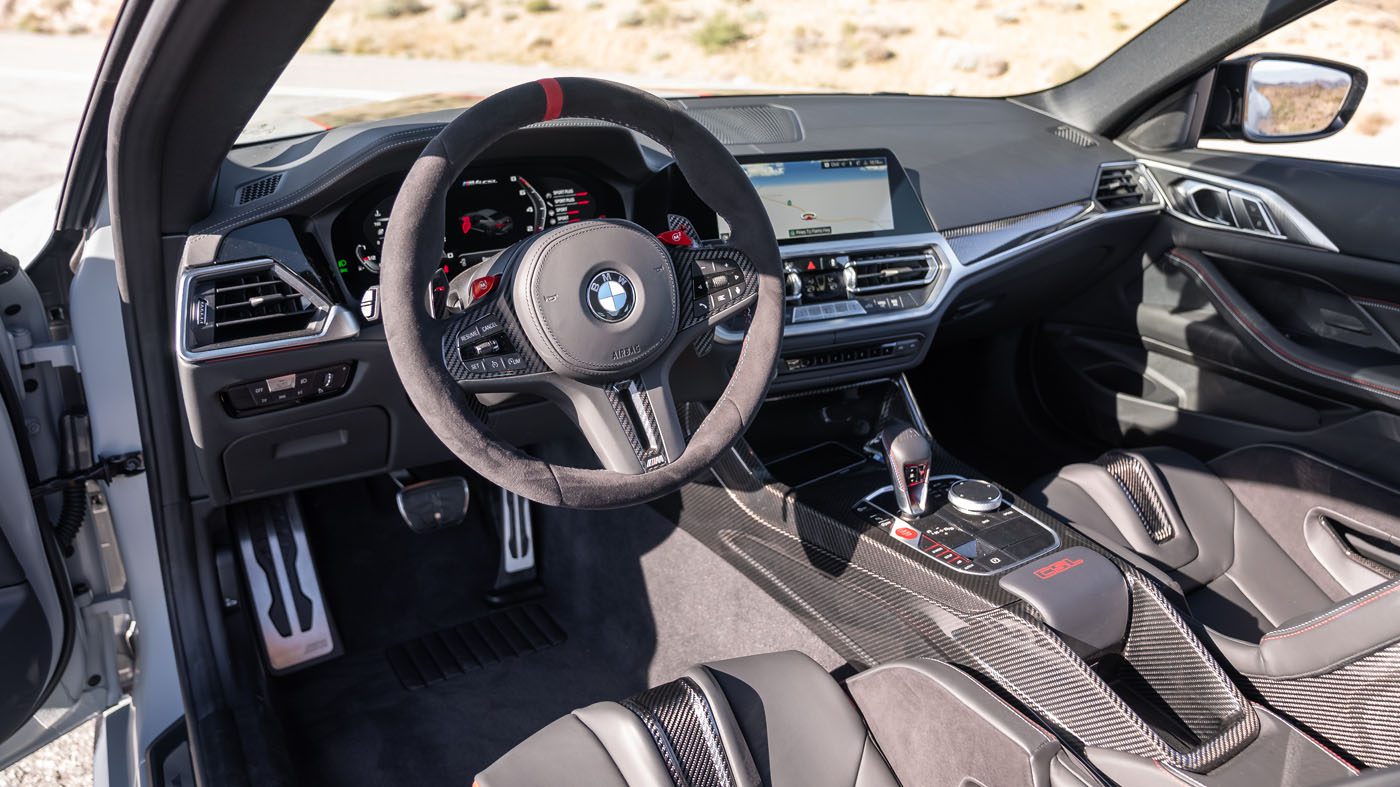
Although its matte gray paint hides most of its exterior carbon bits, its interior leaves them exposed for you to enjoy. The most prominent is its exposed carbon center console, which plays off the carbon inserts in the steering wheel, paddles, and dashboard. There are lightweight materials regardless of where you look.
Instead of sitting in the CSL, you plop into its fixed-back manually-adjustable M Carbon seats. Like in a proper track car, there’s no quick height adjustability, and along with the leg-splitting carbon insert found in most M products, these particular seats add tons of bolstering with minimal padding. Although these make the CSL miserable to drive around town, they add to its sense of occasion.
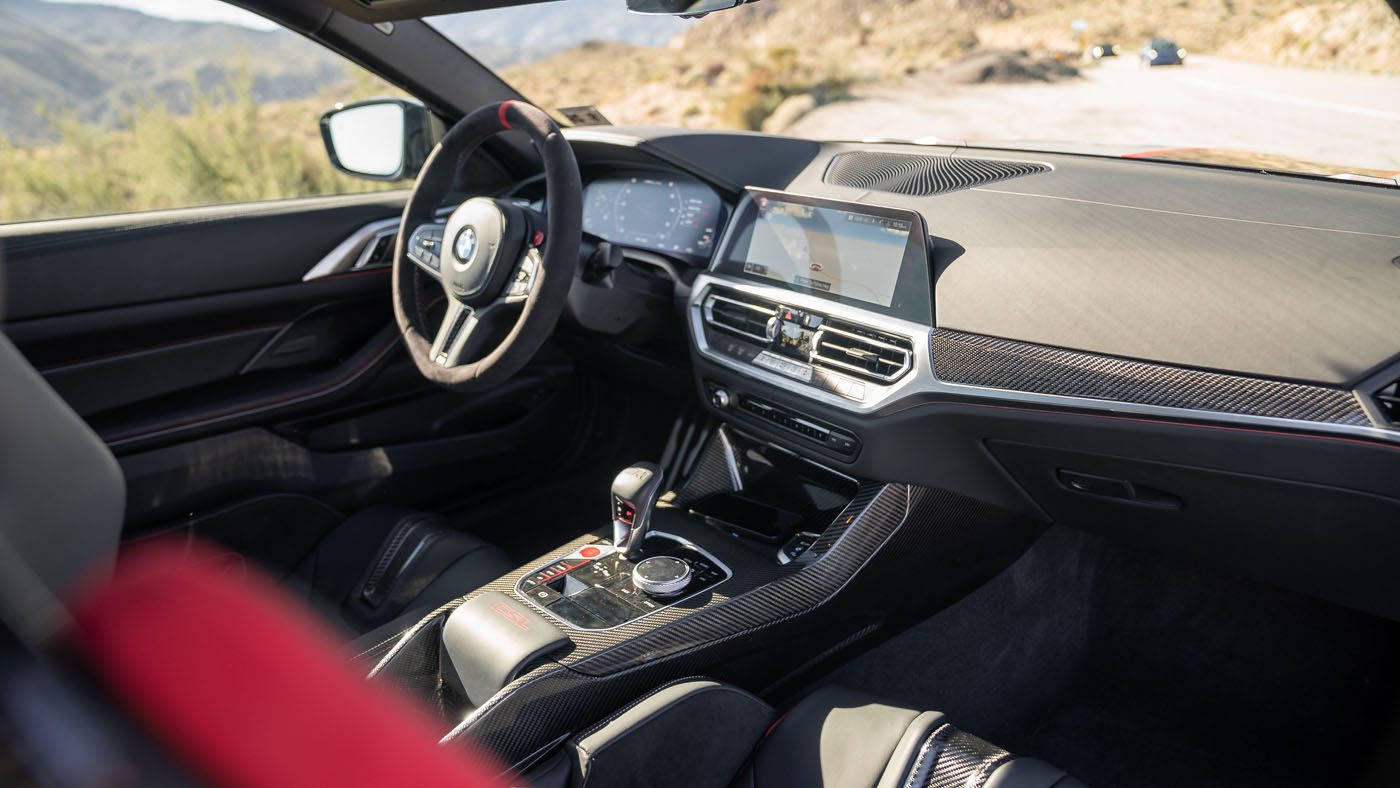
The rest of the M4 CSL’s interior is like any of its standard production siblings. Screens, tech, and safety systems and all.
BMW plans to build just 1,000 units of its latest special edition coupe, each with a starting price of $139,900 plus $995 for destination. This planned production run makes it the rarest CSL ever, as the German carmaker produced 1,383 M3 CSLs and 1,265 3.0 CLSs.
While the 2023 BMW M4 CSL may cost $61,300 more than a standard Competition model, it offers its driver substantially more as well. It feels raw, engaging, and thrilling to a heightened degree. While the standard M4 is a wildly capable car, it is often muted and a bit disconnected from its driver. It’s far from as tactile as older M models. The CSL, however, is a step in the right direction, piping in real noise, vibrations, and terrifying performance that makes for an exhilarating drive.
If anything, the CSL highlights what the current-gen M4 is missing. It’s too subdued, quiet, and compliant. The CSL demonstrates what BMW’s M division can accomplish when tasked with building a car that chases a particular goal instead of a wide gamut of behaviors. The CSL is focused, raw, and exciting, but due to its limited run, it’s one of the best M cars few people will ever experience.
Tags: 2022 ReviewsFeatured
2023 BMW i7 First Drive Review: Better With Batteries
 by Gabriel Vega
The BMW 7 Series just took a significant leap forward, and all it took was ditching its fossil-fuel-burning powertrain to do it.
In terms of sales, the Mercedes-Benz S-Class dominates the full-size luxury sedan segment in the U.S. In 2021, the sedan with a three-pointed star on its hood sold nearly twice as many units as Bavaria’s best. In fact, the last time the 7 Series outsold its closest competitor was a decade ago, in 2012, so something had to change.
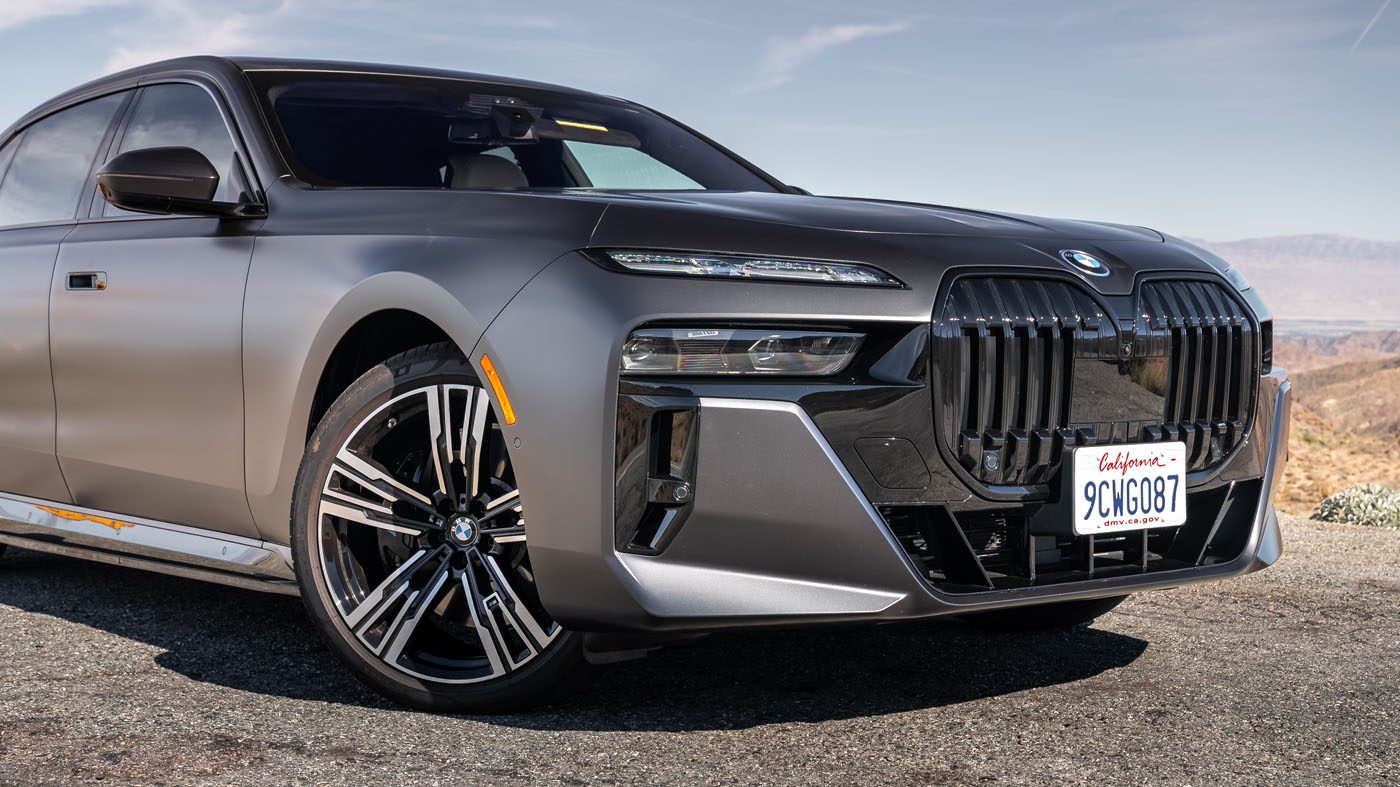
Enter the 2023 BMW i7. It’s the first ever fully electric 7 Series based on the new G70 platform and it’s gunning for the S-Class and its electric counterpart, the EQS 580. With nearly Rolls-Royce interior noise levels, a cleverly-tuned air suspension system, and an interior cabin that feels truly opulent, this electrified seven may just be the best yet, if you can stand to look at it, that is.
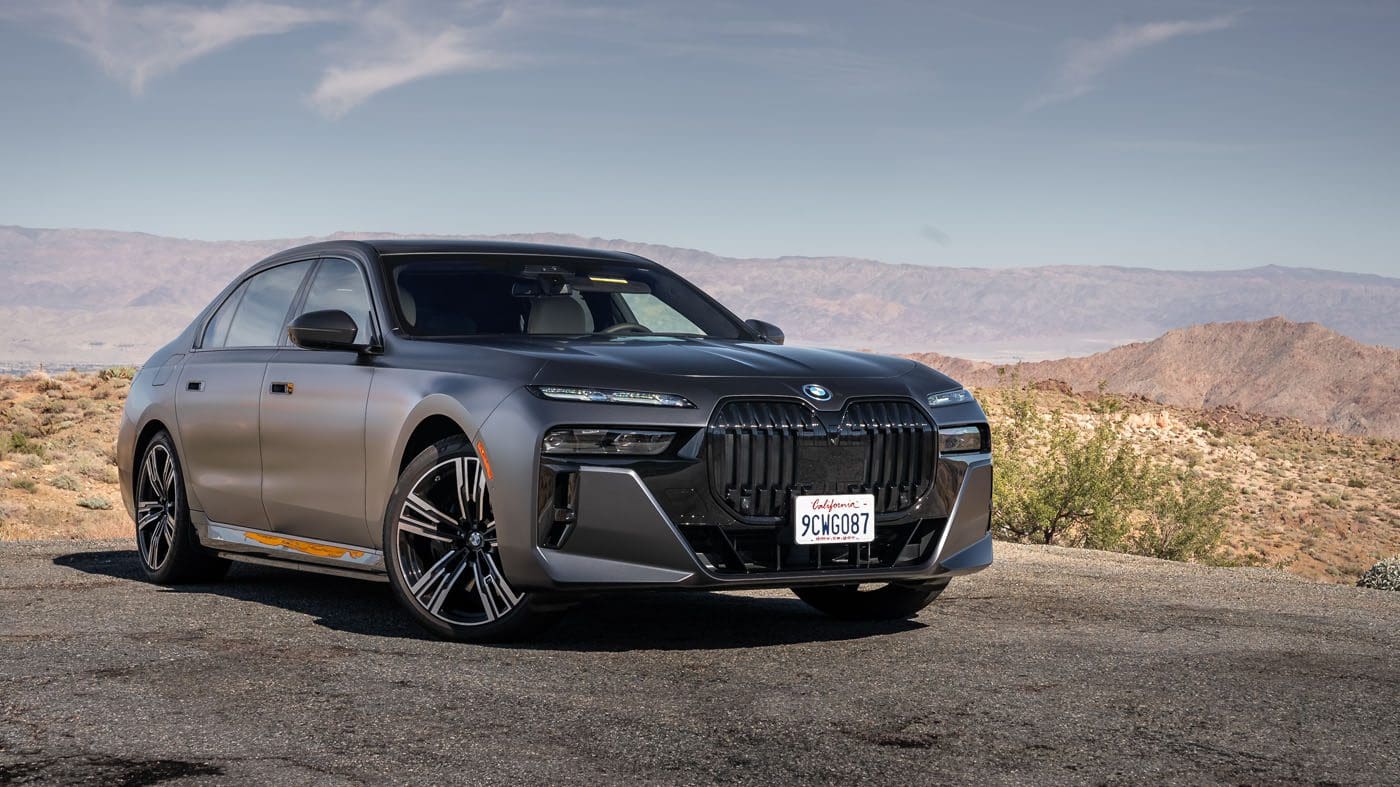
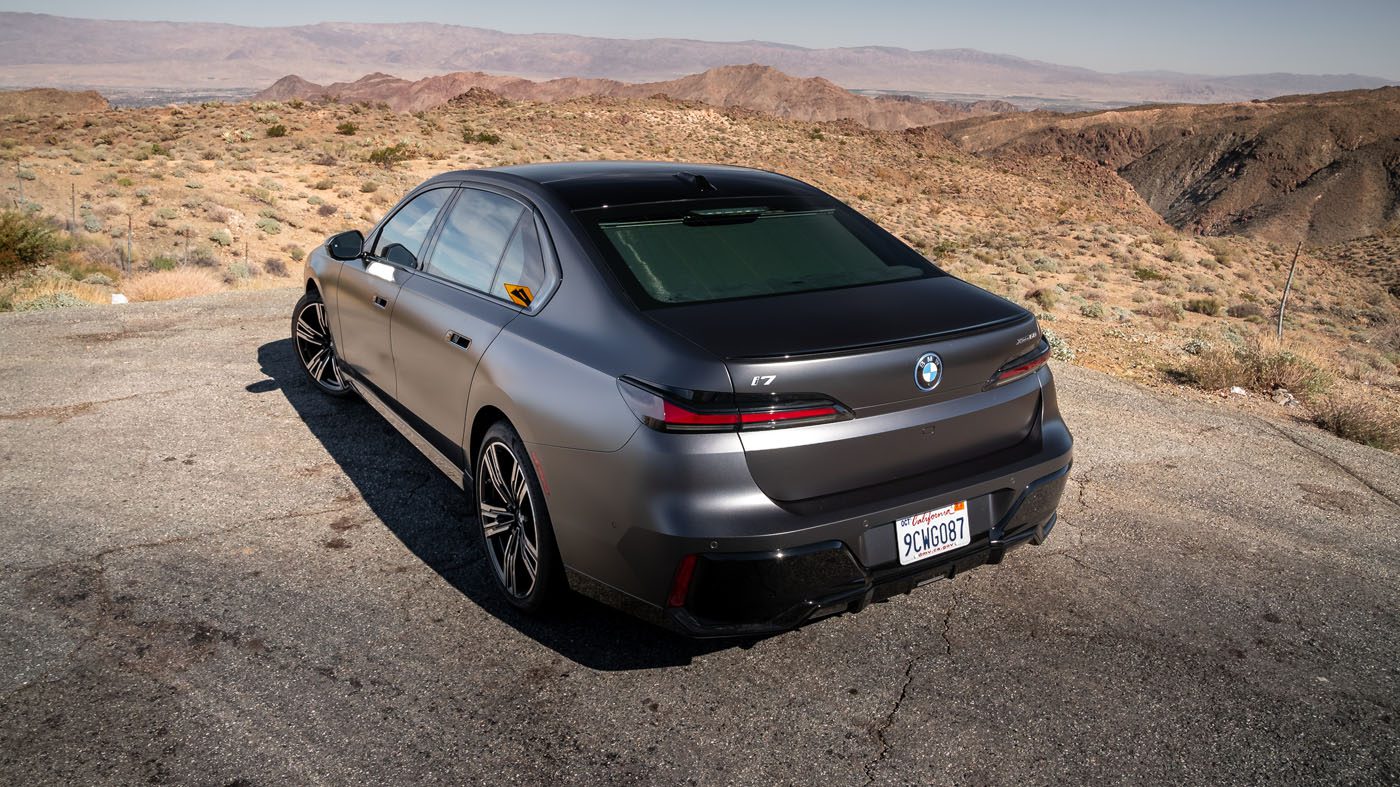
From a glance, it’s nearly impossible to tell that the 2023 BMW i7 is not just another gas-burning large sedan. Its long hood, chunky proportions, and upright nature allude to an engine under its hood. And that’s because, in some configurations, there is. This latest G70 7 Series is still available with a twin-turbocharged V8 only for the U.S. market. The rest of the world will have to plug in if they want the best performance figures.
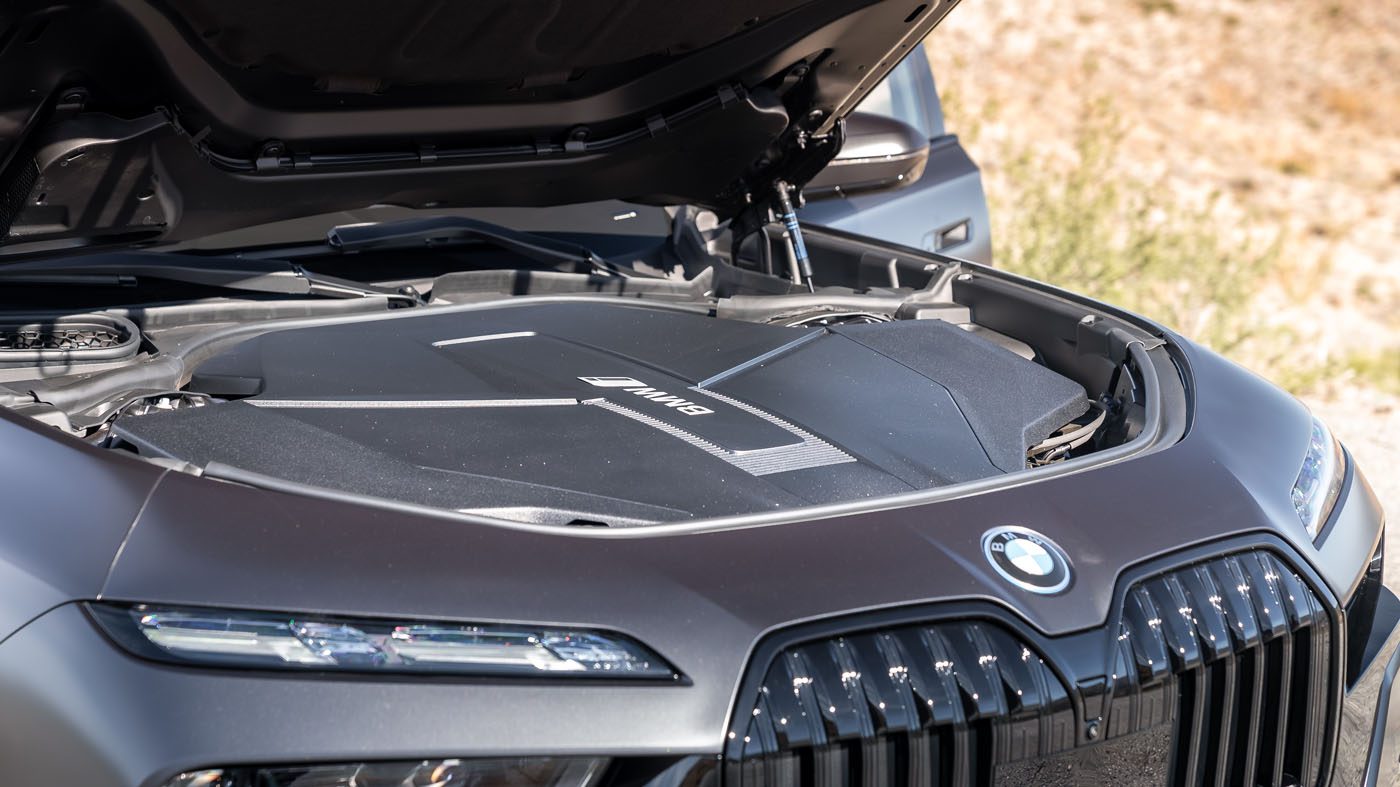
Its more traditional styling has its pros and cons, though. For starters, this i7 will do well with folks that don’t necessarily want to drive around in an egg-shaped aero-focused sedan. Instead, it gently nudges its customer base toward an electrified future without drastic changes. On the flip side, however, this i7 lacks some critical features found in cars envisioned as EVs from the start, such as a front storage space.
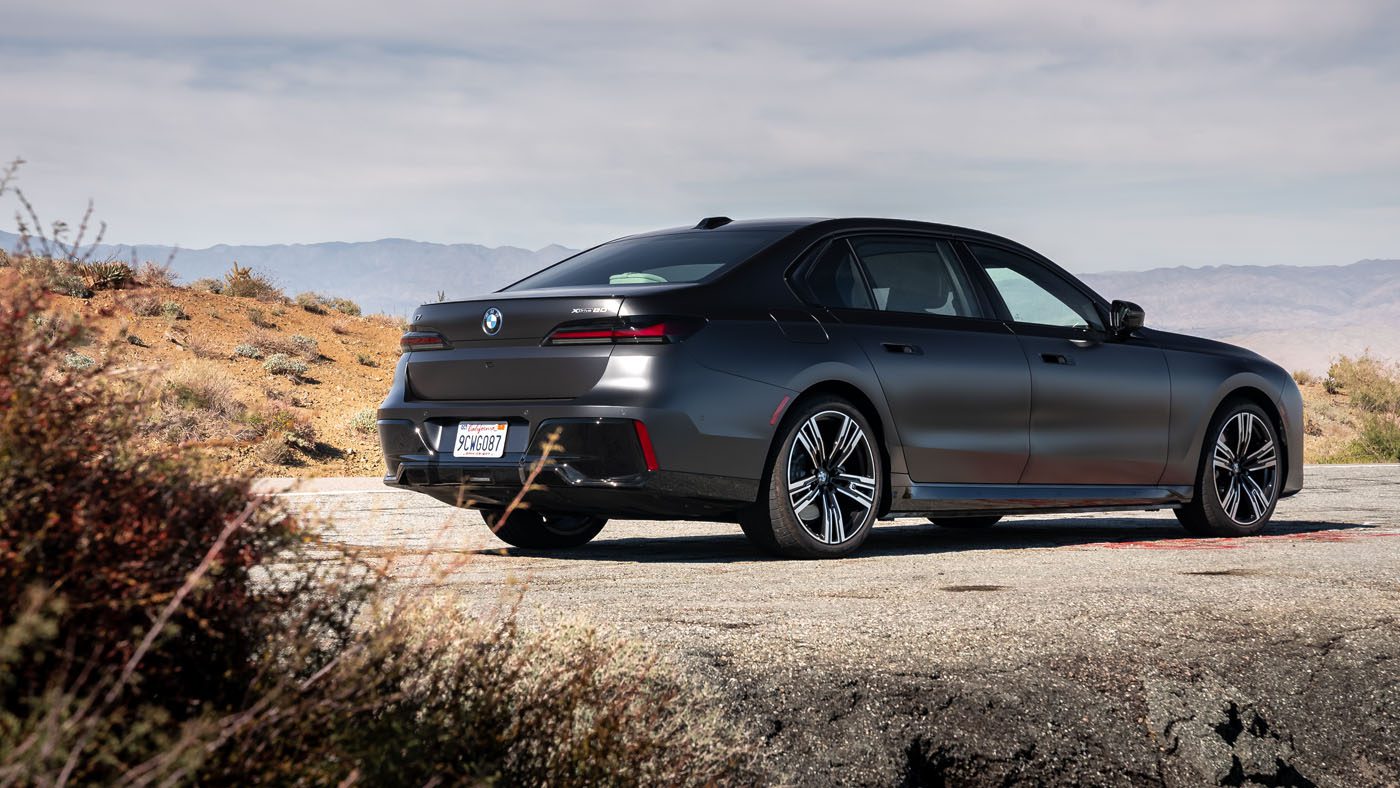
The i7 is quite a sizable machine. At 212.2 in long, 76.8 in wide, and 60.8 in tall, it is larger in every metric than its direct competitor, the Mercedes-Benz EQS 580 4Matic, and 5.1 in longer than its predecessor. This translates to both a formidable road presence and a truly roomy cabin. More on that later.
The elephant in the room, however, is its styling. Its front end builds on the G11 generation car that it replaces with even larger kidney grilles, thin split headlights, and sharp angles in its lower front fascia. Although these design choices look much better in person than in photographs, they’ll still likely split opinions like the rest of the brand’s current catalog.
However, one thing that will lead to a more general consensus is how the i7 performs on the road. Having driven this electrified sedan back to back with its gas-powered sibling, it is undeniably better with batteries. Although the German carmaker has gone to great lengths to mute the sounds and vibrations from its twin-turbocharged V8 up front, it can’t match the absolute silence the i7 delivers.
Like a proper flagship luxury sedan, the i7 is quiet and quick. No road noise, wind, or harsh road imperfections disturb the i7’s interior. It achieves Rolls-Royce levels of interior noise for substantially less money. However, thanks to two electric motors, one in each axle, the i7 still instantly delivers 536 hp and 549 lb-ft of torque. BMW estimates it’ll reach 60 mph in 4.5 seconds before continuing onto a top speed of 149 mph.
2022 Porsche Cayenne GTS Review: A Proper Athlete
With a 101.7 kWh battery in its floor, BMW estimates that the i7 will deliver up to 300 miles of range. It can charge at speeds of up to 195 kW, adding up to 80 miles in ten minutes plugged in. Like other German carmakers, BMW includes three years of free unlimited charging at Electrify America stations.
Although the i7’s electrified powertrain delivers excellent power and range, it comes at the cost of weight. While the V8-powered 760i xDrive has a curb weight of 4,969 lb, its electrified sibling tips the scales at 5,917 lb, a 948 lb difference. This is marginally heavier than the 5,888-lb EQS 580 but substantially more than the 5,236 Lucid Air.
The added weight rears its head in the handling department. The 760i xDrive is a surprisingly willing dance partner through the corners. It hides its size and weight well and, thanks to its clever air suspension, remains relatively flat through the bends. The i7, however, never lets you forget that it’s packing a few extra pounds. It’s not nearly as agile or grippy and leans considerably more as you push it. Thankfully, its electrified powertrain and all-wheel drive system allow it to shoot out of corners confidently.
From a daily driving perspective, none of this matters because the i7 is a star in traffic. Its air suspension complements its already quiet nature by seemingly eliminating road imperfections. The only vehicle I’ve driven in recent memory that achieves this is the Rolls-Royce Phantom, which starts at over $400,000. As far as large luxury sedans go, there’s no longer a clear winner. BMW and Mercedes-Benz are dueling it out on level ground.
Tap the i7’s door handles, and its new automatic doors swing open to reveal a genuinely stunning cabin. While its curved 12.3-in instrument cluster and 14.9-in central display screens are executed beautifully, it isn’t this car’s flashy tech that impresses most. Instead, its massively improved interior materials steal the show. From soft-touch leather seemingly everywhere to glass details throughout, the i7 screams opulence.
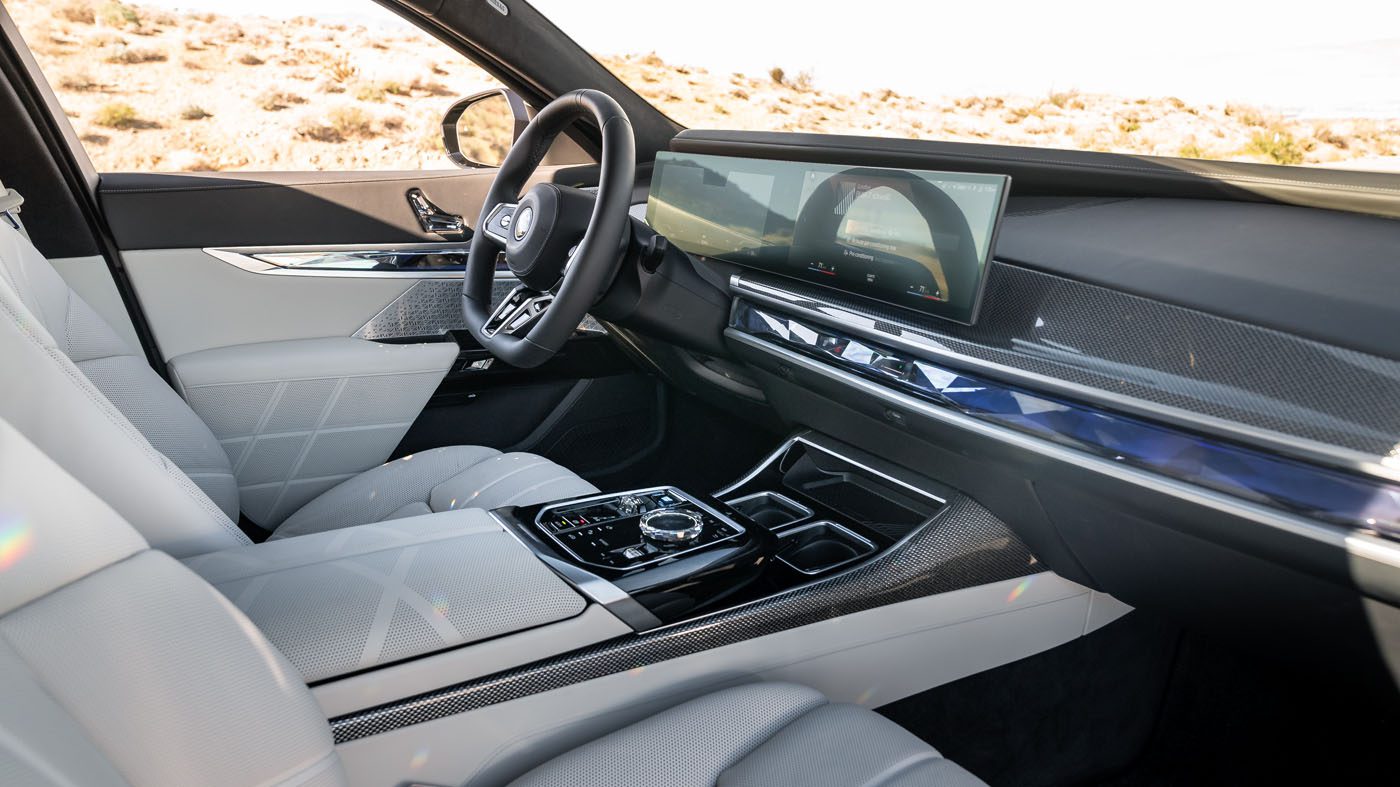
The G70 is not just an improvement over the outgoing model in terms of its interior. It is a massive leap forward. And aside from the excellent sound deadening mentioned earlier, it’s outstandingly comfortable. As standard, the i7 gets what BMW calls its “multi-contour” seats which offer both heating and cooling as standard in the i7 with an optional massage feature available as well. They’re plush, easily adjustable, and great to spend a lot of time in.
2022 Mercedes-Benz S580 4MATIC Review: Punching Way Above Its Class
The i7’s longer wheelbase translates to substantially improved interior space. With the optional Executive Lounge option, you get rear seats that can recline up to 42.5°. While other executive sedans have reclining seats, none offer the optional 31.3-in 8k touchscreen display found in my tester’s second row. It folds from the roof when called upon from a small touch screen embedded in the rear doors and offers vibrant colors.
At this price point and segment, these unique touches, like its seats, 8k screen, and automatic doors, set cars apart, and the BMW i7 is littered with them. It feels like BMW has given its flagship sedan significantly more attention than in the decade or so prior. It rivals not only its closest competitors but also knocks on the door of the Rolls-Royce’s that sit above it.
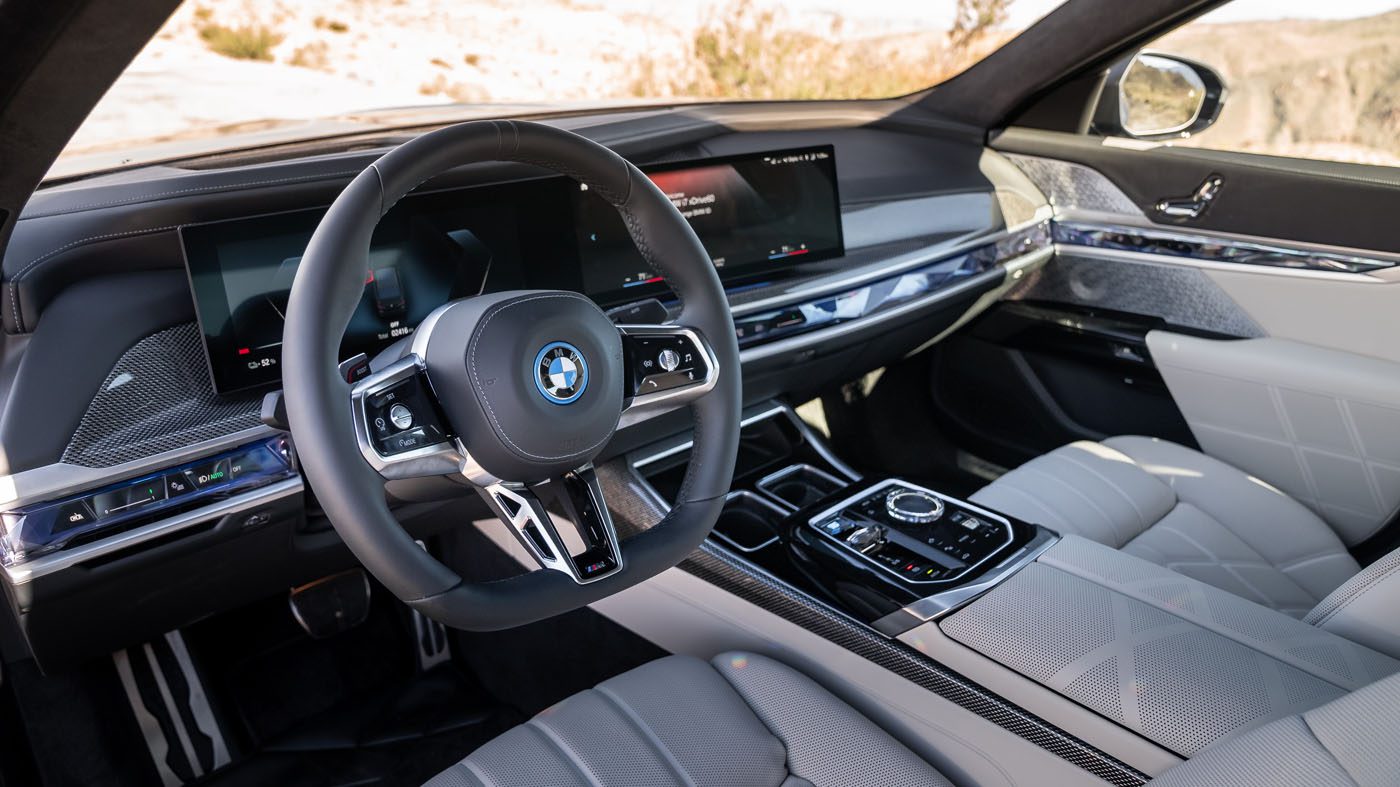
The 2023 BMW i7 starts at $119,300 plus $995 for destination fees. For context, the 760i xDrive mentioned earlier starts at $114,595, including destination, while the cheapest 740i starts at $94,295, including destination.
The 2023 BMW i7 may be the brand’s first electric flagship sedan, but it excels because of how much time and thought has gone into its development. From how it drives to how quiet and comfortable it is to ride in, the new seven is a much better car when batteries power it than fossil fuels.
BMW is taking a gamble with the i7, betting that luxury consumers will prefer a more traditional look than a futuristic aerodynamic aesthetic. Whether that is the case or not, there is no doubt the i7 is properly equipped to be one of the best luxury products the carmaker has ever made.
Tags: 2022 Reviews
2022 Porsche Cayenne GTS Review: A Proper Athlete
by Gabriel Vega
in Cayenne, Porsche News, Reviews
Most sporty SUVs represent a compromise. They attempt to be all things to all people, combining their practicality and size while offering enjoyable handling and performance. But while many contenders try to walk this fine line, almost none succeed. Making a tall SUV filled with all of the heavy tech and luxury materials that most buyers expect that is still genuinely fun to drive is a tall order. However, by simply ignoring the laws of physics, the 2022 Porsche Cayenne GTS achieves just that.
By most metrics, the third-generation Porsche Cayenne is a great luxury SUV. Big, tall, spacious, and with some of the best-build quality in the business, it delivers on its promises. However, step up to the GTS, which stands for Gran Turismo Sport, and you get a V8-powered family hauler that is quick in a straight line, agile in the corners, and with its direct steering, a true joy to drive. The Cayenne GTS is one of few SUVs that doesn’t sacrifice its driving experience for practicality.
Design/Styling
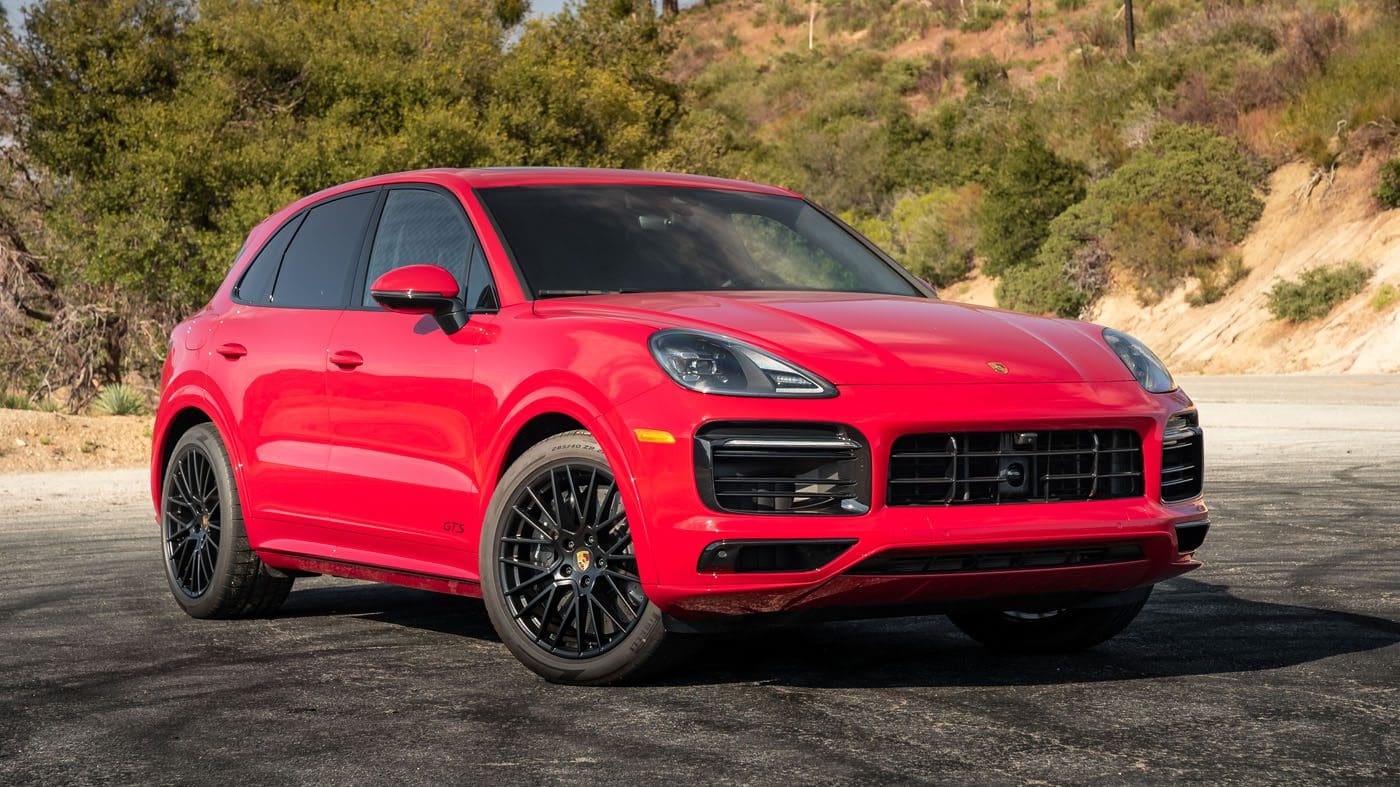
The 2022 Porsche Cayenne GTS wears its size well. Despite its sizable 193.7-in length, 78.1-in width, and up to 66.8-in height, it comes across as much smaller than it is. This is likely due in part to its soft-flowing lines. There’s not a harsh angle anywhere on this SUV’s bodywork, allowing its front-end styling to neatly transition through its sides and out to its rear end. Although this GTS isn’t a Coupé, its roofline still slopes considerably, tying in nicely with the rest of its subtle lines.
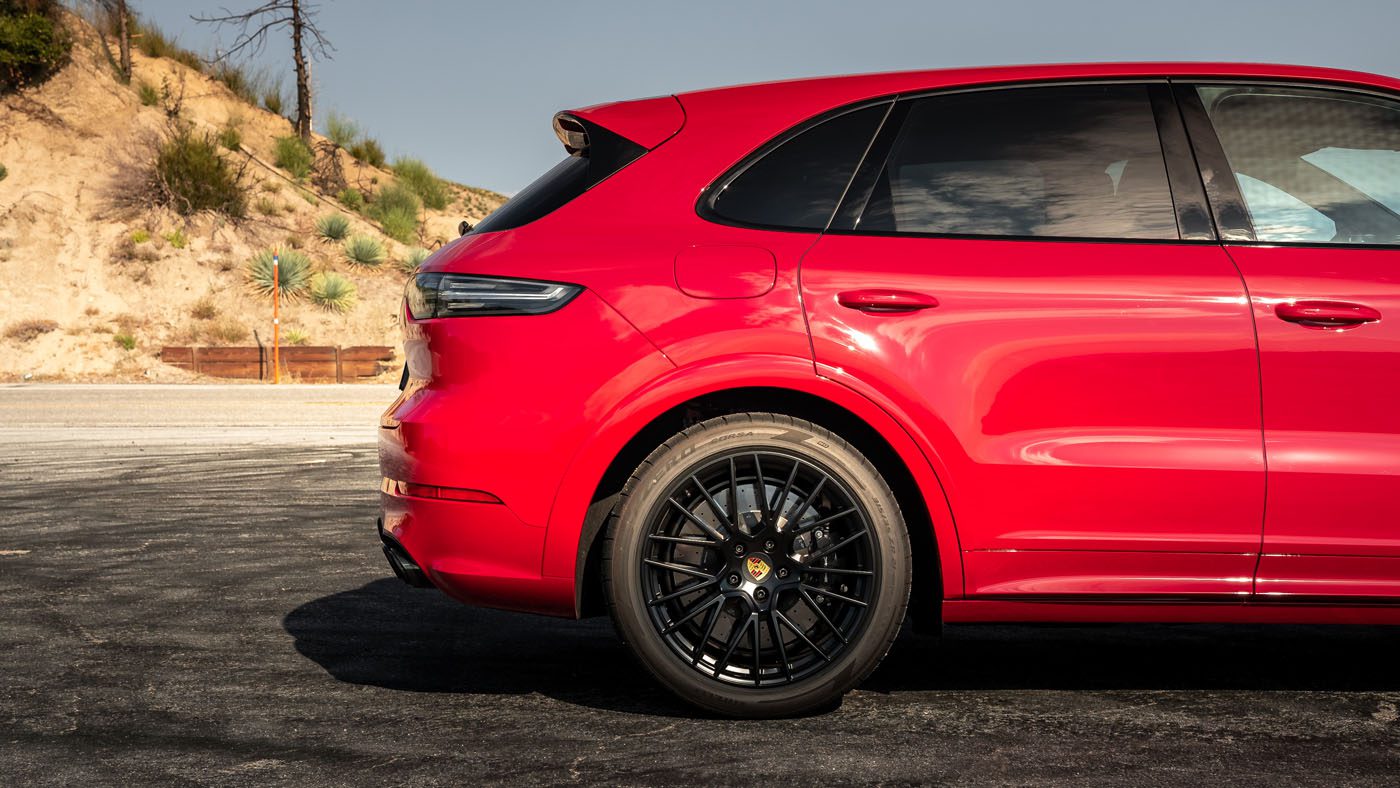
This third-gen GTS builds on the styling elements that made its successors popular with enthusiasts and normies alike. Like those earlier models, it doesn’t wear outer chrome trim or any other details that exist purely to draw attention. Take its standard satin black 21-in RS Spyder wheels, for example. Despite showcasing a sporty multi-spoke design, they’re executed in a subtle shade that doesn’t stand out for the wrong reasons.
2022 Mercedes-Benz S580 4MATIC Review: Punching Way Above Its Class
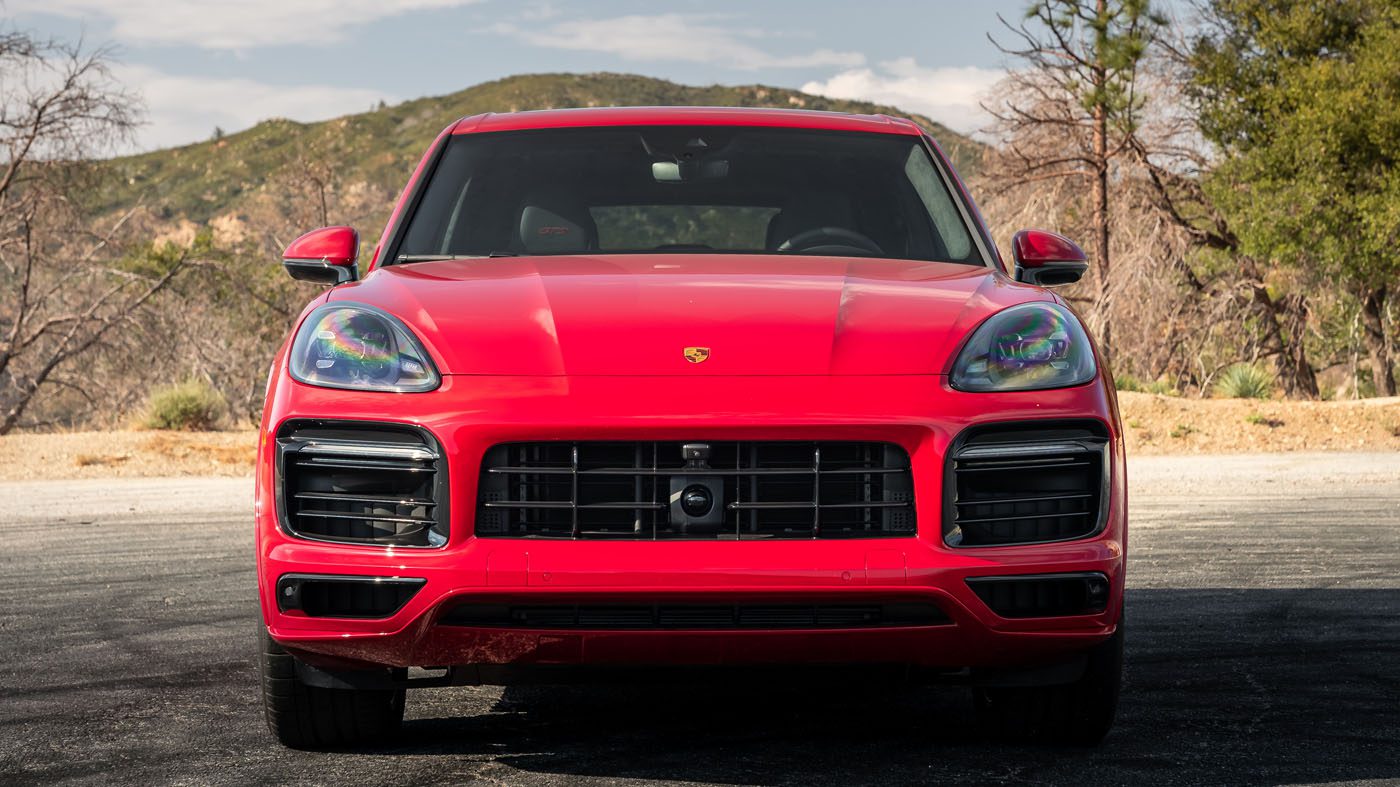
The same goes for its intakes up front and rear diffuser out back. These are unique to the GTS but don’t immediately appear so. At a glance, it’s tough to tell that you’re looking at an SUV with a twin-turbocharged V8 under its hood. It’s only when you step closer and look at its darkened headlights, taillights, black badges, and gloss black elements throughout does it become apparent that you’re looking at something special.
Despite firmly positioning itself as a sporty SUV, the Cayenne GTS retains an elegance that its closest competitors often lack. Even my tester, with its $3,150 Carmine Red exterior finish, flies under the radar. It knows what it is and sees no need to shout about it.
Power/Handling
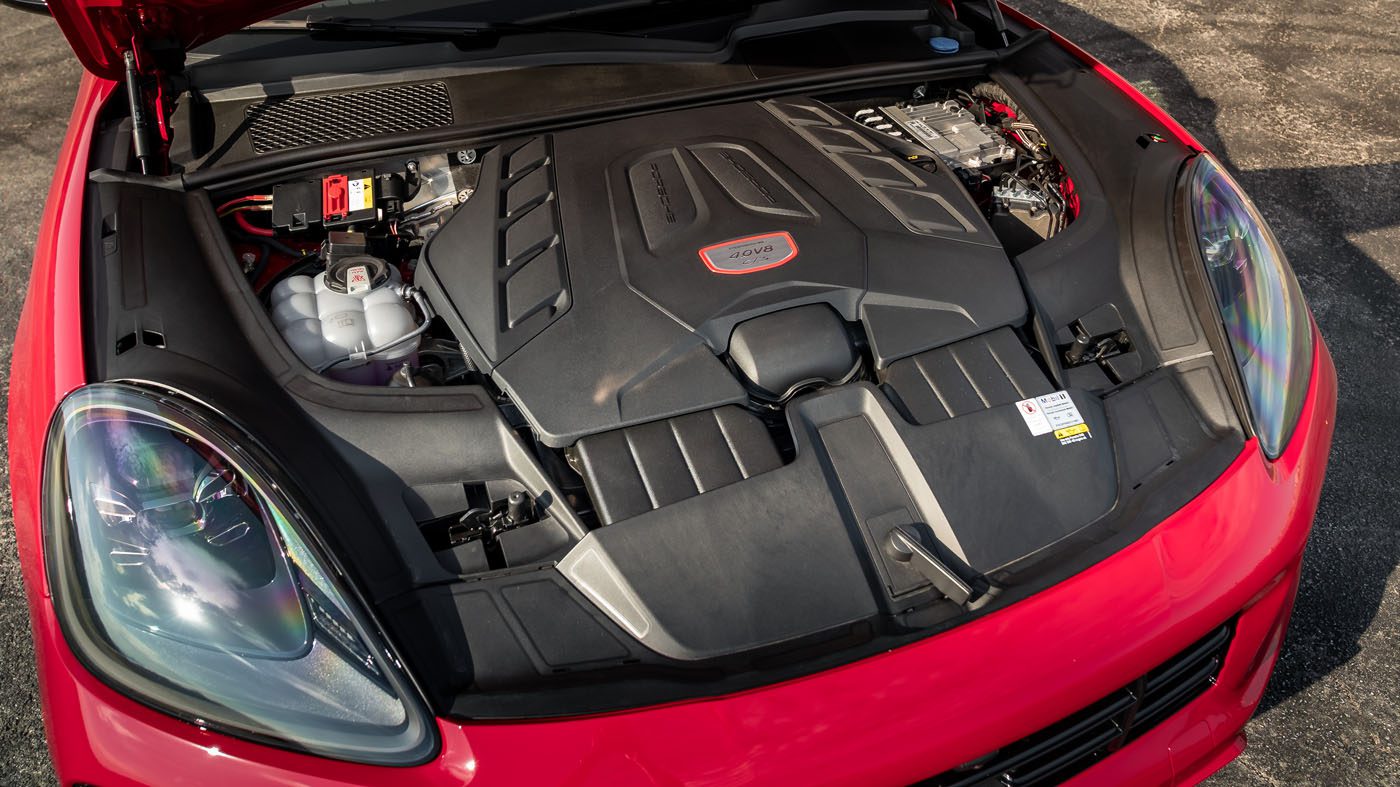
As soon as you turn the key and fire the Cayenne GTS’ 4.0-liter twin-turbocharged V8; it begins to shatter misconceptions. This SUV burbles at idle like a muscle car, and once its valves are open, its engine’s throatiness only builds. Porsche’s standard Sport Exhaust system allows this engine to sing its song without muffling it to retain a luxurious experience. Although it’s piped via the cabin’s speakers, the sound still comes across as authentic and not overly digital.
Step on the gas, and it’s hard to believe that this SUV only develops 453 hp and 457 lb-ft of torque. Despite lacking a proper PDK transmission and counting on a Tiptronic S eight-speed automatic, the Cayenne GTS still rips gear changes and, with a standard all-wheel-drive system, makes full use of its available power, making it feel like much more than it actually is. Flat out, it’ll hit 60 mph in 4.5 seconds before continuing onto its 168 mph top speed.
Since modern performance stats have largely spoiled us, those acceleration figures may not seem all that impressive, but when considering the GTS’ 4,954-lb curb weight, they’re formidable. And it feels just as intense from inside the cabin. With peak torque at 1,800 rpm and very little turbo lag, this Cayenne’s aggressive pull in a straight line brings into question why anyone would step up to a Turbo or Turbo S.
Raw speed aside, the GTS impresses with its composure. Slam the gas, and it doesn’t rock backward like many high-riding competitors. The same goes for the corners, where even during an aggressive run up a canyon road, the GTS remains perfectly stable as if the laws of physics don’t apply. Porsche achieved this by revising its active dampers and three-chamber air suspension system, which combats body-roll and lowers the GTS’ ride height by nearly 1.2 in when compared to a Cayenne S.
Around town, the GTS is undeniably firmer than its S sibling, but not excessively. It’s the almost unavoidable trade-off of having an SUV that corners as well as a proper sports car. Road imperfections are more noticeable, but not to the detriment of this SUV’s driving experience. The GTS never proved uncomfortable or unforgiving, even through Los Angeles’ pothole-filled city streets.
2023 Rolls-Royce Phantom Review: A Step Above The Rest
The Cayenne’s driving experience is made not only by its performance but by how communicative it is. Even on the tightest canyon roads, the GTS is an agile machine. With incredible front-end grip, it turns in both quickly and neatly. It’s eager to change direction, masking its substantial curb weight. Unlike most competitors, its steering is direct and offers excellent feedback. Its smaller sporty steering wheel only adds to the experience, as it’s the complete opposite of the sizable options found in most luxury SUVs.
My tester wore a set of $9,980 carbon-ceramic brakes, which seemed utterly unphased, regardless of how hard I pushed them. Although the stock steel brakes would do fine as well, even this pricey option is only a drop in the bucket when talking about an SUV that costs $143,320 as-tested, so you might as well have them.
Interior/Tech
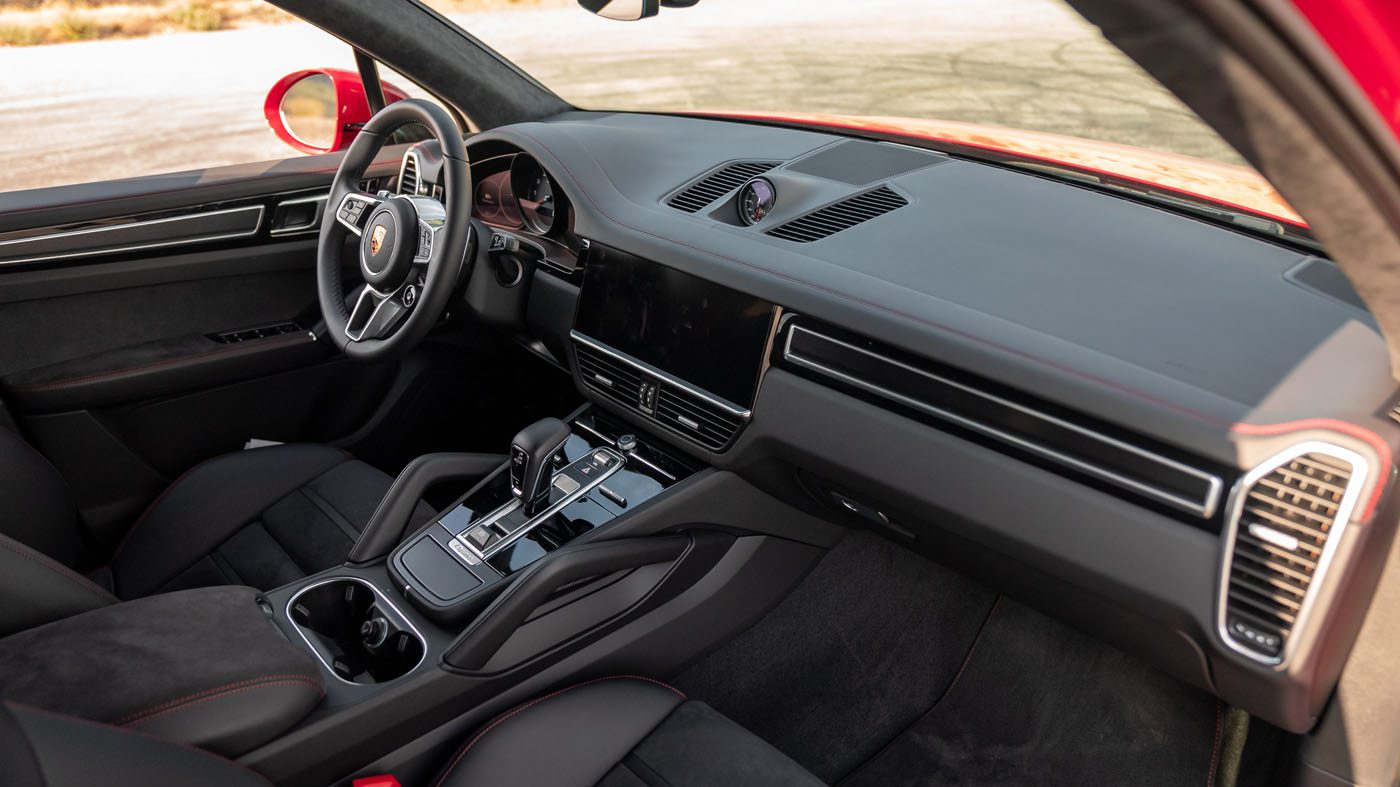
Inside, the 2022 Porsche Cayenne GTS doesn’t forget its luxury roots. Take its $420 18-way adjustable Adaptive Sport Seats, which are available as an upgrade to its $4,030 Premium Package. Although they tighten enough to hold you in through the corners, they still prioritize all-around comfort for daily driving. With their excellent levels of adjustability, it’s easy to find a comfortable driving position. They allow you to lower to the point where you feel like you’re down low instead of towering over the surrounding small cars in traffic.
Although a standard Cayenne starts much closer to $70,000, its build quality is still impressive in this $143,320 GTS. My tester builds on this solid foundation with its $2,970 GTS interior package, which takes the standard black leather and Race-Tex combination and adds embroidered headrests, and Carmine Red stitching on the seats, doors, center console, and dashboard. The package brings in some of the bright exterior finish into the cabin without overdoing it.
On the tech front, the GTS counts on the same 12.3-in central touchscreen as other Cayenne models, which features both Apple CarPlay and Android Connectivity and the sixth-generation PCM infotainment system. Although I prefer smartphone connectivity for its ease of use, the Cayenne’s standard system is sleek and easy to use, even including red accents to match the rest of this SUV’s aesthetic.
Pricing
The 2022 Porsche Cayenne GTS costs $109,000 plus a $1,350 delivery fee. My tester, with its notable options like its $3,150 Carmine Red paint, $3,590 Porsche Dynamic Chassis Control, and $9,980 Ceramic Brakes, elevate that base figure to $143,320.
Similarly-priced competitors include the BMW X5 M, GLE 63 S Coupe, and Audi RS Q8, and while all of these make more power than the GTS and offer greater straight-line performance, none can match it in terms of pure driving fun. Besides, those interested in straight-line speed can continue climbing the Porsche ladder to the Turbo, Turbo S, or Turbo GT.
Closing Thoughts
The 2022 Cayenne GTS doesn’t sacrifice its driving experience in the name of cargo space. It’s quick, agile, and above all else, fun to drive. From its powerful V8 engine that delivers ample torque and a burly note to its flat handling characteristics and incredible grip, this SUV can go toe to toe with a proper sports car. Anyone who buys one for it won’t feel short-changed on a twisty road.
Ditch my tester’s bright Carmine Red exterior finish, and you’re left with a family hauler that is fun when you want it but flies under the radar for daily driving. It’s subtle, elegant, and not boastful about its capabilities. Although it’s not the quickest, most powerful, or most expensive SUV on the market, its lack of compromises makes it one of the most enjoyable.