



Performance Car Sales Are Depressingly Low
Chalk it up to any number of factors, but one thing is clear—it is not a good time to be selling enthusiast cars.
In the car business, the first week of October means quarter-three sales data from most automakers. This gives us a good look at how cars are selling as we pass through the 75-percent mark in 2025. We’ve decided to focus on enthusiast models under $100,000, in this time of a messy transition to electrification, tariffs, economic uncertainty, wage stagnation and inflation, and easing of fuel-economy and emissions standards in the US.
Put another way: It’s a bad time for performance cars, and the data bears this out. We’ve looked at sales of performance models through September of this year compared to the same time period last year, and almost all of them are down.
This doesn’t represent a complete picture of enthusiast-car sales, as most automakers don’t break out individual trims of a model line. So, we don’t have broken-out sales data for BMW M cars, the Honda Civic Si and Type R, Cadillac’s Blackwings, Toyota GR Corollas, and many others. Porsche also hasn’t published its sales data yet.
Still, there’s a clear picture here. And it’s not a pretty one if you’re an enthusiast.
BMW Z4
YTD 2025: 1,603
YTD 2024: 1,471
YoY Change: +8.9%
We start alphabetically, and with a rare bright spot here. The BMW Z4 is in its eighth and final year of production, but it’s going out on a high. Last year, it did well. So far in 2025, it’s doing even better. That’s probably thanks to the manual-transmission Z4 M40i Handschalter package, which has proven something of a small hit. But the Z4 ends production soon, and we doubt it’ll be replaced anytime soon.
Chevrolet Corvette
YTD 2025: 17,718
YTD 2024: 25,711
YoY Change: -31%
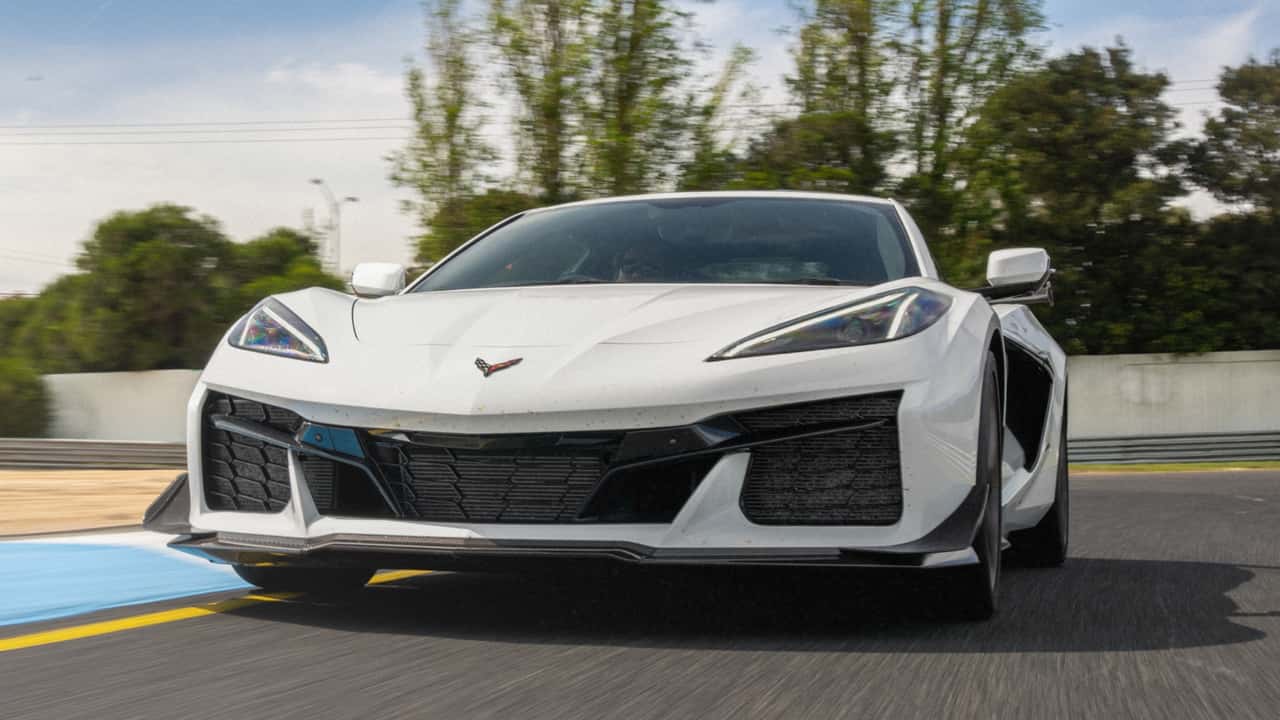
Despite the launch of the new Nürburgring-champ ZR1 and ZR1X, this hasn’t been a great year for the Corvette. Perhaps customers are waiting for the lightly updated 2026 model, with its much reworked interior, or to get their hands on a ZR1 variant, with production of the turbocharged Vette set to ramp up in a big way for next year. Still, now may be a great time to get a deal on one of the best sports cars on sale.
Dodge Charger (vs Charger/Challenger in 2024)
YTD 2025: 8,943
YTD 2024: 56,764
YoY Change: -84.2%
This is, admittedly, a very unfair comparison. The new Charger replaces both the old Charger and Challenger, and Dodge has been slow in ramping up production, with straight-six and four-door models only hitting dealerships recently. But, customers aren’t fond of the direction the car took, ditching the V-8 for turbocharged ‘six or all-electric power. Customers took advantage of their last chance to get the old version last year, driving up sales, too. In any case, Dodge is scrambling, cancelling both entry- and top-level versions of the electric Charger Daytona, and quite possibly trying to put the V-8 in a car never intended to have it.
Ford Mustang
YTD 2025: 32,818
YTD 2024: 36,485
YoY Change: -10%
The same caveats for the Charger don’t apply to the Ford Mustang. And the pony car hasn’t seen nearly as dramatic a drop as the Charger, but being 10 percent down isn’t great. Even Ford’s otherwise successful employee pricing for everyone scheme, meant to offset tariff-inflicted price increases, couldn’t totally help the Mustang. Still, Ford CEO Jim Farley says the company is investing big in the Mustang, so watch this space.
Mazda MX-5 Miata
YTD 2025: 7,299
YTD 2024: 5,780
YoY Change: +26%
Some good news for a change. The fourth-generation Miata is now well over 10 years old, but it’s still one of the best sports cars at any price, and buyers are responding. This is also the first full year of availability for the updated “ND3” version of the Miata, and also the roadster’s 35th birthday, which Mazda is celebrating with an anniversary edition. Still, as the Miata is made in Japan, it’s now subject to a 15-percent tariff, which could push the price further beyond the $30,000 mark.
Nissan Z
YTD 2025: 4,822
YTD 2024: 2,175
YoY Change: +121.7%
It’s the final bit of good news on this list, but it is particularly good news. The Nissan Z has enjoyed a remarkable comeback story. Nissan was slow to build them at first, but now, the sports car is selling swiftly. Like many other Nissan models, the Z benefits from a lot of incentives on the hood at the moment, but it’s also a compelling product. It’s more powerful than a Toyota Supra and a lot cheaper, too. With a manual Z Nismo on its way too, hopefully the Nissan sports car can keep up its momentum.
Subaru BRZ
YTD 2025: 2,284
YTD 2024: 2,323
YoY Change: -1.7%
This year, the Subaru BRZ has seen big price increases, though thankfully, they haven’t impacted sales too much thus far. Though, BRZ sales were way down last year compared to 2023. For 2026, the BRZ is effectively getting a lot more expensive, though, as Subaru is cancelling the slow-selling base model, which brings the starting price up to a little over $37,000.
Subaru WRX
YTD 2025: 8,139
YTD 2024: 13,545
YoY Change: -39.9%
Perhaps more worrying for Subaru is falling WRX sales. It too has seen a big price increase this year, with the MSRP rising to $38,920 for the entry-level “Premium” model. The WRX Premium started the 2025 model year at $36,920, and though Subaru didn’t blame tariffs for its across-the-board price increases, surely, they had an effect. And bear in mind that the 2024 WRX started at $33,855 for its lower-spec base model. So, basically, the WRX is a $40,000 car now—no longer the source for cheap speed that made it so desirable, and sales really seem to be hurting.
Toyota GR Supra
YTD 2025: 2,009
YTD 2024: 2,329
YoY Change: -13.7%
The Toyota Supra is soon to bow out, with a replacement model still a ways away, and likely not a co-development with BMW. Its sales are only down a little over 300 units so far this year, but that corresponds to a big percentage swing when volumes are this low. And it also comes as Nissan Z sales continue to grow, with last year being the first where the Z outsold the Supra.
Toyota GR86
YTD 2025: 8,107
YTD 2024: 9,643
YoY Change: -15.9%
It’s a similar story for the GR86 as its bigger sibling Supra, and its mechanical twin Subaru BRZ. Toyota has managed to keep the base price lower than Subaru’s, with the entry model costing $32,470, but this still hasn’t been a good year for the GR86. It is, admittedly, getting a bit old, with only a handful of small updates and special-edition models since its 2021 release, but it seems more a victim of larger macroeconomic factors.
Volkswagen Golf GTI
YTD 2025: 5,700
YTD 2024: 8,404
YoY Change: -32.2%
In early summer, VW finally brought out the much-improved Mk8.5 version of the GTI, but it also killed the popular manual model, too. It seems enthusiasts bought manual GTIs while they still could last year, and sales for this year haven’t been quite so strong. VW has kept the entry cost admirably low at $33,670—though it will rise to $35,865 for 2026— and despite being dual-clutch only, the GTI is still a very compelling car. Perhaps sales will improve as more Mk8.5 models make their way from Germany.
Volkswagen Golf R
YTD 2025: 2,684
YTD 2024: 3,109
YoY Change: -13.7%
It’s much of the same story with the Golf R as it is the GTI, though the sales drop this year hasn’t been as big. The Mk8.5 brought some needed improvements, but dropped the manual option, too. And unlike the GTI, the R is an expensive car, with a $48,325 base price for the 2025 model that’s set to increase beyond $50,000 for 2026.
The Nissan Xterra Officially Returns In 2028: ‘Dealers Are Super Excited’
It’s coming back in 2028 with a hybrid V-6 powertrain.
By: Adrian Padeanu
Oct 3, at 3:00am ET
Share
2
Comments
Nissan has been making headlines in recent months for its efforts to get back on track after hemorrhaging money for an extended period. While much of the focus appears to be on cutting costs wherever possible, those measures are meaningless without bringing fresh products to market. The new Leaf and Sentra are a solid start, and the lineup will improve further in a couple of years with the return of a beloved nameplate.
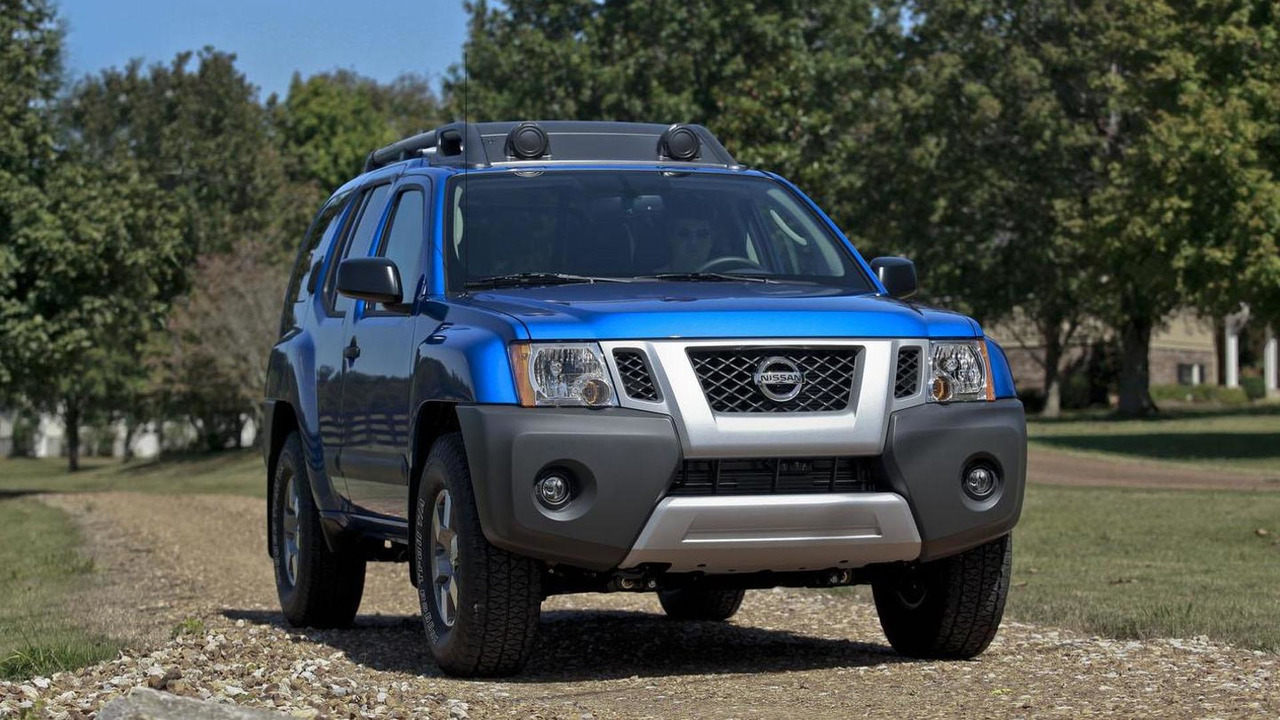
No longer just a rumor, the Xterra is set for a comeback in 2028. Nissan Americas chairman Christian Meunier confirmed the news in an interview with Bloomberg, even sharing some early details. The rugged SUV will be powered by a V-6 hybrid setup and built at the Canton plant in Mississippi. A more upscale Infiniti version is also under consideration.
Meunier revealed that the Xterra will ride on the same body-on-frame platform as the Frontier, which makes sense given that the pickup truck is also assembled in Canton. Unsurprisingly, “dealers are super excited” about reviving a nameplate the company sorely needs. Body-on-frame SUVs are highly profitable, and Nissan wants a bigger slice of that market by targeting customers seeking something smaller than the Armada.
Pricing is still far off, but the new Xterra will certainly undercut the base Armada, which starts at $61,030 for the 2026 model year. The Frontier begins at $33,845, but its SUV sibling will cost more, especially with an electrified V-6 as standard.
Top Videos:
The Ram RHO Is an Off-Roading Monster | Review
Watch More
Hints of the Xterra’s return first surfaced in April at the New York Auto Show, when Nissan Americas senior VP and chief planning officer Ponz Pandikuthira told Motor1: “We want to bring an Xterra back, we’re working very closely on it.” A few months later, Automotive News reported from a dealer conference in Las Vegas that the SUV’s comeback was confirmed for 2028.
At that same meeting, Nissan also told dealers a Z Nismo with a manual was coming; news later made official by Meunier. With both of those details proven true, there’s good reason to believe a third tidbit from the meeting: a new Q50 sedan featuring a twin-turbo V6 with 400 horsepower and a six-speed manual borrowed from the Z.
Still, things will likely get worse before they get better. The next few years could be among the toughest in Nissan’s history. The company is closing seven factories and laying off 20,000 employees as it downsizes and optimizes operations. Annual production capacity will shrink from 3.5 million to 2.5 million units, and Nissan has even created a dedicated team to find additional cost-cutting measures. The situation is that dire.
CEO Ivan Espinosa hopes the sweeping restructuring and upcoming products will turn things around for the struggling Japanese brand. The new Xterra is certainly a step in the right direction, and it can’t come soon enough. Ideally, enthusiasts will also get that new GT-R they’ve been promised.
The Next Porsche Boxster/Cayman Might Keep the Flat-Six, But Go Hybrid
The new 718 might use an electrified flat-six borrowed from the 911 GTS.
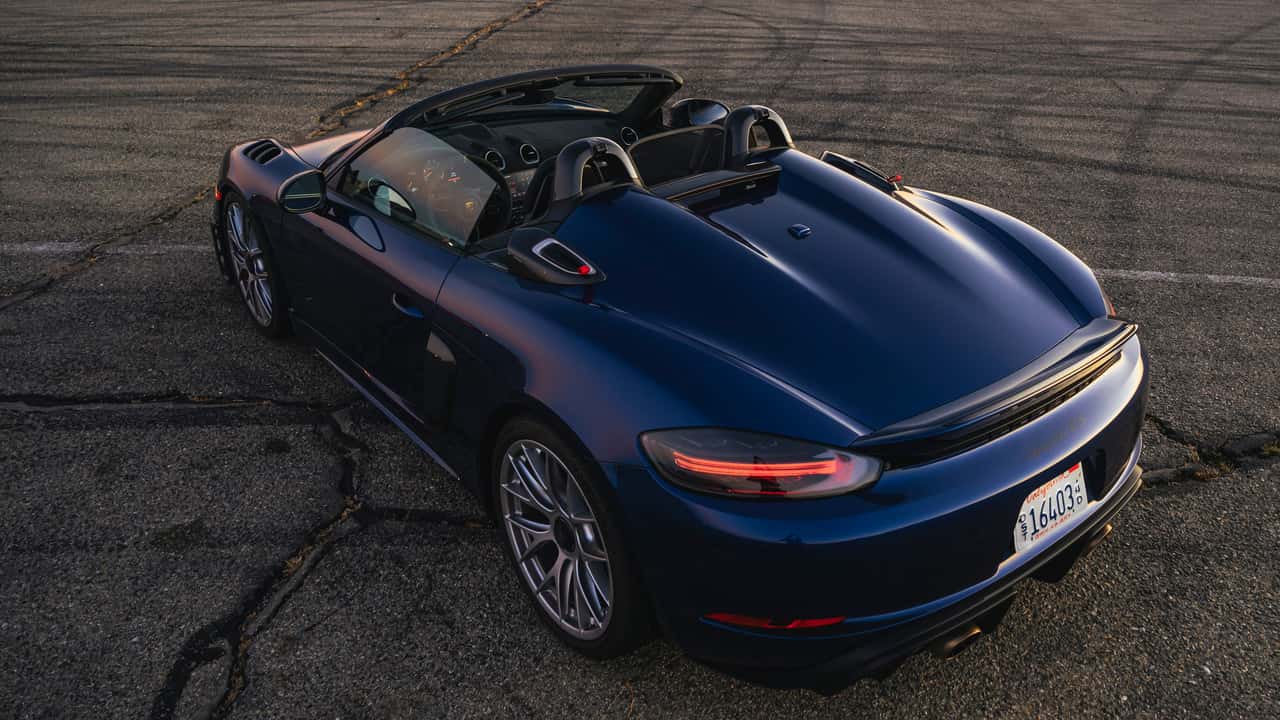
Photo by: DW Burnett / Motor1
By: Adrian Padeanu
Oct 3, at 4:08am ET
Share
2
Comments
October marks the end of production for the current-generation Boxster and Cayman. What comes next? Well, it’s complicated. Porsche initially announced that the 718 would be available only in electric form, but then the automaker changed its mind. Those EVs are still on the way, but they’ll be joined by combustion-powered versions. Here’s the kicker: the ICE models will be considered the “top” versions, positioned above the purely electric cars.
A new report makes things even murkier. The next-generation Boxster and Cayman with gas power may be electrified as well. Autocar claims the ICE 718s will adopt a hybrid setup pioneered by the latest 911 GTS, not only to limit development costs but also due to packaging constraints. The new 3.6-liter flat-six is slightly shorter than the engines used in non-electrified 911s, making it a better candidate for the smaller sports cars.
At this point, you might wonder whether the four-pot has a future. Apparently, it doesn’t. Porsche is unwilling to tweak the turbocharged 2.0-liter mill to meet Euro 7 regulations. Consequently, the next 718 are likely to be offered exclusively with six cylinders. That shouldn’t come as a surprise, since “top” models are hardly expected to rely on small engines.
Because keeping a gas engine in the Boxster and Cayman wasn’t part of the original plan, the flat-six models aren’t arriving anytime soon. Even though production of the outgoing generation is about to end, the direct replacements won’t land until near the end of the decade. When they do eventually arrive, Porsche could market them as continuations of the Boxster Spyder RS and Cayman GT4 RS, given their place at the top of the hierarchy.
Top Videos:
Keep Watching
9
The Ram RHO Is an Off-Roading Monster | Review
Watch More
Weight will be a concern with the added hardware of the T-Hybrid setup, but it won’t be nearly as significant as in the pure EVs. In the 911 GTS, the 1.9-kWh battery pack that powers the electric motor and single turbo weighs just 60 pounds. Altogether, the GTS tips the scales at only 103 pounds heavier than its non-electrified predecessor. That difference isn’t solely due to the T-Hybrid, though, since the car now comes with more standard equipment. As a result, the weight penalty for Boxster and Cayman hybrids should also be negligible.
In the meantime, Porsche remains determined to launch the electric 718. While details are still scarce, the car is expected to share underpinnings with the production version of Audi’s Concept C. In a recent statement to Motor1, Daniel Schuster, Spokesperson for Technical Development at Audi, confirmed the future sports car will ride on a platform “that will be shared within the [Volkswagen] Group.”
He also ruled out fitting the TT-esque model with a gas engine, leaving that niche to the Boxster and Cayman.