



Polestar 2, 3, and 4 Performance Triple Test
Starting from a blank canvas, Polestar has been developing its own formula for performance EVs. Ken Pearson tests the current range in a comprehensive triple-test.
Polestar’s ascension from Volvo’s touring car team to in-house tuner and then to a standalone manufacturer has been rapid. Backed by Geely, it has gone from fettling turbocharged saloons to building a family of EVs, and making a Performance-badged variant of each, in less than two decades.

Some driver-focused EVs aim to be everything in one package: the most powerful car with the longest range, and performance stats to make hypercars jealous while still offering space for the family. But none of the three cars I’m handed the keys to today get close to the top of the performance leaderboards in their respective classes.
Has Polestar instead focused more on the immeasurable sensations than the measurable drivetrain outputs? And are they stamping their mark on the driver-centric EV formula, or is there more to do beyond uprating the motors and dampers?
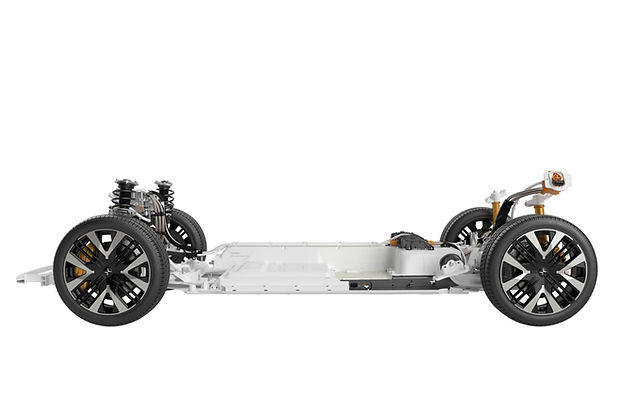
The current model range is made up of the 2 fastback saloon, the 3 large SUV, and the 4 coupé-SUV. For a trio of electric cars, they contain some refreshingly old-school hardware such as manually adjustable dampers and limited-slip differentials, and begin their chassis development on frozen lakes. Joakim Rydholm – Polestar’s Head of Vehicle Dynamics – is also a rally driver in his spare time and favours analysing the movements of each car in slow motion on the snow with no driver aids, building the electronic aids around each car’s inherent stability.
For me, there’s no snow in sight, as the setting for this triple-test is Millbrook’s Hill Course: a short, but challenging one-way B-road. It rises and falls, with off-camber hairpins that test a car’s brakes, steering, and powertrain in equal measure. It’s a good place to find out whether there’s a clear family resemblance united by Polestar’s Performance moniker, or whether they’re three distant cousins sharing a surname.
Polestar 2 Performance

Adaptive dampers are now standard equipment in most mid-sized performance cars, but a unique feature of the Polestar 2 is a quartet of manually adjustable Öhlins dampers. They can be set through 22 stages of firmness, but rather than being configurable via a menu on the infotainment system, tweaking the setup requires getting underneath the car, adjusting each corner, road testing, and repeating the process until the sweetspot has been found.
Likewise, there’s no “Sport” mode, just the option to alter the steering weight and energy recovery settings. The power delivery from the two electric motors is fixed, with a combined 469bhp and 546lb-ft (740Nm) biased towards the rear. The throttle is precise and linear when pressed gently, but standing on it makes the numbers on the speedo rise rapidly with the mid-range torque peak. Reaching 62mph takes 4.0 seconds from rest, with the top speed limited to 127mph.

Taking a long, tightening right-hander, the weight is quickly shifted from left to right as we enter a low-speed hairpin. The car remains stable despite the transfer of mass, with the rear-biased power split helping to push the 2 briskly towards a double-S-bend.
The neutral balance is maintained as we head up a steep incline to take the next cambered hairpin. The mixture of Brembo and regenerative braking is blended perfectly, with no dead-zone or noticeable crossover between friction and electronic anchors detectable. The steering weight itself sits somewhere between that of a hot hatch and a fast saloon.

The handling and performance are well-matched – perhaps more S than RS, but that’s what I tend to prefer. While the ride is certainly at the top of the firm-but-fair scale, the trade-off is a car that doesn’t feel anywhere near its two-tonne kerb weight. In the words of Craig, it is “a total grip machine,” helped by the Continental Sport Contact 7 tyres on our test car.
The 2 Performance is subtly distinct from the models lower in the range. The only visual differences are the 20” forged wheels, gold callipers, a white square in the grille, and a higher power output printed onto the door stickers. I had some seat time in a front-wheel drive variant a few years ago, but the dual-motor 2 Performance model feels like the car it was designed and engineered to be from day one.
Polestar 3 Performance

At first glance, the brand’s second standalone model takes a more conventional approach to creating a fast SUV, by fitting the customary twin-motor drivetrain in a high-riding body and placing air suspension at each corner. But a closer look at the 3 reveals open air channels at both ends, a gently curved glass roof, a prominent rear spoiler, and the same gold brake callipers and forged alloy wheel design as its smaller stablemate.
Here, though, the rims have grown to 22-inch in diameter and wear bespoke Pirelli P Zero tyres. Inside, the minimalist cabin design sees a lower dashboard, an unshrouded instrument cluster that moves with the steering wheel, a larger infotainment display with an improved user interface, and new seats with flatter bolsters.
What can’t be seen is the piece of hardware that makes the Polestar 3 Performance unique in its class: a limited-slip differential on the rear motor. It uses electrically operated dual-clutch packs, allowing it to distribute torque and improve agility whether the car is speeding up or slowing down. Most of its rivals opt for rear-wheel steering to aid turn-in and low-speed manoeuvring, but the fitment of some relatively old-school tech looks to reward high-speed driving – at least in theory.

The car weighs in at close to 2.5 tonnes, thanks in part to the 111kWh battery in the floor. Although the 3 can escape a start line briskly thanks to its 510bhp and 671lb-ft (910Nm) powertrain, it can’t escape the laws of physics. However, it does a good job of working around them. Offering more customisation than its smaller sibling through the central infotainment display, the car’s steering, suspension, and power delivery can be adjusted. Naturally, I set these to their heavy, firm, and Performance settings respectively.
This gives a more binary response to the pair of electric motors, and the 3 wastes no time in building speed when asked, but also in maintaining it as the Hill Course begins to climb. The steering rack feels light but quick, and the car is easy to place using the peaked bodywork over the Thor’s Hammer-shaped headlights as reference points.
While the output from the motors is identical on each axle, the wider tyres and diff at the rear make their presence known by tightening my line on a long right-hander and not flinching at the subsequent sharp left. The car feels anchored to the tarmac at the rear, allowing the front to move freely.

The diff’s effect isn’t quite like that of a front-drive hot hatch, but a series of S-bends allows the torque to be noticeably shuffled from side to side, letting the car stay true to the line I ask for whether accelerating or braking. I always enjoy making large cars move briskly, and the 3 can be hustled through off-camber corners at an impressive rate.
Those pesky laws of physics can’t stop the brakes from feeling like they’re being worked incredibly hard at times. Overall, however, the car feels light on its feet and corners with a natural fluidity that the BMW iX and Mercedes-AMG EQE 53 SUV could only dream of. In short, the 3 Performance is easily the best handling car in its class.
Polestar 4 Performance
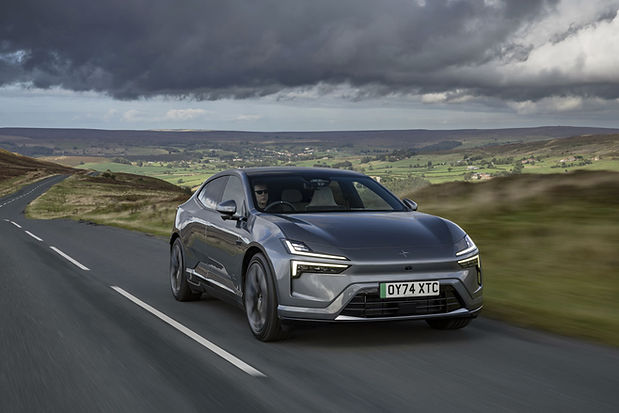
The newest addition to Polestar’s range could be seen as the middle child. It has a larger footprint than the 2, but a slightly smaller cabin than the 3. It has an interesting profile, with an angular nose, a pair of split, segmented headlights, and short overhangs at either end. The long wheelbase is punctuated by the same forged wheel design as the previous two test cars, but this particular 4 has body-coloured lower cladding as opposed to black.
Bucking the trend which makes cars appear to ride higher, this dark grey example looks hunkered down to the ground.
Behind the metalwork, the 4 Performance uses adaptive suspension from ZF, but opts for steel rather than air springs. It’s also the most powerful Polestar at present, boasting 536bhp from its pair of motors, while torque is the lowest of the trio at a combined 506lb-ft (686Nm). Taking 3.7 seconds to hit 62mph from rest, the 4 Performance is the quickest accelerating car in the Polestar range to date.

It certainly feels it, delivering a neck-bending launch with the drivetrain set to its Performance mode. As in the 3, the two motors deliver identical outputs, so there’s no sense of a rearward bias under acceleration. Combined with the square tyre setup of all four wheels wearing 265/40 R22 P Zero tyres, the coupé-SUV has a very balanced and predictable demeanour. Both axles have the same vast reserves of grip and move in unison in all but the most challenging of off-camber corners.
The car feels sure-footed and allows me to make use of the best steering of the model line-up. The thin-rimmed wheel orchestrates swift and faithful responses to small inputs, and doesn’t wash out when cornering quickly. Frustratingly, paddles are still absent behind the rim, but the subtle 12 o’clock marker is a nice touch.

While it avoids the feeling of floating over undulations that many EVs are undone by, the car’s movements are transmitted clearly, encouraging me to lean into its gentle body roll when pressing on.
It’s at home in the sweepers and it devours the straights, but the hairpins and S-bends make me wish for the torque vectoring of the 3’s LSD. The 4 is entertaining to guide through slower bends, but progressive power applications mid-bend are recommended for the smoothest and swiftest exits. Yet it’s still impressively agile, making the most of its balance between comfort and composure. However, that little bit of extra hardware could get it closer dynamically to the Porsche Macan EV and its larger stablemate.
Heading back to base, I set the car’s chassis and powertrain to their relaxed modes, restart the massage programme on the slimline Bridge of Weir leather seat, and flick through the solar system-themed ambient light settings. I also realise that the digital rear-view mirror works as well as a glass one, while bringing the added benefit of something called rearward visibility to the coupé-SUV class. Of the trio, the 4 offers the widest bandwidth, ranging from a comfortable and calm cruiser to an agile and eager hustler at the other end of the chassis profiles.

Family Traits
Even with their distinct body styles and mechanical set-ups, the Polestar 2, 3, and 4 Performance all possess a natural fluidity to their movements. They know their mechanical limits and when to call on the support of ESP. They’re happiest when pushed rather than prodded, preferring to remain composed within the limits of adhesion rather than wanting to exceed them.
That said, they still undeniably feel like EVs, and the large mass beneath the floor is constantly detectable. However, the mass is able to move with the chassis without causing the understeer-inducing pendulum effect and float of under-damped electric cars that I’ve encountered all too often. If you’re after a tail-happy EV that reminds you of driving a piston-engined car, these aren’t the ones for you. I’d recommend choosing something with a drift mode and a synthesised engine sound.

They would all benefit from steering wheel-mounted regen paddles to save taking eyes off the road to tweak the energy recovery settings, adding an extra layer of driver engagement. Whether a simulated gearbox like Hyundai N’s e-shift and Kia’s Virtual Gear Shift (VGS) systems would improve enjoyment is a matter of personal preference – especially if they could be switched on or off at the driver’s leisure.
Personally, I’d leave it switched off as I quite like the linear advancement, which feels more authentic to an electric powertrain. The rear-biased power and grip balance of the 2 and 3 suit the cars well, and the 3’s LSD should become standard equipment for future models, and be added to the 4 at its facelift.
Where Next For Polestar?
A glimpse of the future was seen through an open garage door: the UK-developed Polestar 5. Having since shed its camouflage, the new flagship’s dual-motor powertrain develops 871bhp making it the most powerful car in the range, the quickest to charge with an 800v electric architecture, and the fastest with its 155mph top speed. In keeping with the models that paved the way for it, the 5 doesn’t follow the norms of its segment, forgoing the air suspension and rear-axle steering set-up used by its key rivals – including my current favourite electric super-saloon, the Audi RS e-tron GT.

At present, the trio feel in line with the Audi S, BMW M Performance, and AMG 43/53 ranges, but Polestar isn’t shy about making track-focused special models under the BST (Beast) banner. The brand is clearly happy to experiment and tweak the mechanical formula as it refines its dynamic identity. The three differing motor and suspension set-ups of the three test cars are evidence of this, and the 5 is adding another unique chassis configuration to the range.
While each car does have its own personality, they also share a number of traits. Built on three balanced, neutral, and predictable platforms, the trio use their quick steering and progressively potent power delivery to make use of their vast grip levels. They’re three objectively sensible, software-first EVs when looking at the spec sheets, but thanks to the hardware they can happily keep pace with a hot hatch when the going gets twisty. They’re capable and efficient in everyday use, but most importantly for cars bearing the Performance moniker, they are capable when asked to perform.
Vauxhall Monaro VXR 6.0 Review – Zero XXXX Given
_edited.jpg)
In the early 2000s Vauxhall’s image was in need of a shot in the arm. Luckily for us, they dialled up some V8 thunder from Down Under, as John Bee reports
Badge engineering is one of the most depressing realities of the car manufacturing universe. The phrase immediately conjures up images of soulless white good hatchbacks comfort braking their way to the Post Office and unsympathetic accountants typing fat profit margins into spreadsheets. In our trying times, even flagship sportscars aren’t immune – step forwards the Toyota Supra. But occasionally, something rebellious sneaks its way past the bean counters and completely turns the concept on its head. One such car is the Vauxhall Monaro VXR.
It’s a curious melting pot of nationalities, the Monaro. Built down under in Australia on a Holden chassis, powered by a Chevrolet ‘small block’ V8 and in this case, lumbered with the most uninspiring of British badges. If it was a burger it would have a double Detroit patty, a large dollop of Vegemite sauce and be smothered in smart price cheddar cheese. Depending on what part of the colonies you call home, it also goes by three different names. If your ancestors were prisoners, it’s the HSV GTO Coupe. If your late relatives got a bit upset about taxation on tea, then it’s the Pontiac GTO. There was even a briefly mooted attempt at reviving the Bitter marque on a re-bodied Monaro in Germany, but it didn’t gain enough traction with investors.
You’ll no doubt be keen to point out that Vauxhall has previous – the lithe VX220 and ludicrous Lotus Carlton spring to mind. But where the VX220 went to great lengths to distinguish itself from its Elise foundation with retuned suspension, inhouse powertrains and a distinctive rebody, the Monaro received absolutely nothing other than a set of Griffin badges. And this is a very good thing, because the HSV in the above paragraph stands for Holden Special Vehicles, an offspring of GM’s Australian arm that likes to go motor racing.


At first glance, this big Aussie brute appears to have missed a corner at Mount Panorama and got lost in the Lancashire countryside. V8 Supercar features like its massive AP Racing brakes, cavernous bonnet nostrils and long boot spoiler are giveaways this isn’t your run-of-the-mill sports coupé. A chic Audi TT rival, this is not. It has serious presence, this car, and I can’t help but admire its menace – especially painted in sinister Phantom Black.
Things get really intimidating when you crank the Chevrolet Corvette-sourced V8 into life and everyone in a five-mile radius becomes aware that you’re here to cause some mischief. It takes a split second to turn six litres of freedom before the LS2 thunders away into a chop-chop idle that shakes the entire car.
Blip the throttle and you may well trigger the Met Office into giving a severe storm warning.
That savage of an engine dominates the car, helped by what are, in my opinion, must-have modifications. A Brian Tooley Racing Stage 2 cam gives it the lumpy idle it should have had from factory and a Wortec exhaust is responsible for the amplified anger coming from (a supercharged variant matching) 483bhp at the flywheel. If you want a car that flies under the Doppler radar, look elsewhere.
Slip behind the wheel and the intimidation factor switches to hospitality. Here the Bathurst comparison fades and the car shows a different, softer side. The electrically adjustable seats are like leather armchairs – comfortable, supportive, and perfectly suited for covering long distances. As soon as you turn a wheel, the car’s grand tourer credentials come to the forefront. The steering is low geared, taking more input to get round a corner than you first think. The wheel is also larger in diameter than you expect, although its rim is thin and falls nicely to hand. Once you get used to these quirks, the feel and feedback it gives are, surprisingly, one of the car’s strong points. It’s beautifully weighted whether you’re cruising on the motorway, changing lanes, or charging hard on a twisty A-road.


Despite the fantastic steering feel, don’t expect to be clipping apexes or throwing it into corners like it’s a VX220. Supple suspension and slow steering combine to give a more relaxed approach to getting down a road. The car just seems like it’s in no rush for the inner tyre to be hugging the inside line. You’ve also got to take into consideration the mass that you’re forcing to change direction – around 1,700kg with no fancy electronic damping to help disguise it. That’s not a big figure by today’s standards, but 16 years ago it was a bit on the porky side.
Far and away the car’s biggest weakness is its gearbox. It’s a short, stiff throw and it doesn’t like to be rushed. It’s clunky, notchy and is about as heavy-duty as I’ve come across. The fact it requires patience to use once again amplifies the grand tourer vibe – though not wanting to make excuses for it, the mountain of torque available means you’re never really rowing through the box searching for that power band anyway. Owner Chris tells me there’s an aftermarket replacement available in the Tremec T56 Magnum – it’s a pretty penny, but if it cures the car’s Achilles heel then it’s a price worth paying in my eyes.
The standard box is very long geared – it’ll do 30mph in 4th but only just. That’s in part thanks to the spicier cam sacrificing low-down drivability, but also means by the time you’re hitting the limiter in 6th, if you’re brave enough and can find somewhere to do it, you’ll be blasting along at nearly 180mph. This is the car’s Australian roots showing – geared to cover vast distances for hours on end with the air conditioning cranked to the maximum.


The engine that propels you to that speed gives you the feeling you have the power to change the Earth’s orbit with each shove of your right foot. It’s a relentless surge that only lets up at the upper reaches of its 6,600rpm redline and the noise it makes is nothing short of sensational. If you’ve not driven an LS-powered car, it’s by no means as lazy as you think a Yankee 6.0 V8 would be – it’s all aluminium, after all, and the BTR cam gives it more peak power than standard. Give the Monaro a lighter, more positive-throw gearbox and I would guarantee you’d shave huge chunks off 0–60 and ¼-mile times. Not only that, it would make the car more versatile, giving you the choice to keep it in gear and ride the wave of torque or drop down a few cogs and enjoy the thrills of a big-capacity V8 at full chat. I’m beginning to realise why “LS swap the world” is a trend.
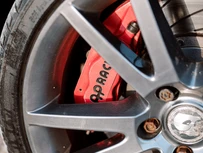
Considering the huge pace on tap, I was disappointed in the brakes – especially since they are the uprated AP Racing units. They look the business with large, red-painted callipers but lack any initial bite and you find your foot sinking further and further into the carpet before the freight train momentum gets scrubbed off. If you’re on a twisty stretch of road and pressing on in the big Vauxhall, you’ve really got to plan ahead with all of your inputs. It’s easy to think you’re going to plough straight on at the first corner when you’re not used to the car – and that’s not due to understeer. You’ve got to hit the anchors early and with a fair amount of force before getting the car turned in, again giving more input on the wheel than first anticipated. You begin to question if this car is a one-trick pony – a straight-line juggernaut that can’t hide its American heart.
But this is where the Aussie hooligan comes out fighting. Forget how the car behaves at entry or apex – corner exit is where this car truly shines. It’s fantastic. That feeling when you plant the throttle mid-corner and start easing off the lock to let the car drift out wide, the suspension squats, the cone-type LSD finally wakes up and it just goes. Any minor adjustments can be made with your right foot but be brave, keep it pinned and the V8 hits its crescendo and slingshots you down the next stretch.

For the vast majority of the time, the Monaro is a comfortable cruiser – more than happy to be the daily driver or road trip companion. On the right stretch of fast sweeping bends, however, its mood changes and you become embroiled in a game of chicken. How early can you put the power down post-apex? Truth be told, the traction control is on the intrusive side – and when it does kick in, it’s not all that sophisticated either – but I was under instructions from the owner to leave it on. It’s on budget tyres and this much torque can be a handful, to say the least.
With a set of Michelin PS4S tyres (which Chris intends to fit soon) and a wide-open road to play with, I can see why this car has a bit of a reputation with the Bogans down under. It’s a real Jekyll and Hyde and no doubt would be more than happy to throw you into a hedge if you’re not giving it your full concentration. Give it the respect it deserves, however, and I can see that long wheelbase giving you plenty of notice before the drift angle gets too much to save.
When the car was new it was unfairly shoehorned into a category with the BMW M3 and Mercedes C63 of the day, of which neither is a direct rival. The BMW is much stiffer, far more responsive and sharper. However, unlike other cars of the Commonwealth, the Monaro has a transcontinental skillset. Imagine a Jaguar XKR with a manual gearbox, a limited-slip differential and a naughty exhaust – you’re on the money. There’s no doubt it’ll cruise as well as the big cat – just without the opulence.

For some, that is a major stumbling block – just like the Vauxhall badge it wears. What about reliability? Chris’s car does have the odd niggle – the seat adjustment button that randomly downs tools and goes on strike is just one of a few things that need addressing – and he’s already spent a few quid getting the paintwork up to scratch. But at this point, it’s a 16-year-old car – I’m sure even a Lexus wouldn’t be perfect at this age. For me the badge really doesn’t matter, and the LS2 is the main reason for that. It’s an assault on the senses like nothing else for the money and a two-fingered salute to those who value style over substance. I can’t think of another car that would be so at home on a comfortable and relaxing long-distance cruise as it is bouncing off the limiter doing burnouts.
I adore the Monaro’s split personality – that ability to be an antisocial yobbo one minute, relaxed cruiser the next, and back to being a menace to society with one press of the loud pedal is something that speaks to my inner child.
The follow-ups to this model became even more potent – with bigger-capacity and supercharged engines kicking out preposterous power for a saloon car. But what they gained in brute force, they sacrificed in character. In my eyes at least, the coupé shape looks far better than the newer four-door VXR8 – squint and they’ve even got a whiff of fat Vectra about them. In an effort to move the car more upmarket, they tried to raise interior quality and give it some style, chasing the BMW M5. However, going off the steering wheel alone – which is one of the least attractive designs in a modern performance car – they missed the mark by a mile.
The Monaro, on the other hand – despite its multiple identities – doesn’t try to pretend it’s something it’s not. Its designers probably spent 90% of the budget on the engine and did a very decent job of the chassis – but bollocks to the rest. Other members of the team, in particular Craig, disagree. He used to live in Australia and has a real affinity for their macho saloons. Make of that what you will – or the fact that down under he’s a Holden man, yet in the northern hemisphere he swings back towards Ford – the Judas.
The bottom line is there’s a real honesty to the Monaro VXR that’s endearing and no doubt why Chris is happy to keep throwing money at it. We are grateful the badge engineering focused entirely on the engineering side of the equation – and the car cosmos is all the richer for its existence. If Craig could only afford the fuel bills, a HSV Maloo ute would be the perfect RUSH photography and support car.

Vauxhall Monaro VXR 6.0 Stats & Performance
Engine: 6.0-litre V8 (LS2)
Configuration: 90° V8, OHV, 16 valves
Displacement: 5,967cc
Bore x Stroke: 101.6mm × 92.0mm
Compression Ratio: 10.9:1
Redline: 6,500rpm (est.)
Output
Power: 398bhp @ 6,000rpm
Torque: 530Nm @ 4,400rpm
T-56 Transmission
Gearbox: 6-speed manual
Final Drive Ratio: 3.46:1 (TBC.)
Rear-wheel drive
Performance
0–62mph: 5.2sec (est.)
0–100mph: 11.4sec (est.)
0–124mph: 17.0sec (est.)
0–150mph: 28.0sec (est.)
Quarter-mile: 13.4sec @ 108mph (est.)
Top speed (limited): 155mph
Top speed (de-restricted): 170mph (est.)
In-gear acceleration
50–75mph (4th gear): 4.5sec (est.)
Weight
Kerb Weight: 1,680kg
Power to weight ratio: 237bhp per tonne
Torque to weight ratio: 315lb ft. per tonne
Steering
Power-assisted rack and pinion
Front Suspension: MacPherson strut, coil springs
Rear Suspension: Semi-trailing arm, coil springs
Brakes
Front: 330mm ventilated discs, twin-piston callipers
Rear: 315mm ventilated discs, single-piston callipers
Tyres
Front: 235/40 ZR18
Rear: 245/40 ZR18