



Toyota Corolla Cross Atmos 2026 review
Is a much-need face-lift to Toyota’s now-pricier ‘smedium’ SUV enough to sway buyers from the popular Hyundai Kona and growing Chinese competition
Three years is a long time in motoring. Just consider the fortunes of the Toyota Corolla Cross, launched in late 2022, a model that garnered an 8/10 rating at launch (from yours truly) and has sustained the same regard in every garage review since.
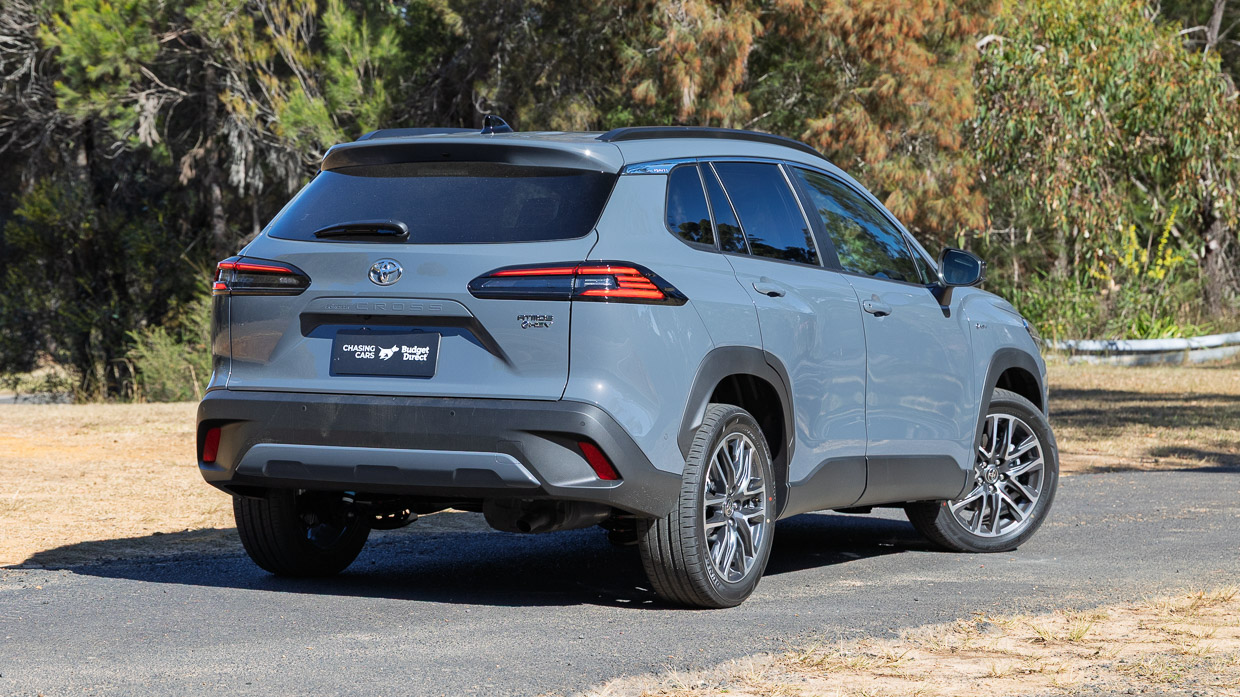
Neat, clever, practical, inoffensive. Utterly predictable and almost surprise free, the Corolla Cross seemed primed for sales dominance.
And at 4.46 metres in length, its segment-straddling ‘smedium’ (small-to-medium) size appeared primed to lure buyers from two key volume-selling SUV segments.
And yet now, three years later and newly facelifted, the Corolla Cross hasn’t proven to be the sales smash it might’ve appeared on paper.
Why? Perhaps less so due to singular merit, and perhaps more so due to the tsunami wave of brands and models that continue to swamp not just its own segment, but others where buyers might choose to cross shop.
Case in point? Now, in late 2025, Corolla Cross contends with no fewer than 21 different name plates in the sub-$45K small-SUV category where the car industry (via VFacts) classifies it.
And at the last audit, it sits just sixth in the sales race behind Hyundai Kona, MG ZS, GWM Haval Jolion, Chery Tiggo 4 and Mazda CX-30…
But hold up. With three of the five available Corolla Cross variants sailing north of that $45K price cap, nicer versions make for logical competitors in the plus-$45K small SUV segment…against 24 other nameplates.
Further, Corolla Cross’s segment-straddling size and steeper priced lobs it squarely against another 30 nameplates in sub-$60K medium SUVs, including its stablemate the RAV4. For the record, year-to-August 2025, the still-popular-if-seven-year-old RAV4 (32,564 units) has outsold Corolla Cross (8090 units) four to one.
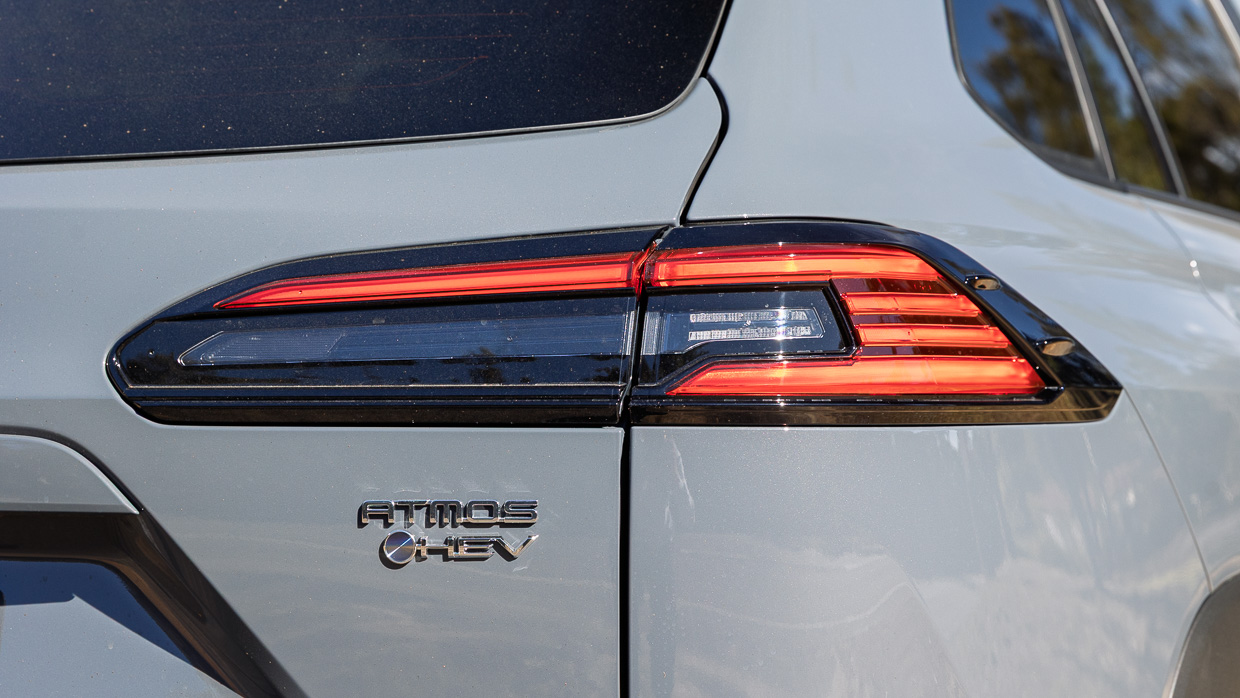
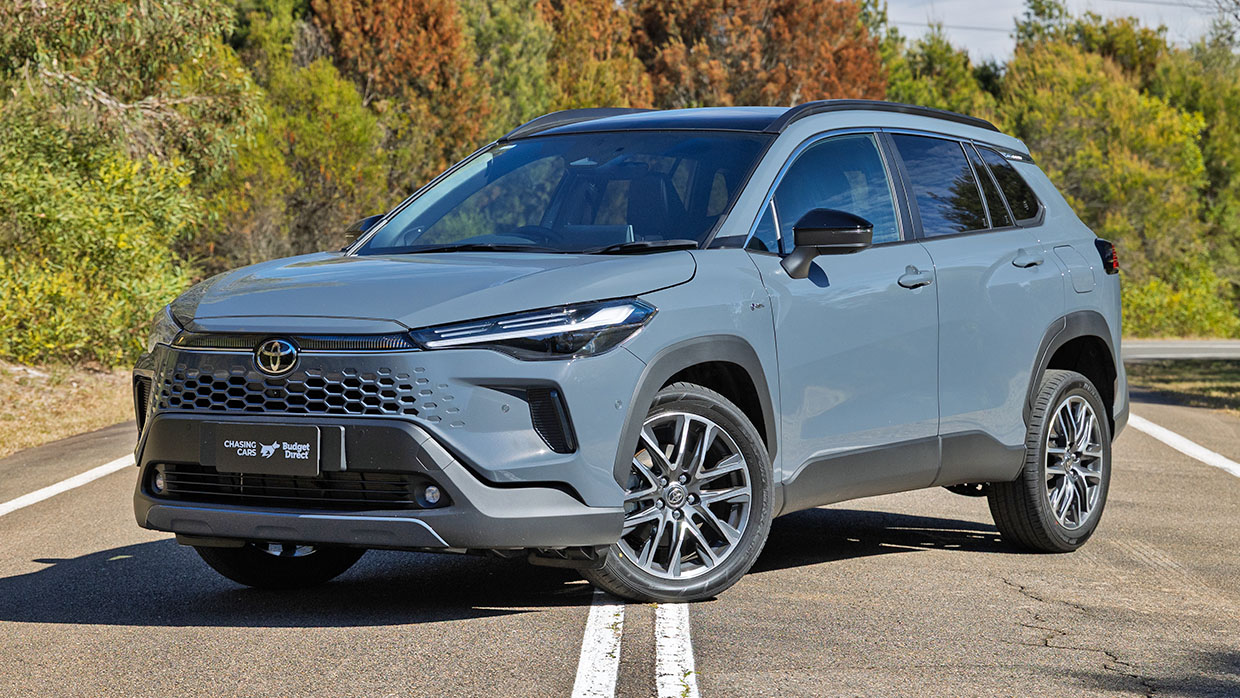
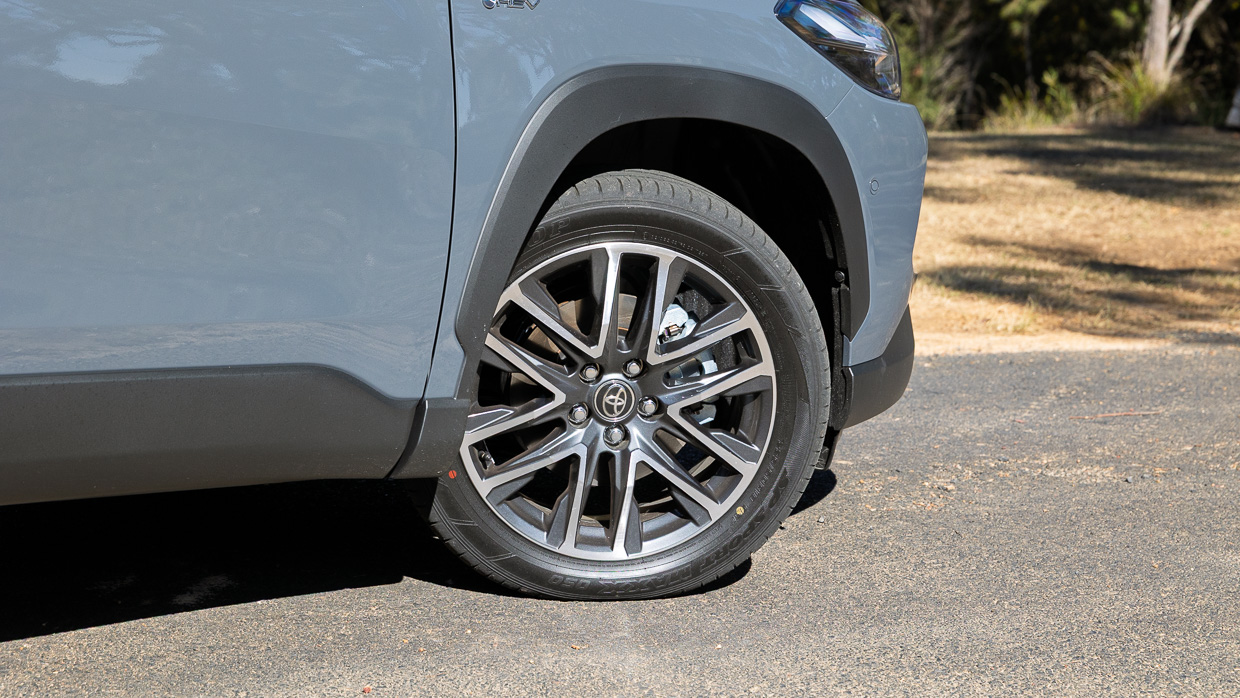
What’s new? A fresh front fascia and headlights with light strip motif, revised rear bar, plus new wheel designs and badging outside. Inside, a revised centre console and seat trim materials and a minor tech lift. However, spec tweaks do come with a pricing bump.
Fancier features, fancier pricing: is the 2025 updated Corolla Cross a better buying recommendation. Or does the stiff headwind make it a less compelling choice in the growing ocean of options?
What are the Corolla Cross Atmos’s features and options for the price?
On test here is the high-spec Atmos variant in front-wheel drive, which lists for $47,990, before on-road costs. Our test example, in $580 cost optional Ash Slate paintwork, is priced from around $53,170 driveaway.
The Atmos trim can also be had in AWD for a $3000 upcharge ($50,990 list), which will be joined soon by an identically priced GR Sport variant that adds little more than a lick of sporty stylisms.
Those on thriftier budgets can enter the Corolla Cross line-up from $37,440 list for base GX, while a mid-tier GXL clocks on at $41,190, before on-road costs.
At the time of review, Toyota Australia warns of “expected wait times” on GXL (and forthcoming GR Sport) variants with potentially “different specifications and/or different price points” for both, while advising customers to check with dealers for updates.
Rivals for our Atmos FWD? Price high to low, the Toyota contends with Chery Tiggo 4 Hybrid Ultimate ($34,990 driveaway), Haval Jolion Ultra HEV (38,990 D/A), the top-selling Hyundai Kona in Hybrid Elite trim ($42,900 D/A), Honda HR-V e:HEV L ($42,900 D/A) and Subaru Crosstrek Hybrid S ($46,090 list), to name five of…a great many.
And RAV4? The most closely priced-variants are the mid-spec XSE FWD ($49,585 list) or the lower-grade GXL with AWD ($48,810), both with more powerful 2.5L hybrid powertrains than offered in Corolla Cross.
Standard features of the Atmos spec include:
- 18-inch alloy wheels
- Rain-sensing wipers
- Heated, power-folding mirrors
- LED headlights
- Kick-sensor powered tailgate
- Partial-leather seat trim
- Eight-way power driver’s seat
- Heat and ventilated front seats
- Heated steering wheel
- 12.0-inch digital driver’s display
- 10.5-inch sat-nav media touchscreen
- Wireless Apple CarPlay and Android Auto
- One-year Toyota Connected Services subscription
- Nine-speaker JBL audio
- Dual-zone climate control
- Wireless phone charger
- 3x USB-C outlets
- Panoramic glass roof
- 17-inch space saver spare wheel
How does the Corolla Cross drive?
Buyers hoping for conspicuous changes under the skin for this facelift are in for disappointment. The Corolla Cross slogs along with its naturally aspirated 2.0-litre-based self-charging hybrid system, with the same 112kW/188Nm engine outputs and 146kW combined power figures as before.
That’s not to say it’s bad and hasn’t necessarily improved. Often unsung is Toyota’s tendency to polish rough edges throughout a model lifecycle, and while the bones of the M20A-FXS powertrain mightn’t cut many edges, this fifth-generation hybrid is quite fit and healthy in its current form.
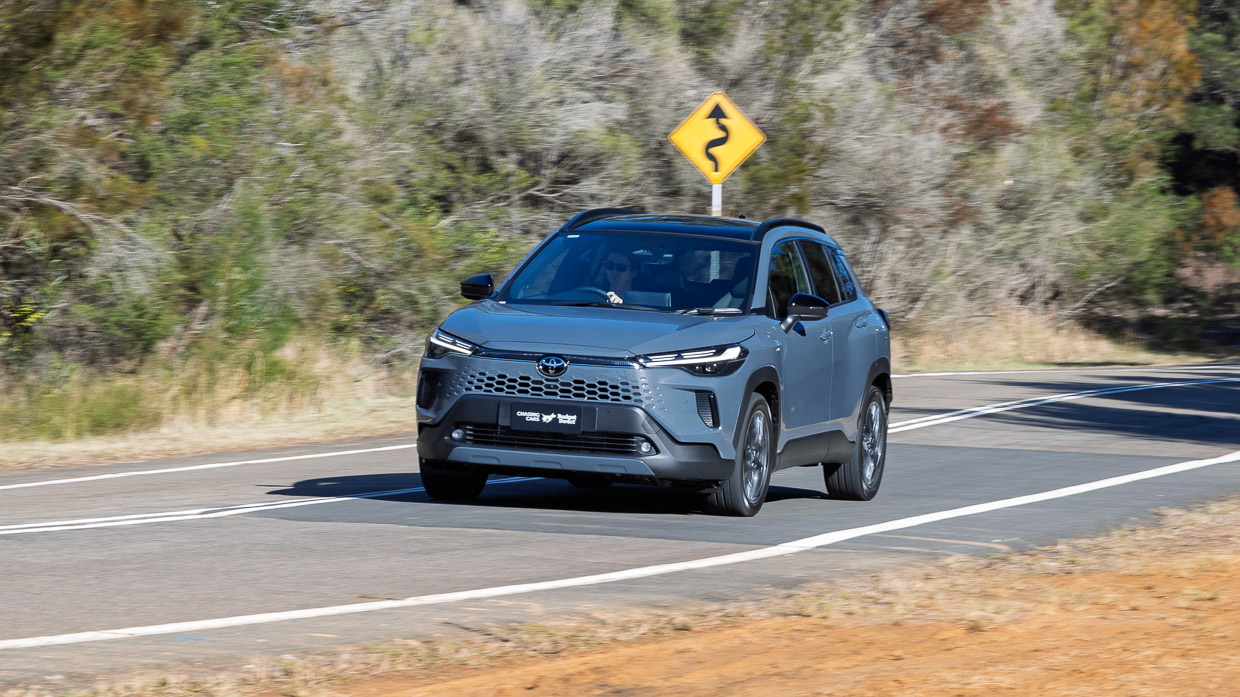
Acceleration is reasonably punchy (we timed it at 7.5sec 0-100km/h) and drivability is nice and linear, even if, in typical Toyota hybrid form, the engine can flare away with a raucous thrum at times — especially loaded up with four adults — with the constantly variable transmission reluctant to match engine rpm to road speed.
It’s not perfect. Climbing into and out of the system’s powerband is smooth and the switchover points between ICE and electric propulsion is mostly imperceptible, though this powertrain has an oh-so-slight granular palpitation at constant highway speeds, complete with faint nipping shunts, presumably as EV drive clocks on and off.
Similarly, it’s not entirely happy under adaptive cruise control, where the powertrain faintly nudges drive torque on and off in a rocking motion in attempts to keep the SUV running consistently at the desired road speed.
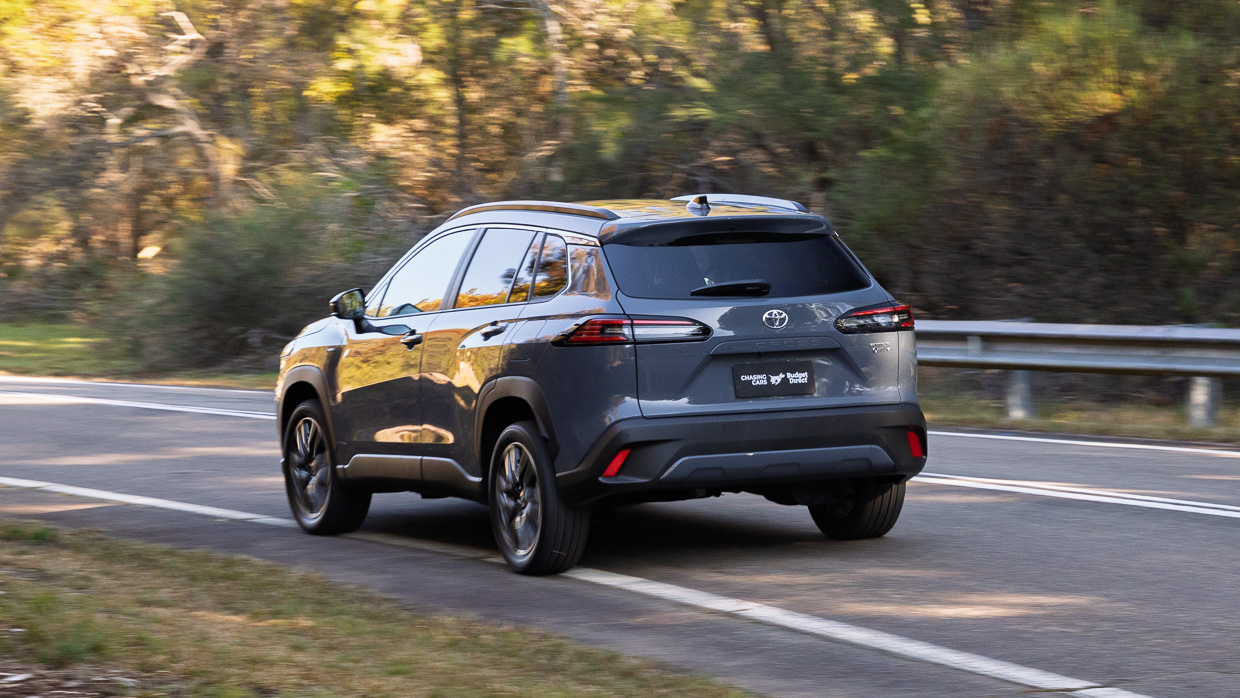
This is Toyota’s small-capacity self-charging hybrid system at its most refined yet, even if some slight coarseness creeps in around the edges. That said, it’s measurably smoother and more polite than a good many rival series-parallel designs out there.
The on-road lowlight? Fuel consumption? We’re accustomed to seeing four-litre consumption even from larger-capacity RAV4 powertrains, but our tester — its second time through the Chasing Cars garage — simply refuses to drop below 5.3L per hundred.
The highlights? Ride and handling balance. The Corolla Cross was and remains a supremely comfortable urban runabout, anchored mainly through a lovely suspension compliance that just avoids being too mushy.
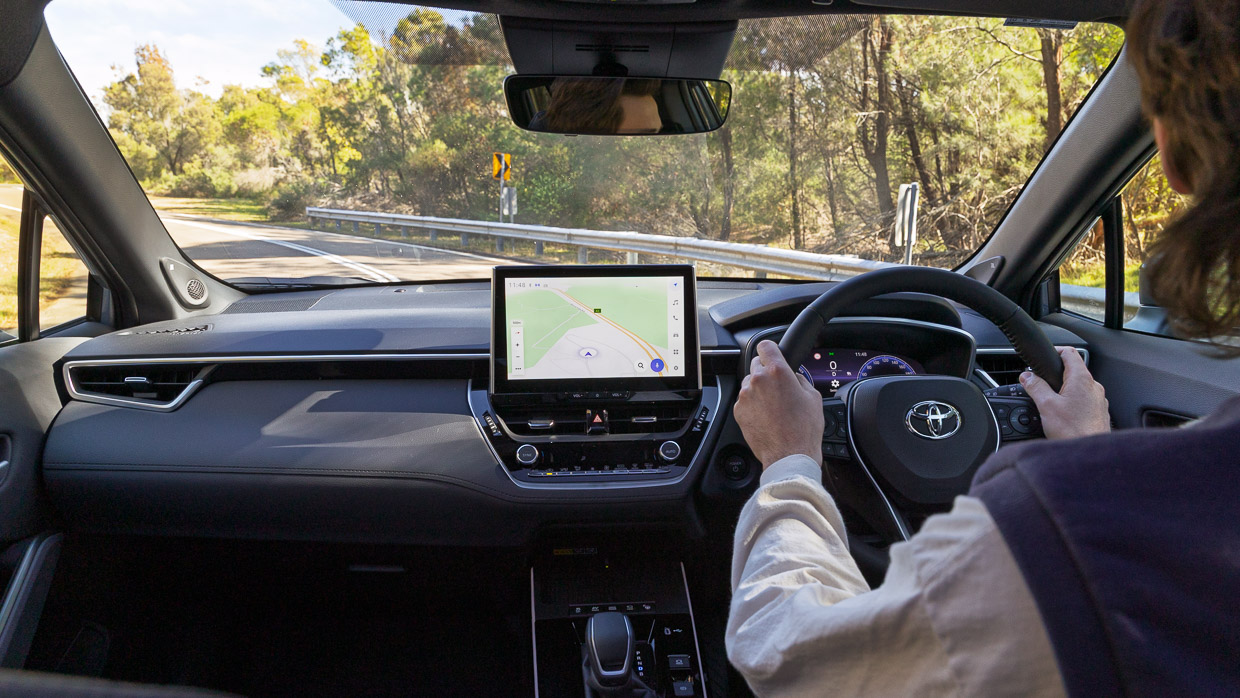
Its 18s can get caught on occasion slapping over some deeper/sharper bits of road acne, but its ability to filter out all manner of bumps is wonderfully accomplished.
Its polite nature also makes the Corolla Cross a fine touring machine for soaking up long open-road kays, powertrain grumbles notwithstanding.
However, its structure doesn’t quite suppress ambient road noise as well as it might — it’s not bad, if not nearly as serene on the ears as the best in class like the Nissan Qashqai.
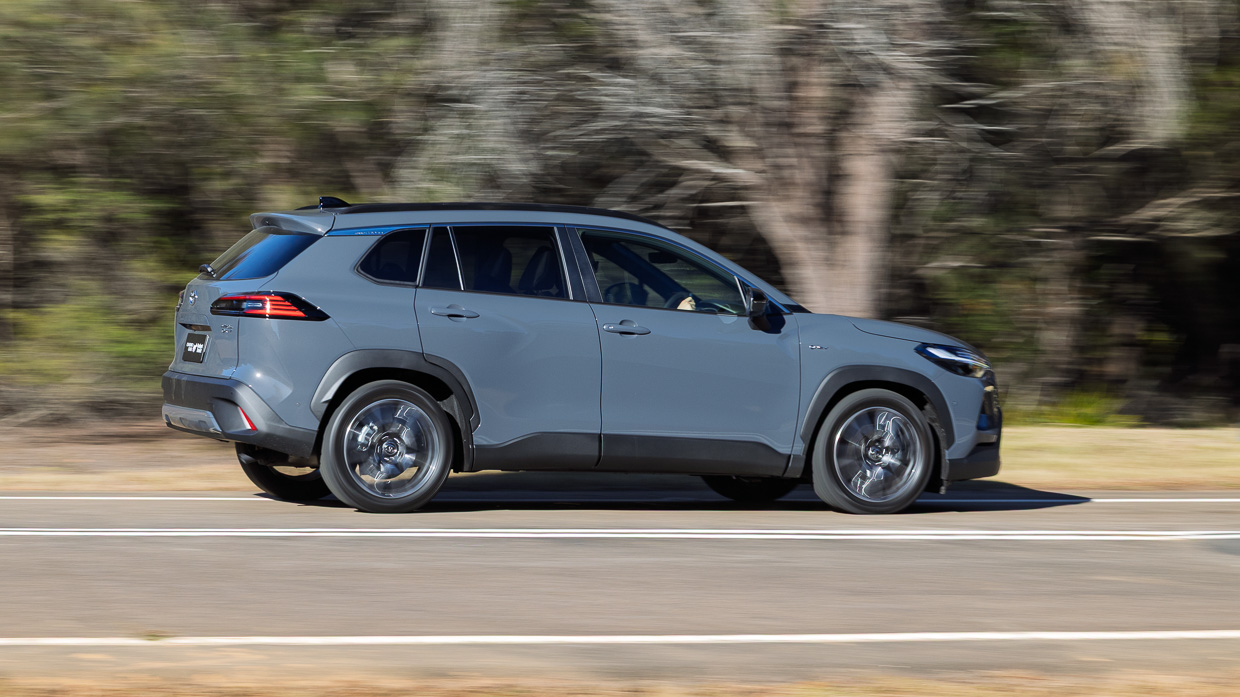
There’s just enough body control — and a wonderfully innate natural balance — to lean the Corolla Cross dynamic character more towards Corolla (funnily enough) than RAV4.
It’s sprightly and connected, if never really drumming up enough engagement to be properly fun. Perhaps the GR Sport, with its revised suspension and 19s, will add suitable sportiness to the SUV’s recipe.
And this is from the front-driven Corolla Cross, fitted with more rudimentary torsion beam rear axle than the most sophisticated multi-link rear axle of the all-wheel drive versions.
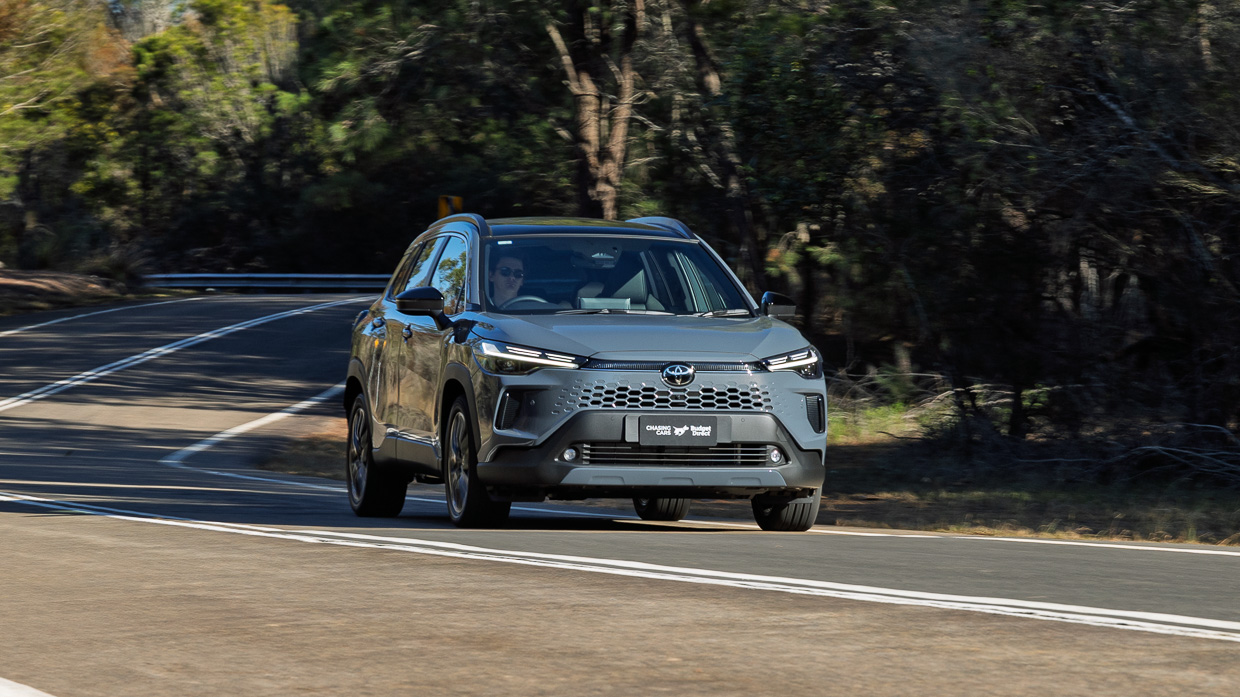
The point? You don’t miss out (much) in ride and handling chops by opting for the front driver. And nor does it lack real-world traction either, at least in most conditions.
That said, the ($3000 pricier) AWD will absolutely pay dividends to regional buyers who habitually drive on broken surfaces. Not because the Corolla Cross has off-road chops to speak of, but because the safety in traction all-paw drive presents in less than ideal conditions.
While safety is covered off below, the panoramic view monitor system — with its 360-degree coverage and transparent chassis viewpoint —deserves a shout out for making parking in even the tightest areas a doddle.
What is the Corolla Cross Atmos’s interior and tech like?
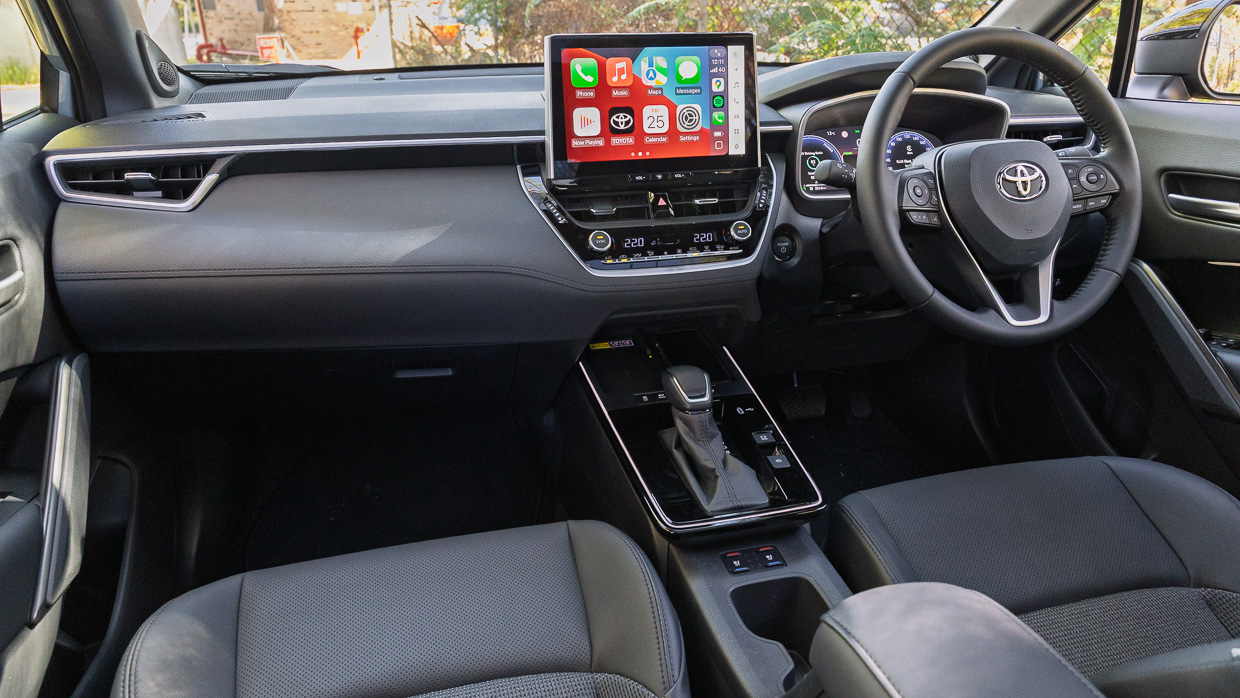
The flagship Atmos interior treatment is…largely unremarkable. Save for the revised centre console — which brings a ring of mood lighting and two phone pads, only one of which charges your phone — this face-lift is a dead-ringer for the AWD Atmos we reviewed two years ago.
As mid-life interior makeovers go, it’s a lazy one.
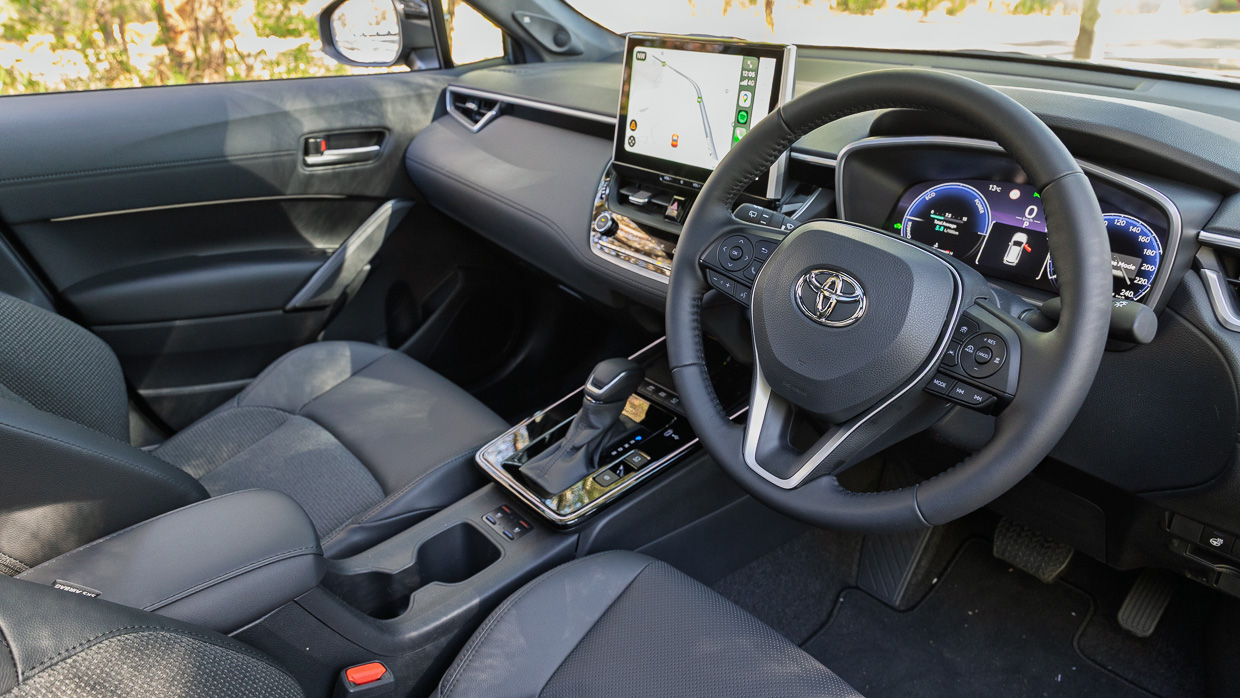
That said, the Corolla Cross was and remains straightforward, presentable, uncomplicated and easy to navigate, despite its fundamentally bland mid-grey theme. It’s a welcoming place to spend drive time, be it peak hour or interstate road trips.
The worst of it is, surprisingly, entry. There’s a triangular protrusion right where the dash fascia meets the driver’s door trim, and taller drivers will bash their left knee against it at least once a week. Ouch!
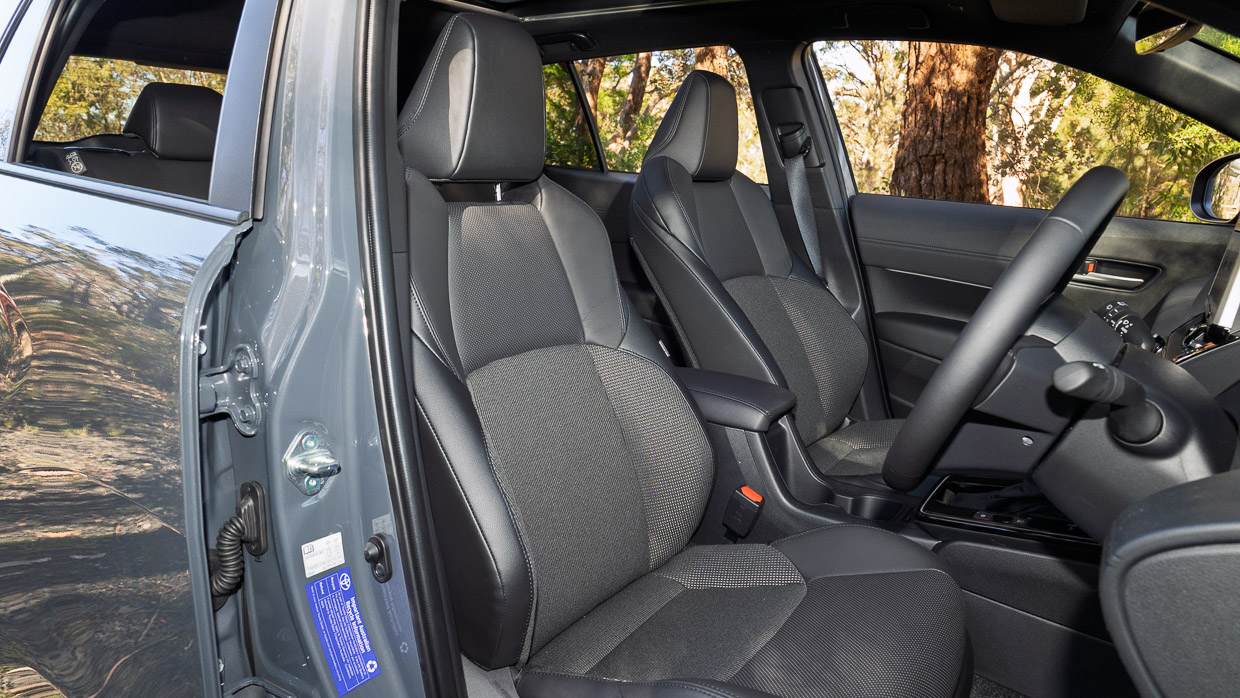
Thankfully, the rest of row one is more ergonomically sound and roomier than its ‘Corolla’ namesake might suggest.
Materials, though, are workmanlike: the ‘leather appointed’ trim isn’t particularly tactile, there’s an abundance of hard plastics for this flagship variant’s price point, and it features the curious blend of seat heating and cooling with partial cloth trim.
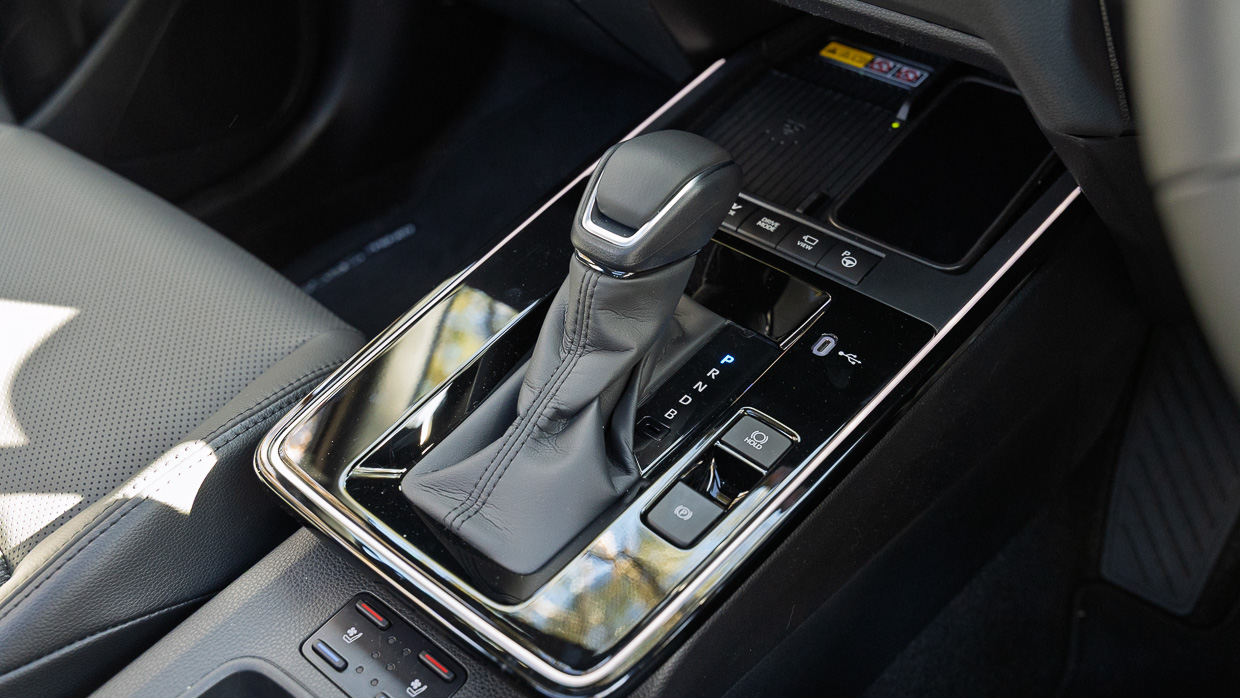
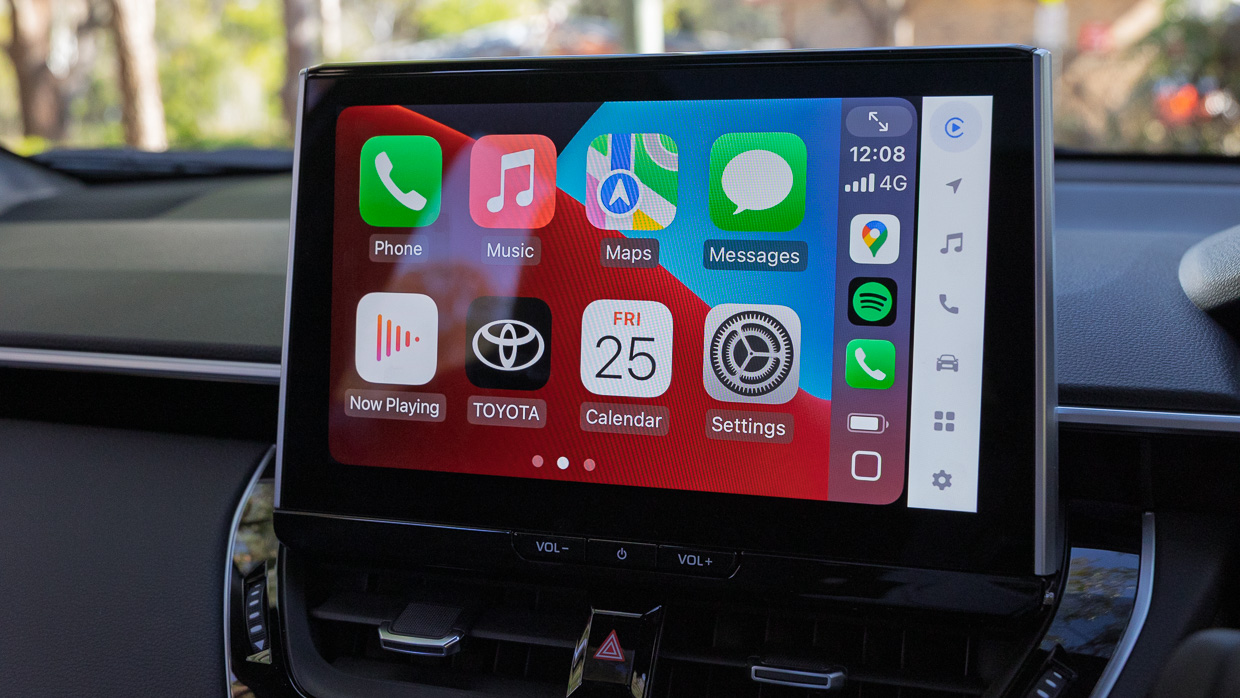
Even the new stuff — again, just the centre console — appears parts-binned from 2005. And the tech does feel much newer. The presentable, carryover 12.3-inch driver’s screen brings the only meaningful colour to the cabin theme and it makes the modest carryover 10.5-inch media screen look a bit old hat.
Content is a mixed bag. The transparent chassis 360-degree camera proved surprisingly useful when kerb-spotting while parking in tight places, but the so-called premium JBL audio system’s sound quality is mediocre at best. And the shrill hands-free phone audio is woeful.
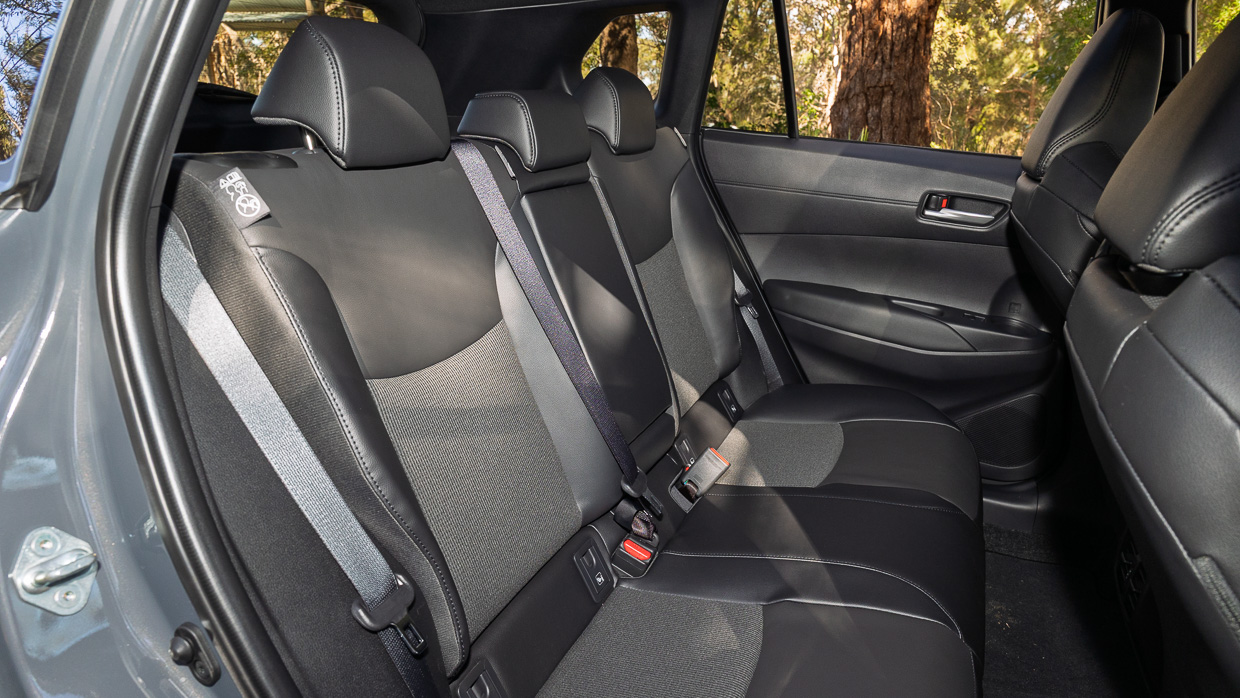
Second-row room is average, partly because front footwells force taller front occupants to set the front pews rearward on their rails. The upshot is that Corolla Cross is a four-adult proposition at best, and for shorter trips in order to avoid discomfort.
Row two is also minted in grey-on-grey, the door cards almost completely ballistics grade hard plastic, and the wavy stitching of some of the hardy seat trim is low-rent.
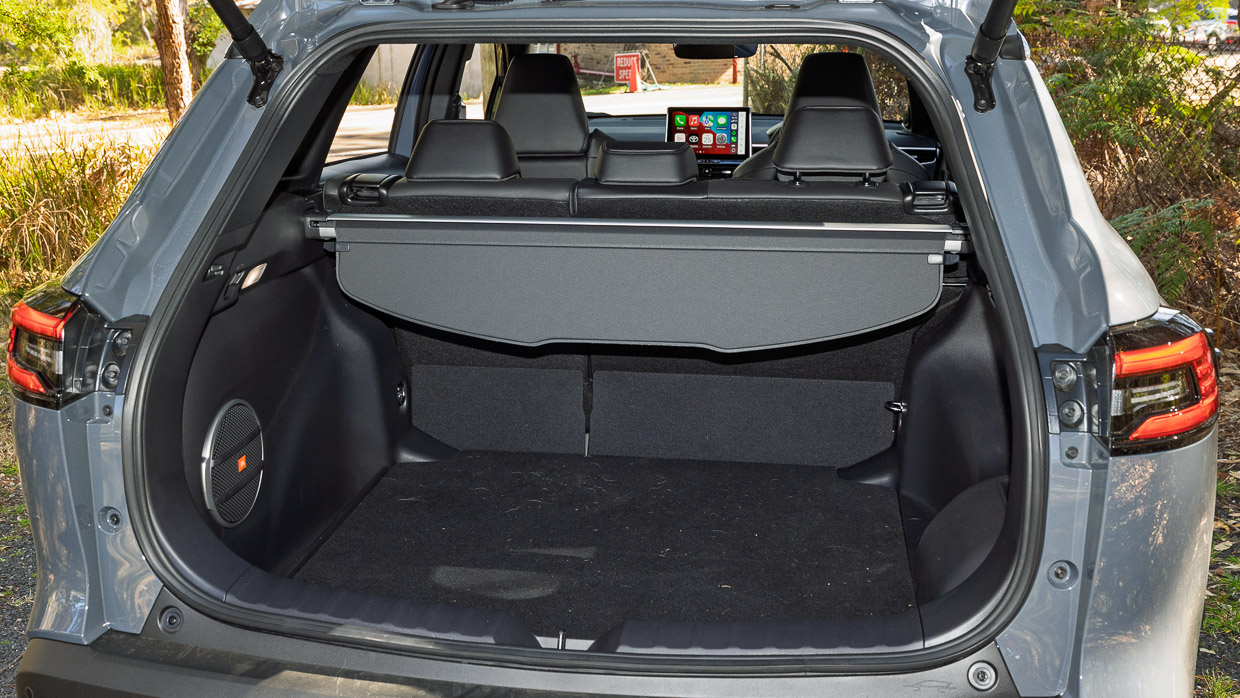
Boot space is a decent 425 litres with usable proportions and the 17-inch spare wheel is, for a touring national, downright essential for long road trips.
But the kick-sensor tailgate, slow to open while barking beeps at high volume in typical Toyota style, might drive you and your neighbours bonkers before too long.
Is the Corolla Cross Atmos a safe car?
With so little changed to this facelift, it’s no surprise that this MY25 version carries over its five-star ANCAP rating from more lenient times, in 2022. It covers all variants bar the upcoming GR Sport.
The Corolla Cross scored 85 and 88 percent respectively for adult and child occupant safety protection, 87 for vulnerable road user protection and 83 for safety assist.
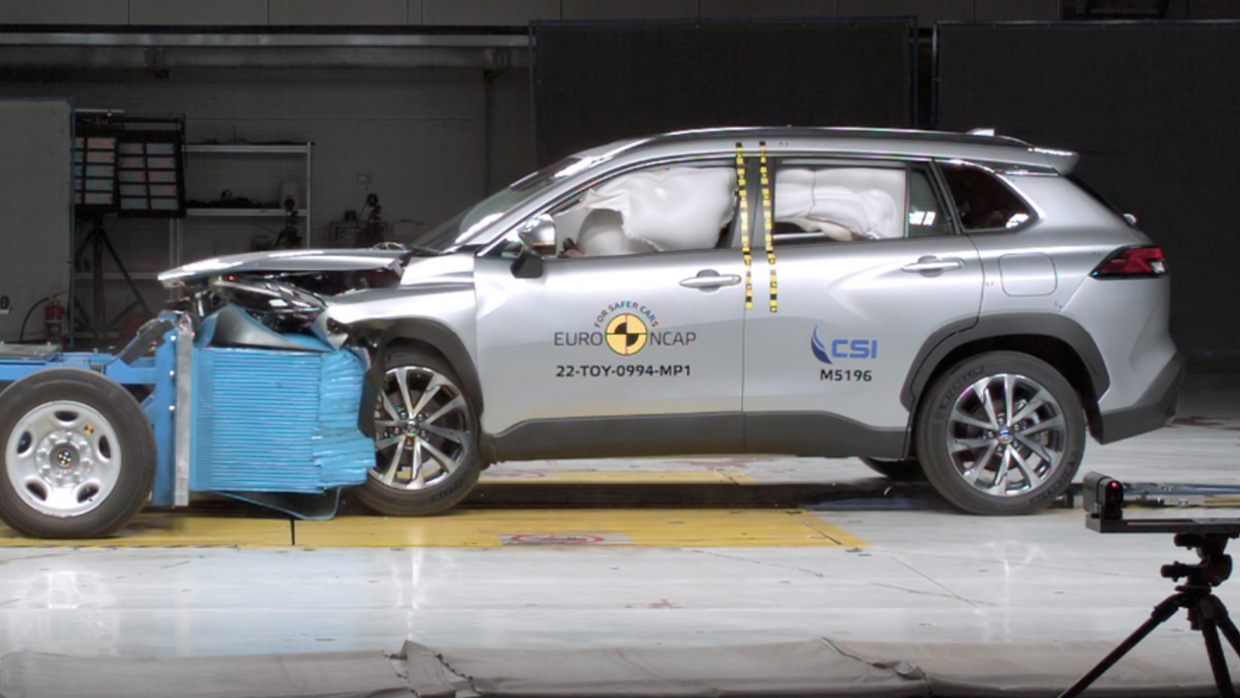
Safety features include:
- Eight airbags
- Forward autonomous emergency braking with pedestrian and daytime cyclist detection
- Turning assist
- Lane departure mitigation
- Lane change assist
- Blind Sport monitoring w/ safe exit warning
- Rear cross traffic alert
- 360-degree camera
- Road sign assist
- Auto high beam assist
Because the Corolla Cross omits driver monitoring and audible overspeed warning (rather than speed sign recognition) system, it doesn’t constantly bing and bong at the driver as Kias, Hyundais, Mitsubishis and a long list of Chinese-branded SUVs do. And thus, no systems need to be switched off before every trip for occupants’ sanity.
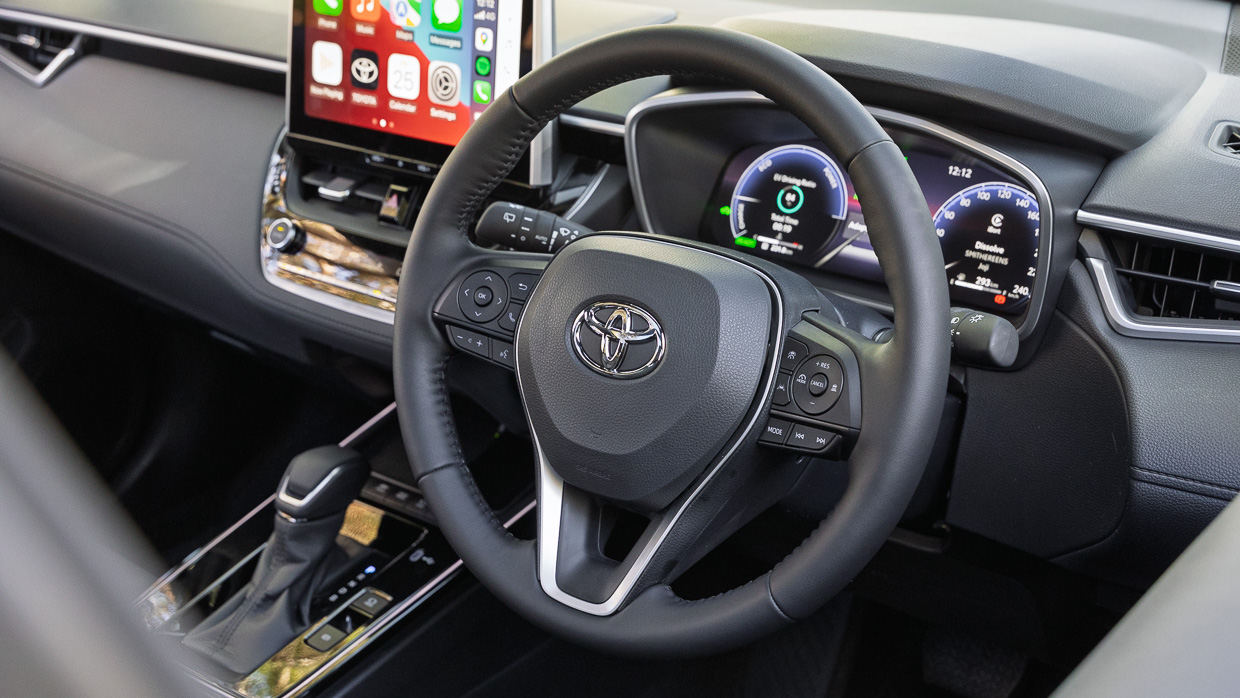
And yet it’s still five-star ANCAP certified. Nice.
Our only inconclusive observation was that the activation of forward collision warning — let alone forwards AEB — is so late that it could appear dysfunctional short of a genuine emergency stop situation.
What are the Corolla Cross Atmos’s ownership costs?
The front-drive Corolla Cross comes with a thrifty 4.2L/100km combined fuel consumption claim, which is amongst the best in class and typically impressive for the brand that leans so heavily on its hybrid credentials.
The problem is that our test car refused to drop from around 5.4L/100km during our week of, frankly, relaxed and cruisey driving. One litre per hundred mightn’t sound like much…but 28 percent thirstier than claimed is far from being on the money.
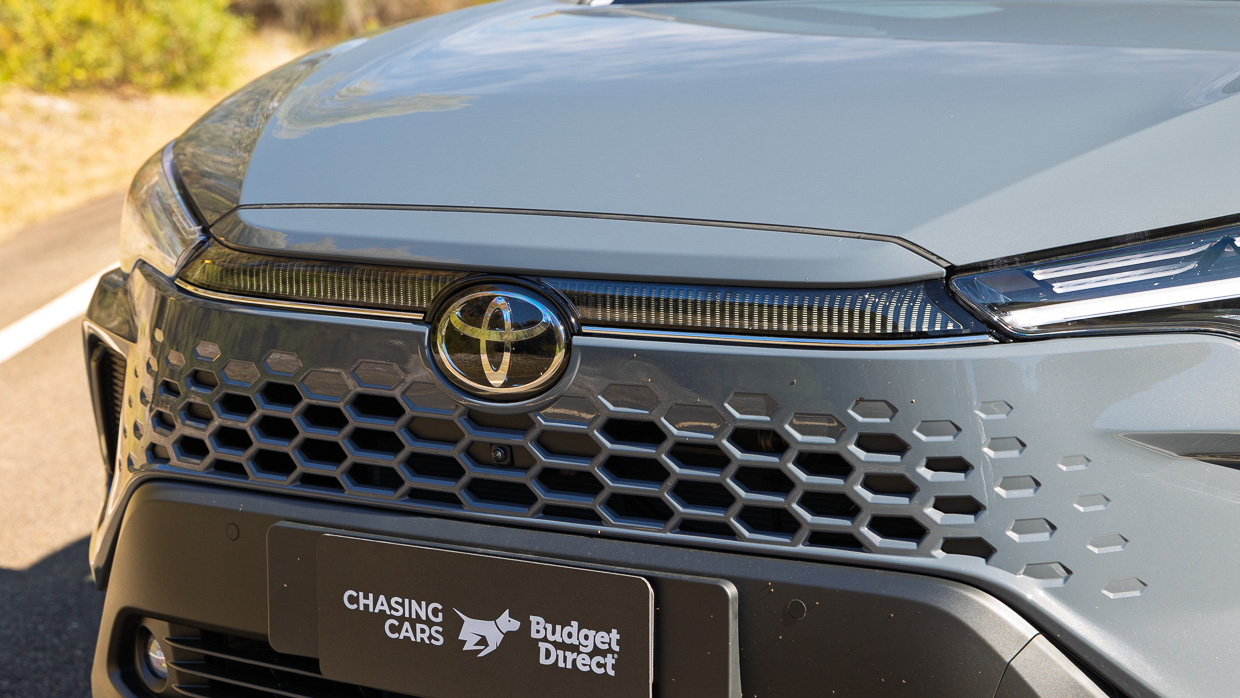
Less questionable is Toyota’s famously cheap servicing. Five years of coverage costs just $1275 — cheap as chips — with decent intervals of 12 months and 15,000km between visits.
The increasingly mundane five-year (unlimited-kilometre) warranty can be extended through to a more competitive seven years if you service the vehicle on time.
The honest verdict on the Corolla Cross Atmos
Let’s call the Corolla Cross facelift what it is: a very minor update that ‘sidegrades’ — rather than upgrades — aesthetics so that the model looks refreshed, complete with an obligatory price bump. In Atmos form, at least, there’s nothing meaningfully new to write about…bar tweaked appearances.
Further, small, front-driven mainstream SUVs asking well in $50K on-road warranty a fancier fit-out: where’s the passenger seat electric adjustment, the head-up display, the soft-touch door cards inserts, third-zone climate, etcetera?
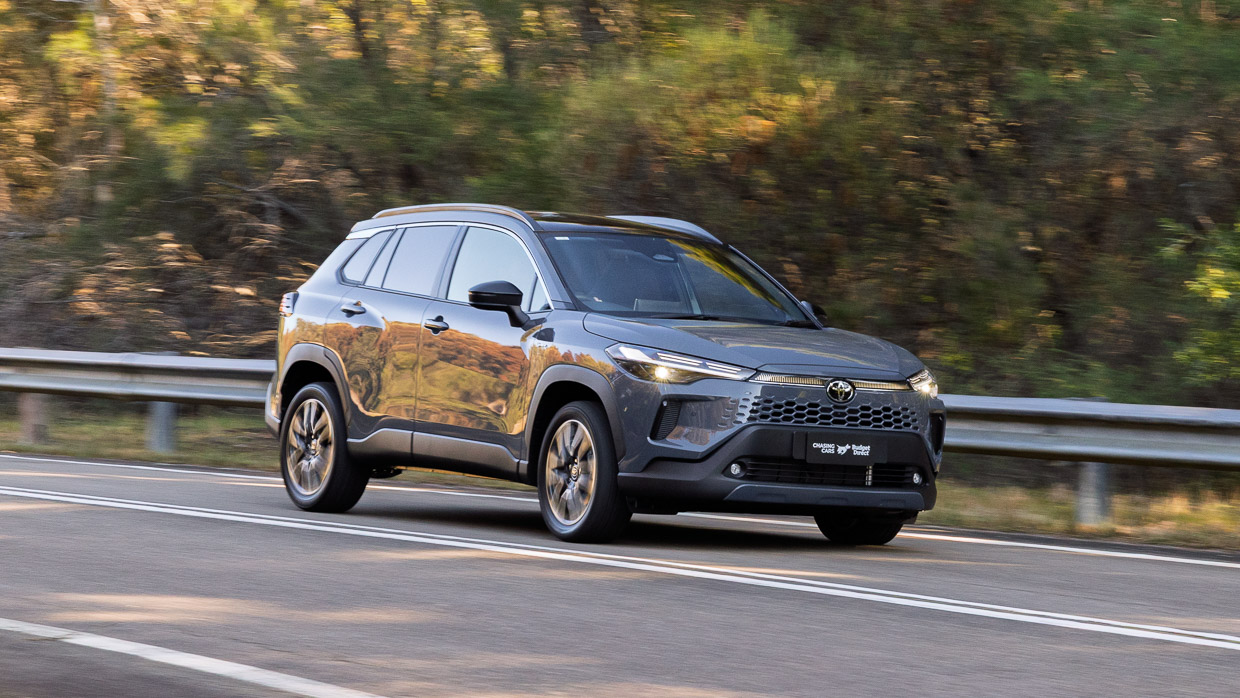
Rivals trounce Corolla Cross on value, and it’s reflected in the sales stats.
From powertrain to interior tech, there’s nothing new, nor anything all that outstanding. And where the top end of the Corolla Cross sits, price wise and against an ocean of competitors, staying anchored to 2022 appears to be dangerous waters. On this alone, it must be taken down a peg from its steadfast 8/10 rating providence.
And yet…the Corolla Cross remains such an easy-to-use, fuss-free, low-maintenance and downright likeable device. It’s perfect motoring for when motoring is the last thing you want to think about, doing anything else that life demands.
Ford Transit Custom Sport long term review
4 weeks ago

John Law
Road Test Editor
Utes are the hottest segment in Australia right now, but what about the other commercial staple, the humble van?
We’ve said it before and we’ll say it again, the dual-cab ute is a deeply compromised family hauler.
Ford Rangers and Toyota Hiluxes might be the vehicle-du-jour at the moment selling the dream of doing weekly dirty work and opening up a whole new world of weekend adventures.
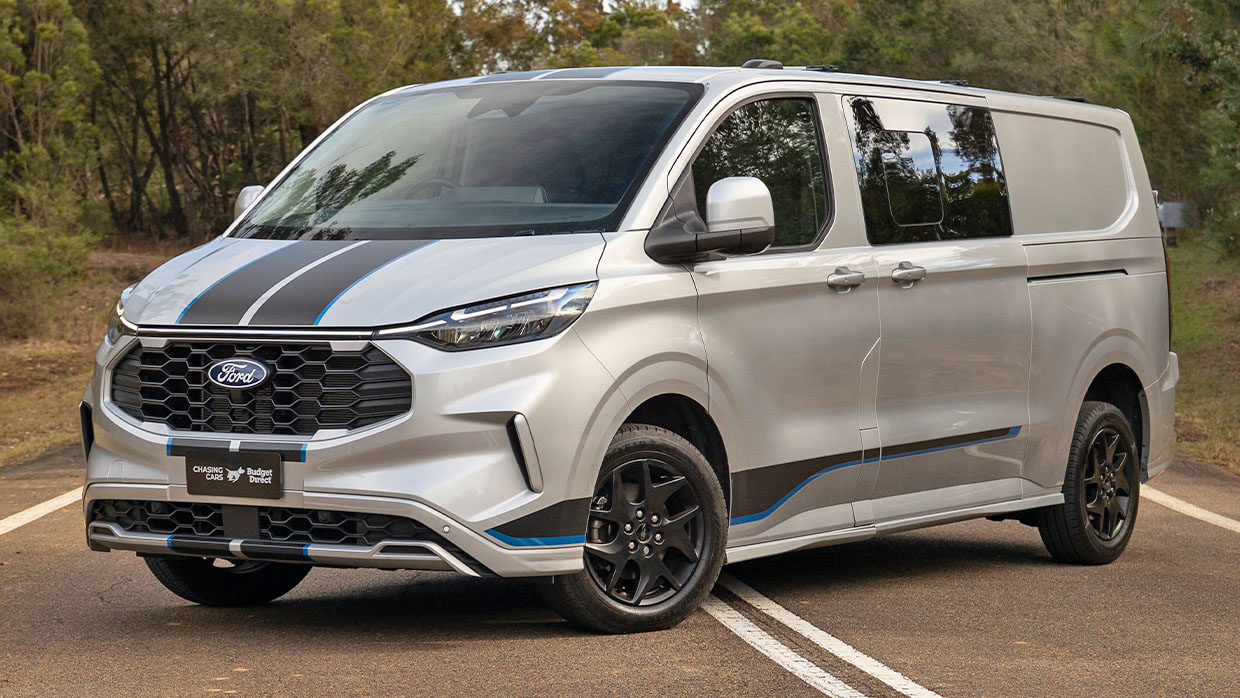
But what about the poor van? Kombis, Transits and Sprinters have been doing double-duty as family-cum-work vehicles for much longer than utes.
Yet in Australia, mid-size vans account for a lowly two percent of the market, and a lot of those sales are from delivery fleets. Combine 4×4 and 4×2 utes and you get nearly 20 percent of sales — yikes.
We’re driving the new Ford Transit Custom in family-oriented (but not workshy) Sport guise with two rows of seating to see if the van deserves more love in Australia.
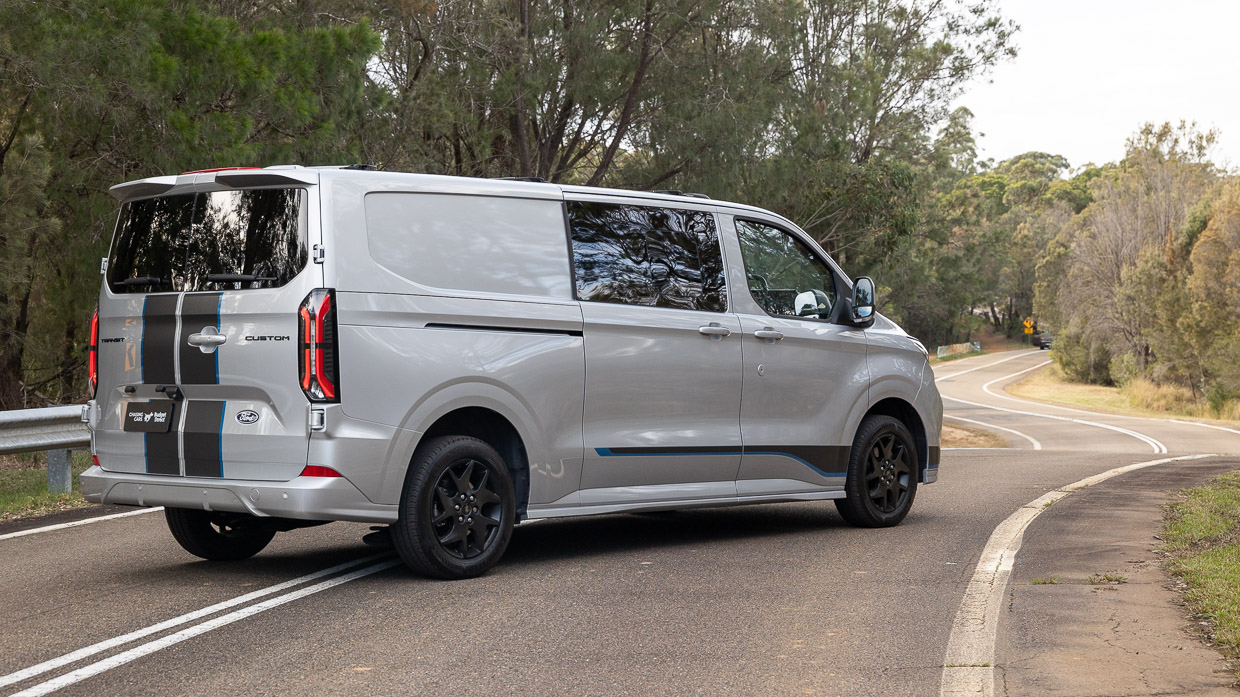
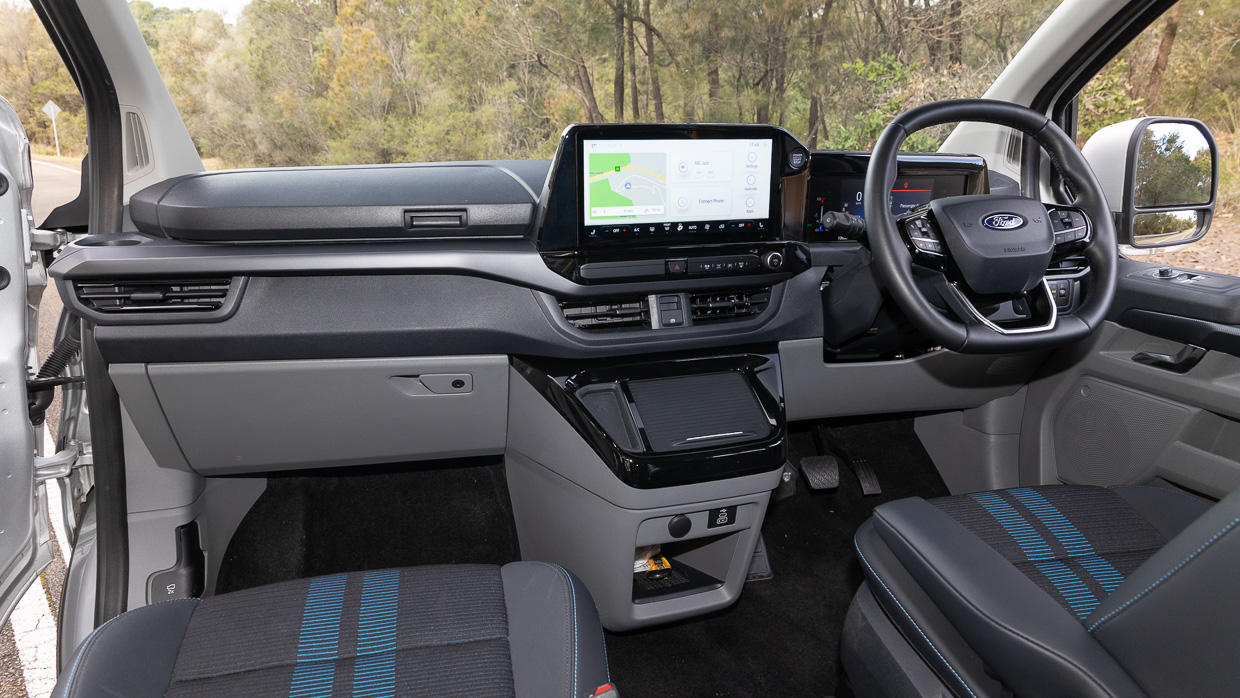
It should have a solid chance, with fairly spiffy cabin appointments including blue-accented cloth upholstery and a large touchscreen with wireless smartphone mirroring.
Driving should be pretty sophisticated as well, with a rear bulkhead insulating the passengers from the classic van rumble. Plus, Ford’s engineered the new Transit Custom with multi-link, independent rear suspension. Sounds sophisticated to us.
Navigate this long-term Ford Transit Custom Sport review
- Month 1: Taking delivery of the Transit Custom Sport
- Month 2: Transit Custom on tour
- Month 3: Are utes the answer?
Month 3: Are utes the answer?
The time has come for the whole point of this particular long-term endeavour. We pretty much always have a long-term ute around because Australians can’t seem to get enough of them, making up a fifth of all new-car sales.
Comparatively, Ford sells 17 times more Rangers than it does Transit Customs, despite the two models being of similar size, price and — at least in theory — utility.
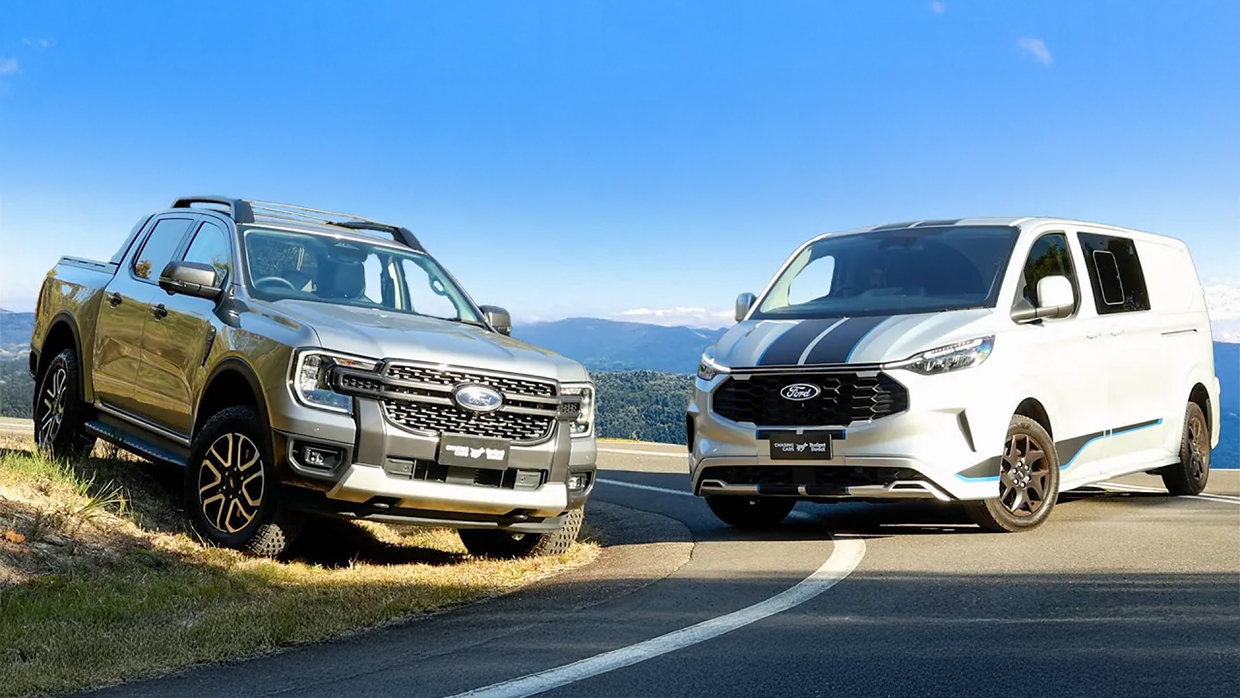
We could have selected a large SUV to compare against the van like a Ford Everest, however the ute seems more relevant as both offer greater practicalities on the commercial side, and each has five seats rather than seven.
While a 150kW/500 2.0L twin-turbo would have been a better price and performance match for the Transit Custom Sport, for argument’s sake, we’ll be somewhat ignoring the pace advantage of the 184kW V6 Sport we got along as a counterpoint.
Instead, we devised several real-world criteria to compare this pair and see if the Australian public has been right in voting for pick-ups with their pockets.
Cargo capacity and security
Any dual-cab commercial vehicle is a compromised affair. Shorter load bays than workhorse single cabs, plus more focus on tech, equipment and occupant comfort, meaning lower payloads.
The Transit Custom has a more restricted load area, in a sense, being closed in at the top. But with a low floor and 180-degree opening barn doors, it is much easier to load heavy cargo into. The load bay is also longer, wider between the arches and — crucially — more secure.
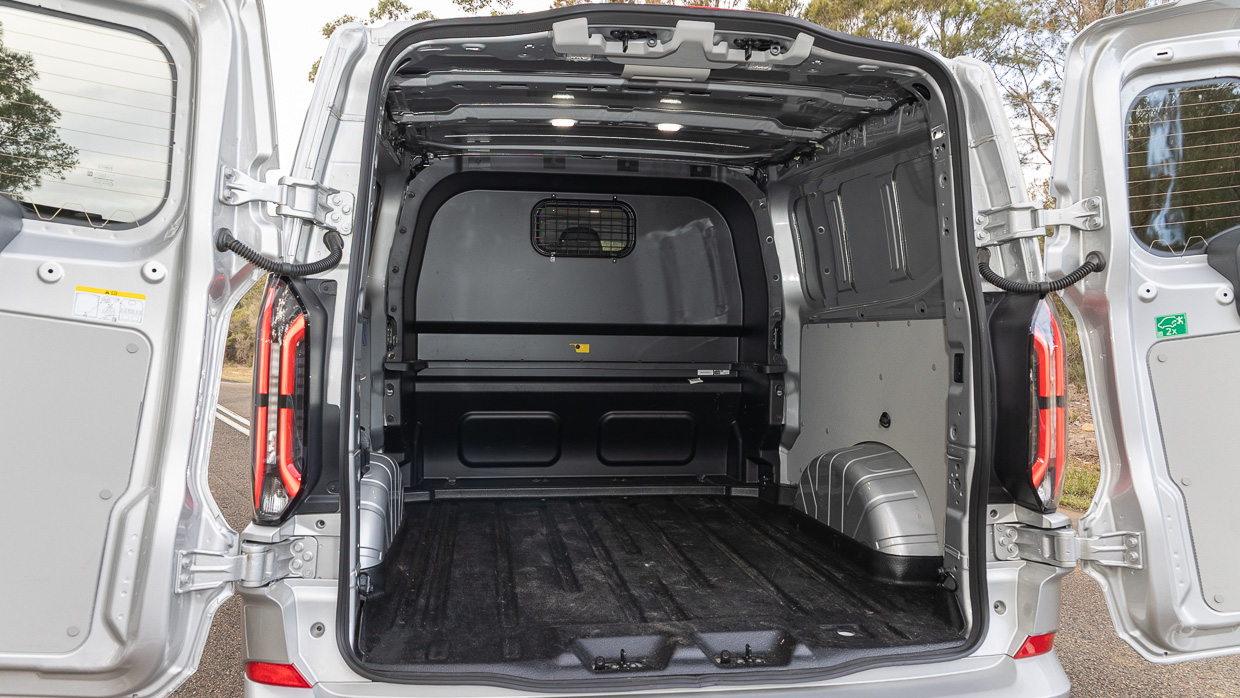
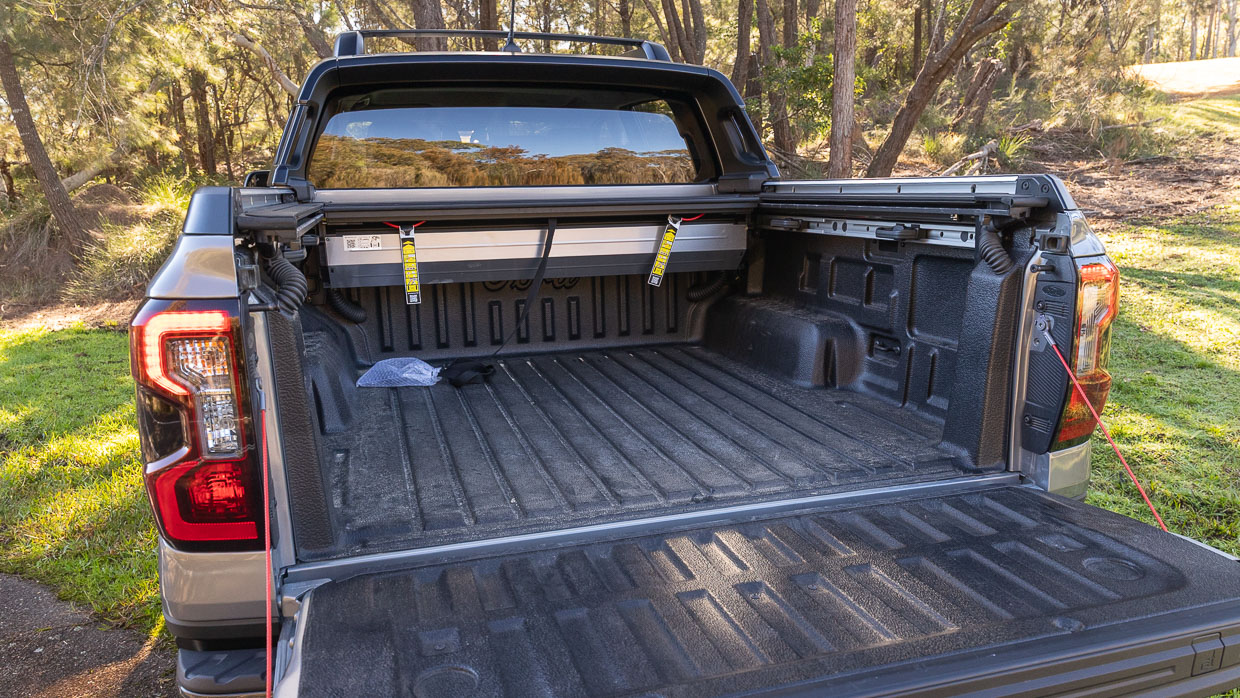
The Ranger hits back with better towing capacity and plenty of dealer-fit accessories such as canopies and sports bars, plus the ability to fit a custom tray.
See the table below for figures.
| Dimension | Transit Custom Sport DCiV | Ranger Sport V6 |
|---|---|---|
| Cargo length | 2004mm | 1480mm |
| Cargo width (min) | 1392mm | 1224mm |
| Cargo height | 1425mm | 550mm |
| Payload | 953-1058kg | 927-1004kg |
| Braked towing | 2500kg | 3500kg |
Ultimately, the van wins when it comes to cargo carrying ability and security, being packaged with greater efficiency.
Off-road ability
The Ford Ranger V6 gets a full-time 4WD system, locking rear differential, various terrain modes, and our tested example had all-terrain tyres. Still, it struggled a little on the muddy mogul test, taking a second for its traction control to engage and send drive to the gripped-up wheels.
But it is way better than the Transit could hope to be. It’s front-wheel drive, after all, and with just 118mm ground clearance plus a long 3500mm wheelbase, getting hung up is almost guaranteed.
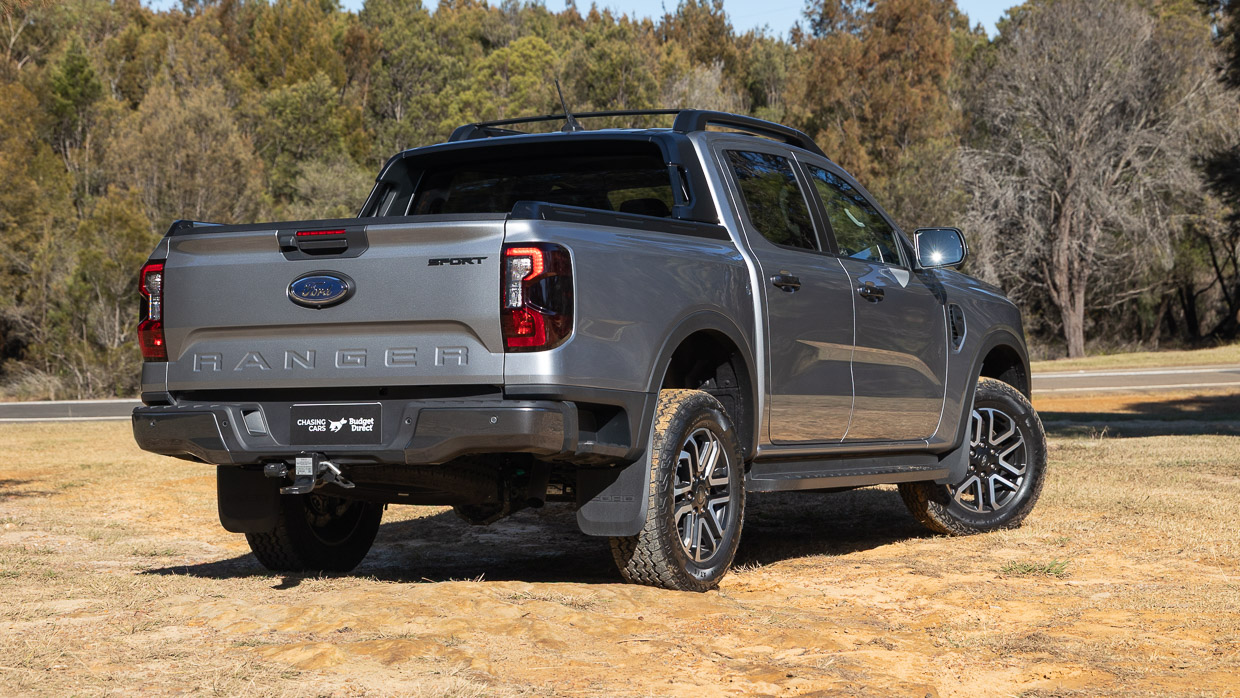
The incoming AWD Transit Custom Trail will provide all-paw grip, raised ride height and off-road focused tyres to improve things.
As above, though, if you’re on holiday you can bring a mountain bike along, leave it in the back without too much fear of theft, and explore places a 4WD ute could never hope to go… swings and roundabouts. Ranger still wins here, naturally.
On-road comfort
One area that utes have come on leaps and bounds is everyday comfort. From agricultural bouncy castles, refinement levels are now closer to passenger cars than ever… but still not as good.
Competing priorities of off-road ability, towing capability and general comfort see all areas compromised, in truth.
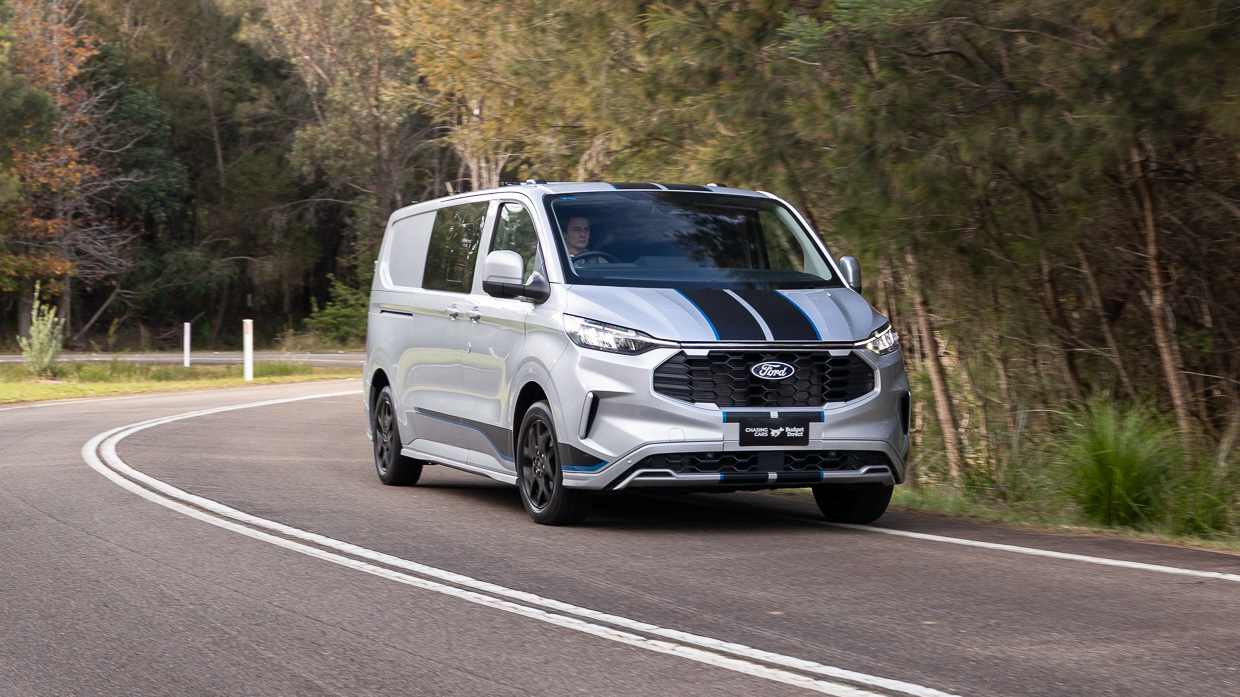
The body-on-frame construction, tall-set body, leaf springs and live rear axle mean a generally more unsettled ride quality — even though the Ranger is basically the best of the bunch.
The new Transit Custom, however, with its independent rear suspension and lower ride height, is more sophisticated. It keeps occupants flatter, with less wallow, heave and general better ride control. Plus, the steering feels even better than the ute.
Urban practicality
In the city, the Transit Custom can be a touch intimidating thanks to the sheer size. In truth, it’s a very easy vehicle to place with superb forward visibility owing to a short bonnet and big side glass.
The commanding, high-set driving position gives a great view-point of the road ahead, and there’s stunning practicality in the cabin: double gloveboxes, plenty of cup-holders, multi-layer door bins, and hidden wireless charging pad plus a huge number of USB ports.
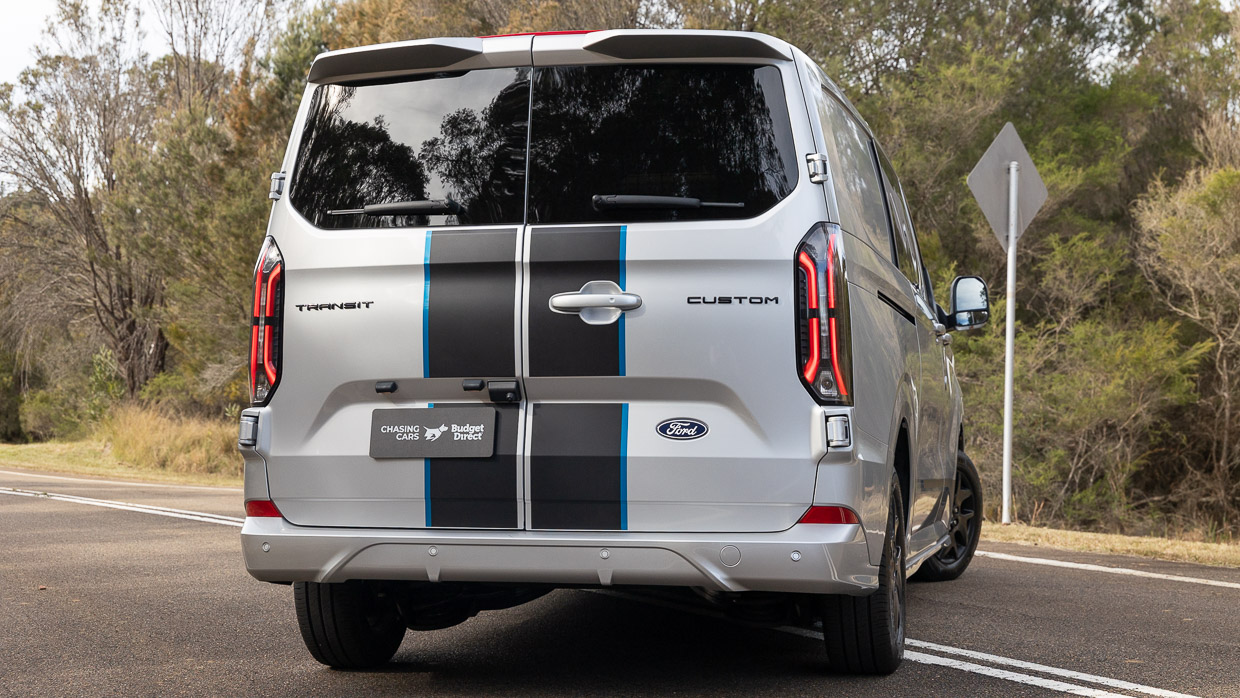
It may be wide, yet the Transit Custom has a secret skill in tight perpendicular parks: sliding rear doors open in less than 10cm and you can easily walk through into the front captain’s chairs.
At the end of the day, the Transit’s sheer size is its undoing. You can’t get the Transit Custom into a lot of Sydney’s older multi-storey carparks. Some are height limited to 1.8, or even 1.75 metres, precluding both of these cars.
But the majority seem to be 1.95M, which permits the Ranger (1918mm tall) but not the Transit Custom Sport (1985mm).
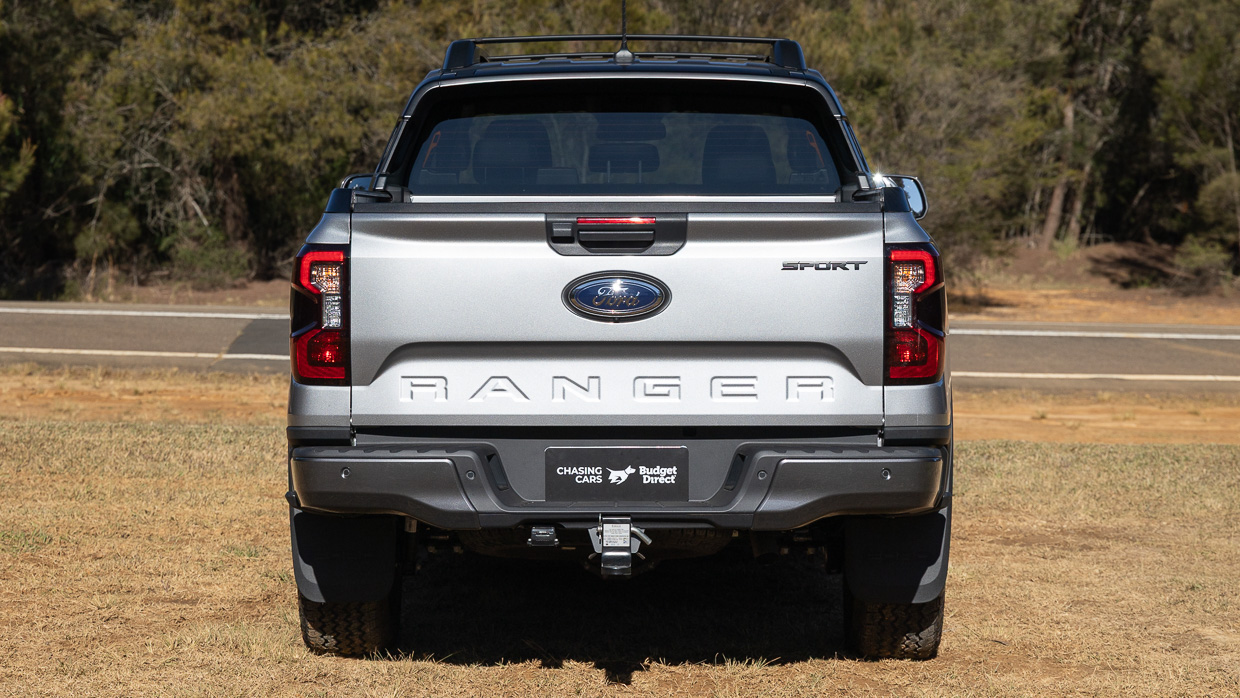
With a closer back window and slimmer B-pillars, the Ranger’s visibility out the back and sides helps rescue the compromised front view.
And when it comes to back seat comfort, the Ranger’s bench remains quite upright and compromised next to an SUV, but the rear windows go all the way down, plus it’s easier to access the top tether points for mounting child seats than the Transit Custom.
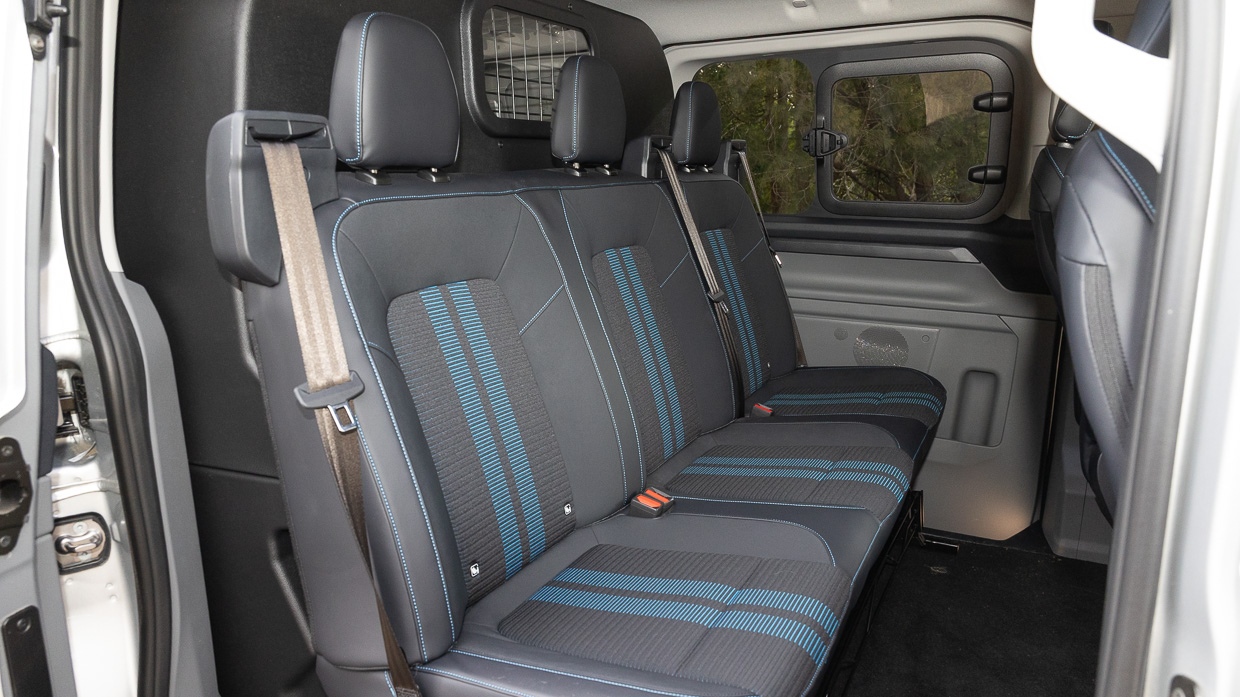
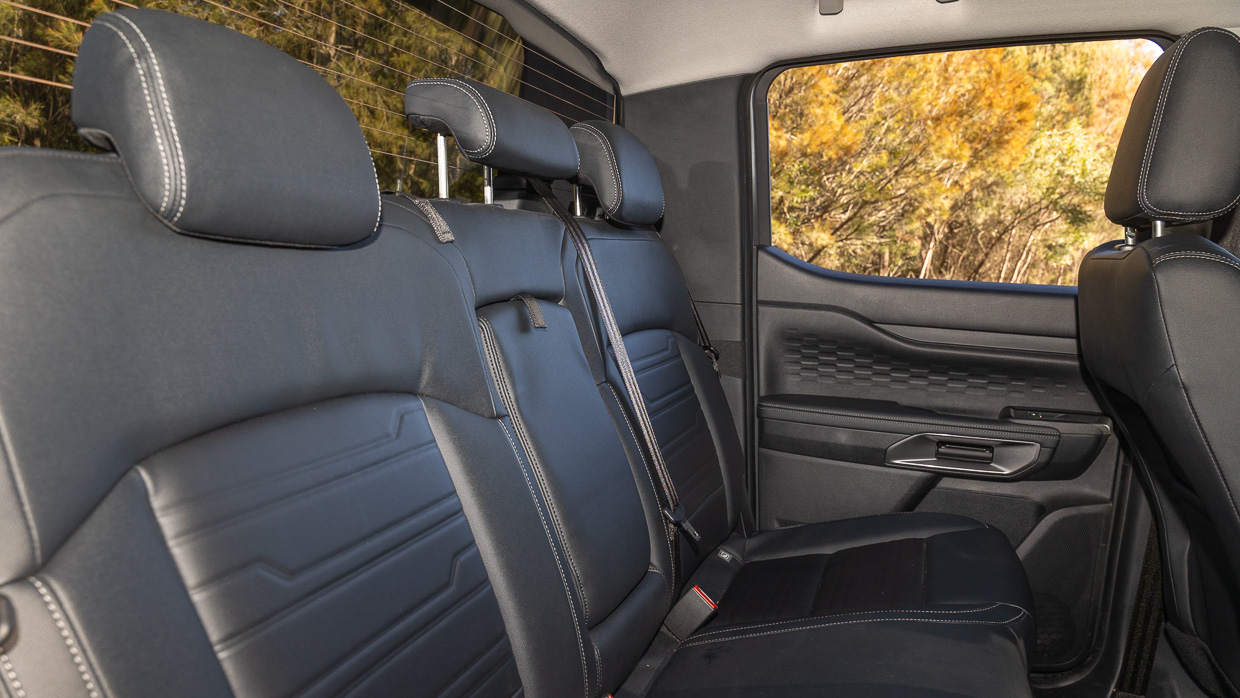
The Transit Custom may have more space and a better view out front, but the rear seats are dark and the windows don’t roll down — chalk this one up as an unexpected win for the ute.
Passive safety
Active safety is all the rage these days, and both vehicles scored five stars in ANCAP safety testing, reflecting strong crash worthiness and a litany of aids which work well in practice.
Passive safety (how a car brakes, road-holding and even straight line speed) remains deeply important in avoiding the worst in the first place, however.
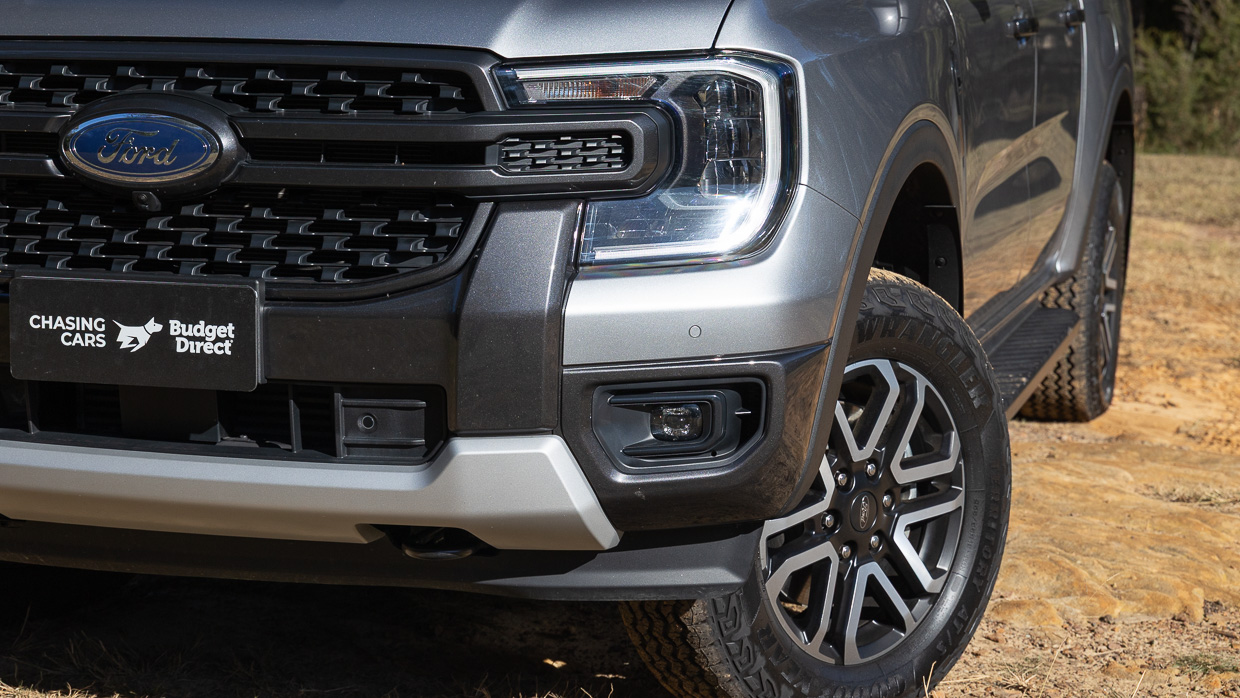
Theory goes that a 2.3-tonne ute with all-terrain tyres isn’t going to be much good at stopping from 100km/h, and that’s sort of true. We recorded 43 metres in the dry. A ‘good’ result for passenger cars is somewhere in the 34-38 metre range.
The Transit Custom was just a little worse, though, which was surprising. It recorded 44 metres at its best. There’s lots of weight over the nose as well, which make the Transit Custom squirm more under heavy braking than the Ranger.
In 0-100km/h acceleration testing, it was no surprise the V6 ranger trounced the Transit Custom at 10.06 vs 7.87sec.
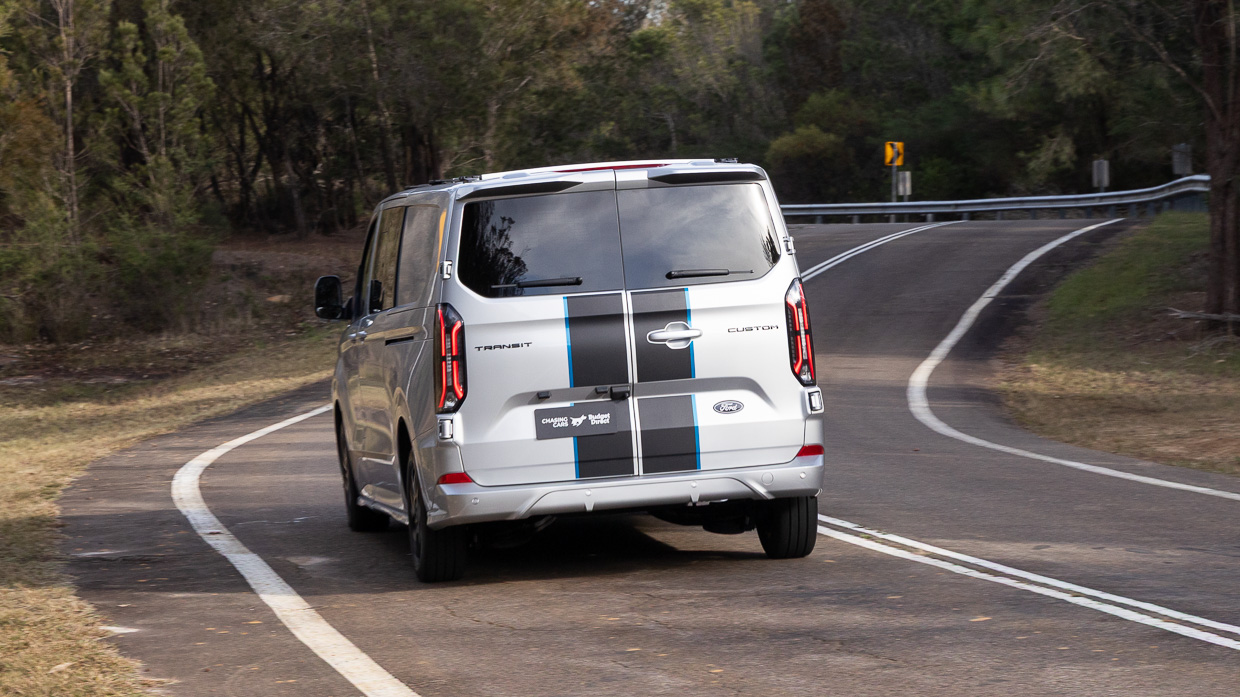
What was surprising was that, although more fun to drive, the Transit exhibited greater instability mid corner, tending to understeer or oversteer sooner than the more planted and consistent Ranger Sport.
This was by no means an exhaustive comparison, but it was an eye-opening one, along with a good way to challenge preconceptions.
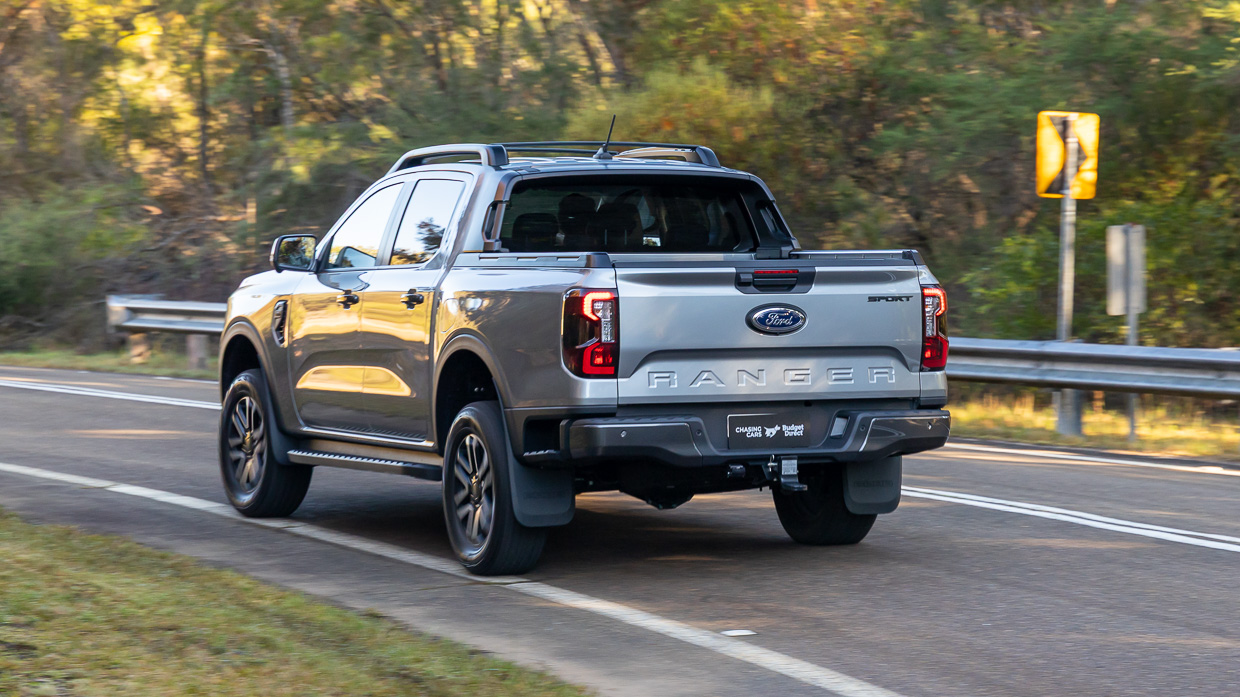
What eventuated was a clear winner if you’re looking for an all-round vehicle for Australian conditions, and it was the Ford Ranger.
The Transit still has my heart thanks to its excellence in some of the less objective ways — character and perception, for example — even if the Ranger is, overall, the more proficient vehicle. Food for thought.
Month 2: Transit Custom on tour
- Kilometres: 4759km
- Fuel consumption: 7.2L/100km
It might come as a surprise that the Transit Custom keys are hot property in the Chasing Cars office.
It was immediately put into long distance touring mode by your humble writer, with a 1200km round trip from Sydney to Yackandandah for a weekend away mountain biking, appreciating sporty cars, and consuming tasty beverages.
During the well-trodden Hume schlep, I discovered the Transit’s superb drivability extends beyond the city limits.
It may be down 30kW and 110Nm down on a twin-turbo Ford Ranger (which weighs about the same) yet the Transit feels punchy and unflustered climbing steep grades at 110km/h.
Only when you really ask a lot, for example overtaking B-doubles on country roads, does the Transit’s leisurely acceleration make itself known. Yet it flows beautifully through twisties, feeling remarkably car-like.
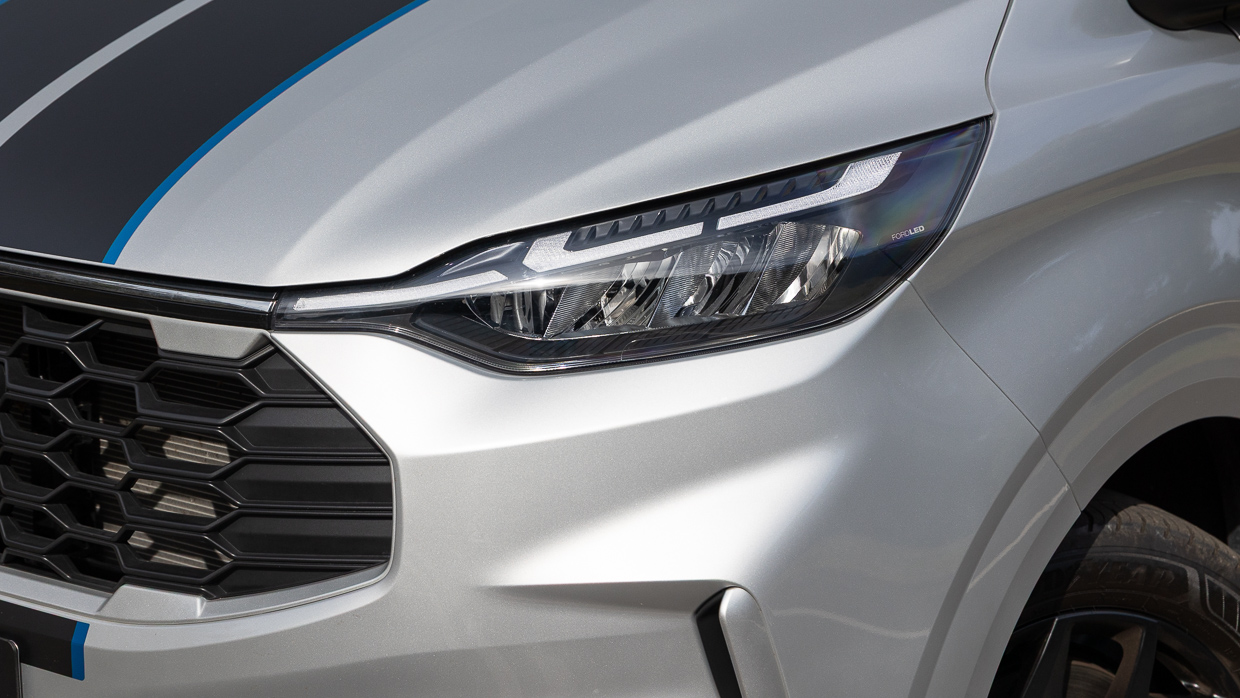
That said, it fell a long way short of matching my trip companions — a Porsche 911 Carrera ‘991’ and Jaguar E-Type 2+2 — for outright driving joy.
One major flaw we discovered was the Transit’s poor auto highbeam calibration. It’s a system that should effortlessly blend into the background… but not this one. You really notice how long it takes to dip when cars are coming, and yet how sensitive it is to bright roadside signs.
It’s double annoying, because the left stalk takes care of wipers and high beams, as the right stick is used for gear shifting. It took all sorts of futzing around to figure out manual highbeams so as not to blind other road users.

This was a complaint mirrored by AV specialist James Mort, who packed the Transit Custom full of Prime Ministar’s members and gear for an east coast tour, supporting The Rubens.
It’s a tough ask, fitting five grown lads, their band equipment (and sanity beverages) on board but the Transit Custom shrugged it off, Mort noting the same effortlessness from the relaxed yet confident powertrain.
But band trips mean a lot of kilometres, and despite the Transit Custom’s impressive sub-7.0L/100km cruising economy, you’re going to need to fill up and, after a total of 8000km on the odometer, likely some AdBlue.
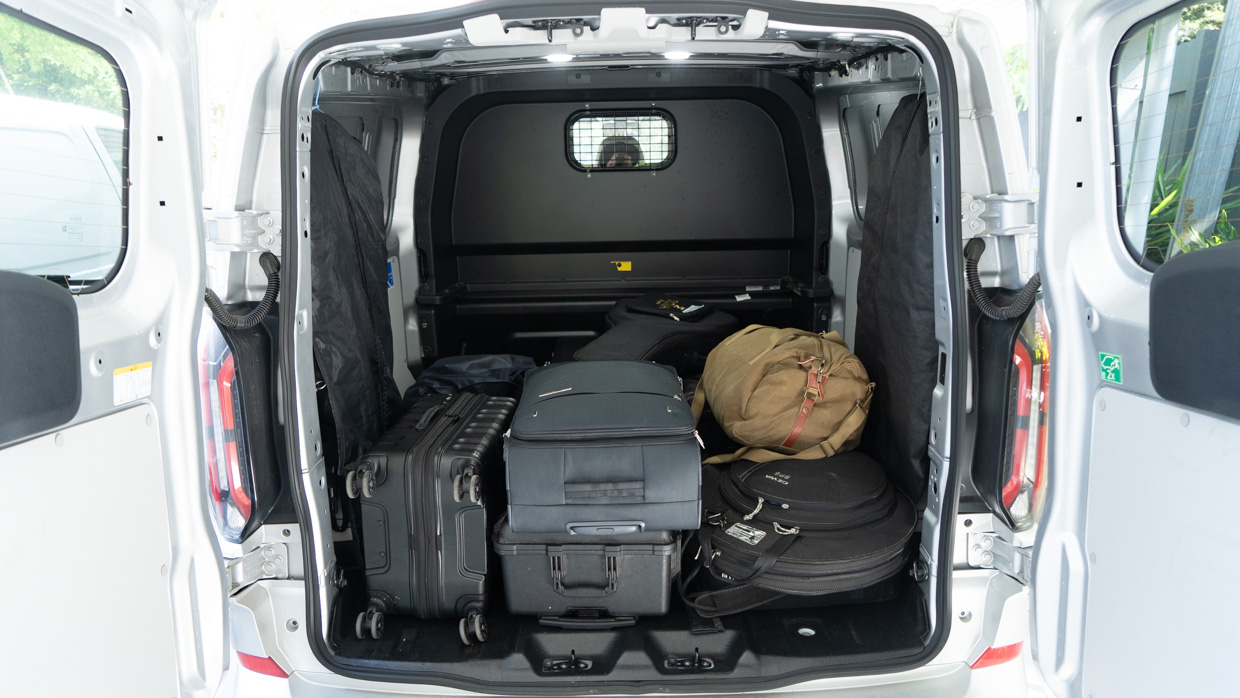
It’s not nice stuff, the exhaust fluid, so where possible filling up from a proper pump — rather than an expensive bottle of the stuff — is preferable. Makes spilling less likely and keeps your hands from burning.
My advice? Get some rubber gloves to leave in the car if you own a modern diesel.
Problem is, it’s typically found near high-flow diesel pumps, which the Transit doesn’t accept. Good as a tour bus, though? You bet. Comfortable chairs, a brilliant view out front, quiet on the motorway and remarkably smooth riding.
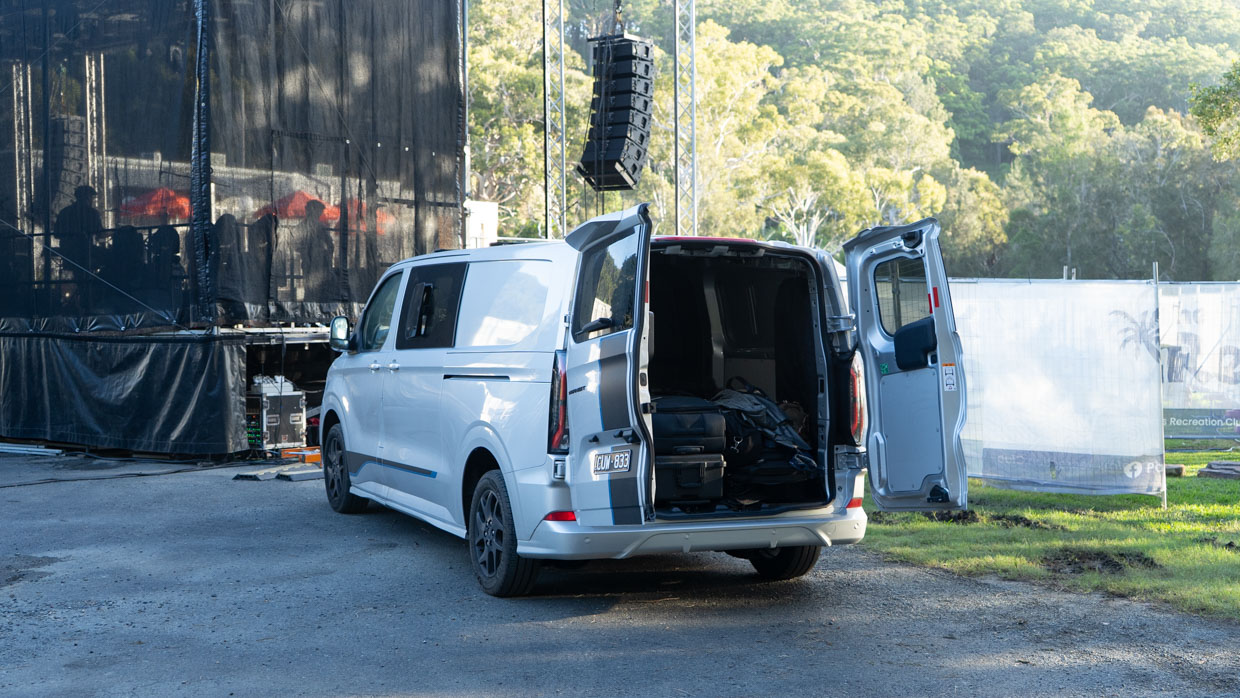
It’s the sort of vehicle a Gen X, guitar-loving parent could use as a double duty vehicle, carrying as many kids to school as amps to the gig on the weekend.
In the same breath, the Transit did a much better job of keeping my mountain bike out of the elements, and away from thieving hands in country towns.
Would I have it over an equivalently priced dual-cab ute? I think so, but a conclusive test next month will give us a concrete answer…
Month 1: Taking delivery of the Transit Custom Sport
>
What is it? It’s a van! But this isn’t just any van, it’s one for the whole fam’, packing two rows of seating into the body with a bulkhead separating the cabin from cargo space.
Sport is the top trim level in the Transit Custom world until the 4×4 Trail arrives, and ours is the long wheelbase. Only options are premium paint, which ours has (Agate Silver, $700), and the ability to swap the standard barn doors for a lifting tailgate.
What’s a Transit Custom? As a nameplate, it’s right up there with Porsche 911 and Land Rover Defender for icon status. So if you don’t know what a Ford Transit is, well, you should. That said, this second-generation Transit Custom is a fresher face in Ford’s van family.
It sits below the full-size Transit as rival to other mid-size vans, such as the Toyota Hiace, Hyundai Staria, LDV V70, and related Volkswagen Transporter T7. Again, due to this vehicle’s configuration, it might be able to tempt Kia Carnival and the new MQB Evo-based VW Multivan buyers to go a bit more commercial.
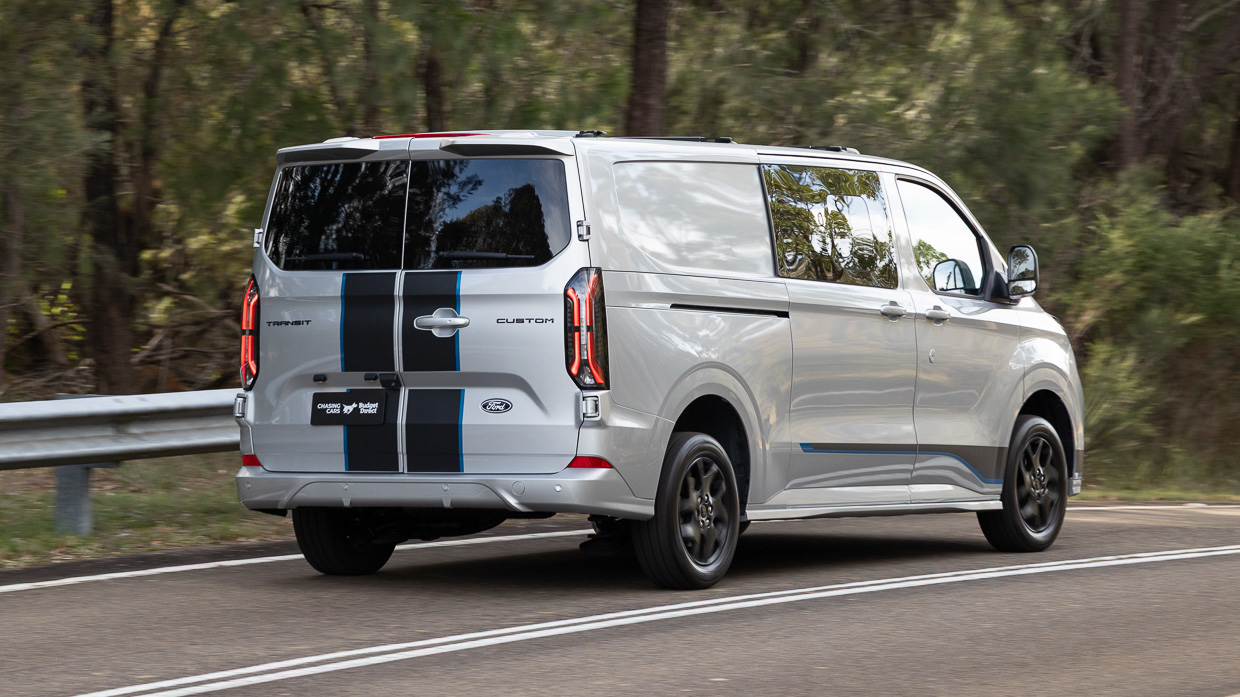
The Transit Custom Sport LWB measures 5450mm long, 2275mm wide (including mirrors), 1991mm tall and rides on the extended 3500mm wheelbase. With five seats, the load space is, naturally, a little smaller, than a single-row option.
It is still generous, with the Transit Custom’s load bay measuring 1392mm wide between the arches, a height of 1425mm, and length of 2004mm for a total load space of 4.3 cubic metres. Payload is up to 1058kg.
For context, the two-seat Trend LWB has a comparatively huge 6.8 cubic metres with payloads up to 1223kg. All Transit Customs can tow up to 2500kg (braked).
Outside of pure van life, the Transit Custom underpinnings are also used for the Ford Tourneo people mover. Meanwhile, Ford is introducing a four-wheel-drive Transit Custom trail later this year for adventure seekers.
How much is it? At the top of the Transit Custom tree is our Sport DCiV which costs $62,990, before on-road costs.
What’s the spec of our car? The Sport comes with the following equipment.
- Dusk-sensing LED headlights with auto highbeam
- LED daytime running lights and tail lights
- Black 17-inch alloy wheels
- Keyless entry and push-button start
- Kerbside sliding load door
- Rear barn doors
- Front captains chairs with adjustable armrests, 10-way power driver’s seat, lumbar adjust, three-stage heating
- 13.0-inch multimedia touchscreen
- Wireless Apple CarPlay and Android Auto
- Connected navigation and embedded modem
- Wireless charging pad
- 7 x USB-C and 1 x USB-A outlets
- 12.0-inch digital driver’s display
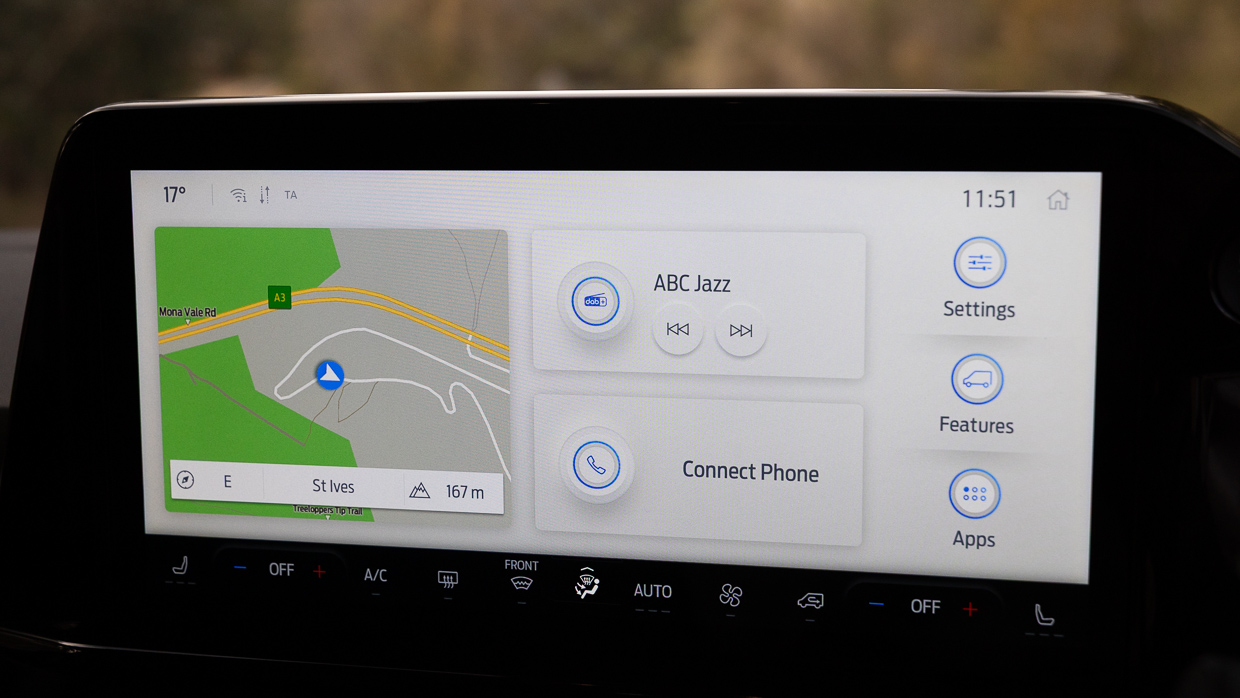
How long is it sticking around for? We’re in the Transit Custom for three months and more than 5000km, and it’ll be followed up by its Kia Carnival-rivalling people-mover sibling, the Tourneo.
What are we going to do with it? Everything we can. Weekends away, using it as the audio-visual packhorse, taking it to the shops (with carparks that boast more than 2.0 metres of height clearance), and packing five people in. It’s even going on a rock and roll tour with The Rubens!
Initial performance
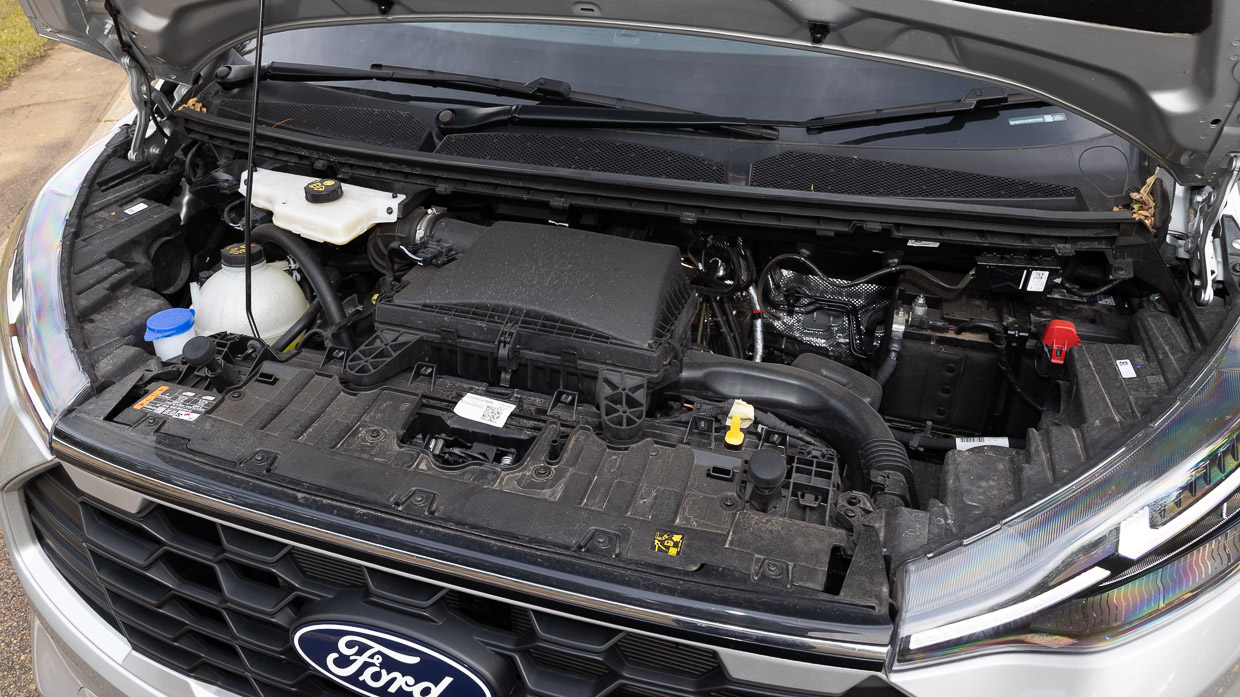
Ford only offers the Transit Custom with one diesel engine, a 125kW/390Nm 2.0-litre single-turbo four cylinder.
Performance is remarkably effortless around town considering it weighs nearly 2.2 tonnes, you can thank the well-calibrated eight-speed automatic transmission and good sound insulation. A 10-second flat 0-100km/h run feels plenty rapid for this kind of vehicle
Ford’s bringing two more powertrains to the mid-size van later this year, the petrol-based plug-in hybrid and a fully electric version, too. Our diesel has an official 8.0L/100km combined fuel claim.