



2022 McLaren 720S Spider Review: Redefining Speed
On a bright sunny Miami morning back in 2019, I stepped into a McLaren 720S for the first time. Up until that point, I thought I had speed figured out, with plenty of seat time in supercars from various brands. However, when I slammed my foot down, and that 720S sprung into life, I realized I had it all wrong. Nothing accelerated like it, and with its turbo noise whistling behind my ears as it violently pinned me to my seat, I learned the difference between supercar and hypercar levels of performance.
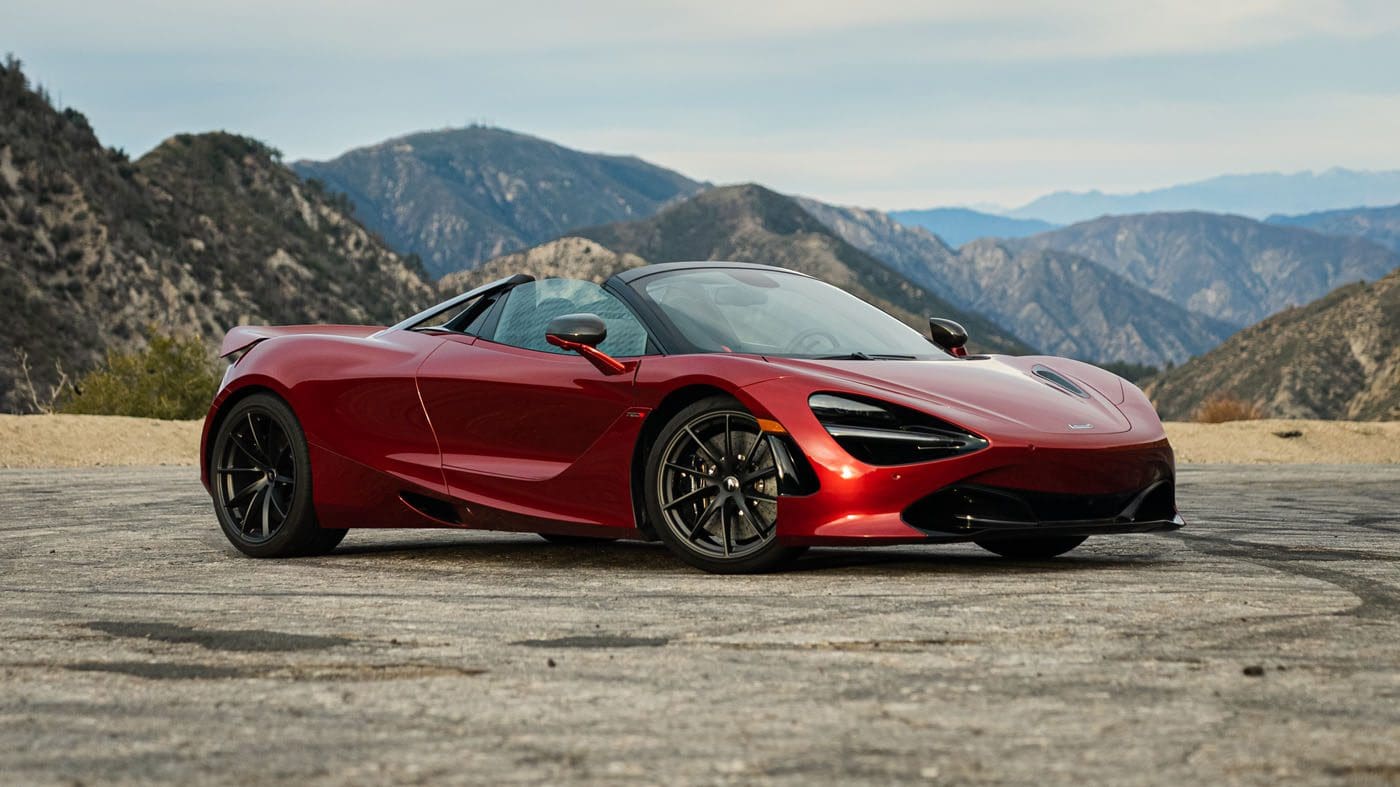
To my delight, nearly three years later, the British carmaker tossed me the keys to a 2022 McLaren 720S Spider for a few days. Knowing well just how fast this car already was, my real goal was to figure out whether or not chopping off the roof fundamentally changes the driving experience. However, despite the added heft from the retractable hardtop roof, it’s clear that McLaren’s engineers are part-time wizards. Only magic could deliver a drop-top that handles this well while delivering tremendous performance. Spoiler alert, the Spider, is the one to get.
Function Over Form
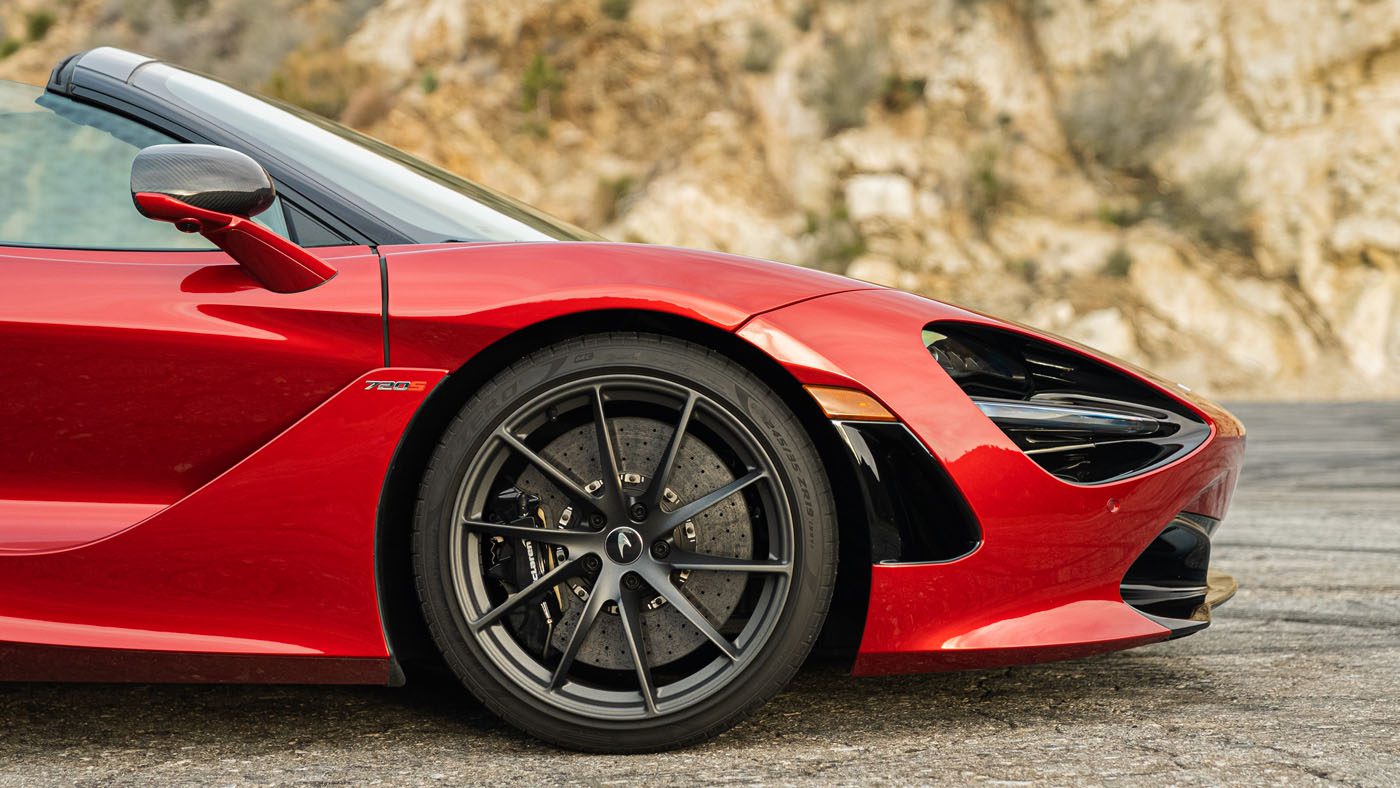
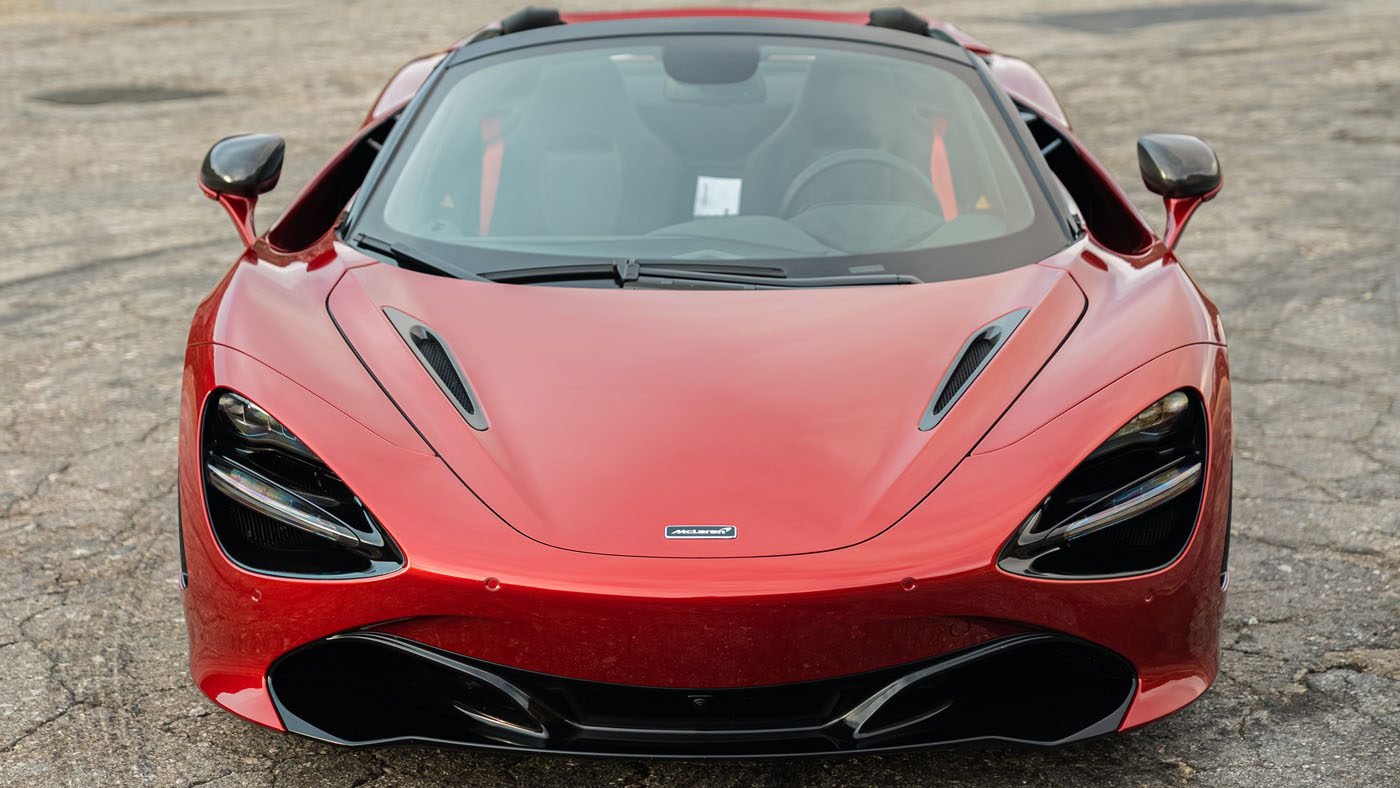
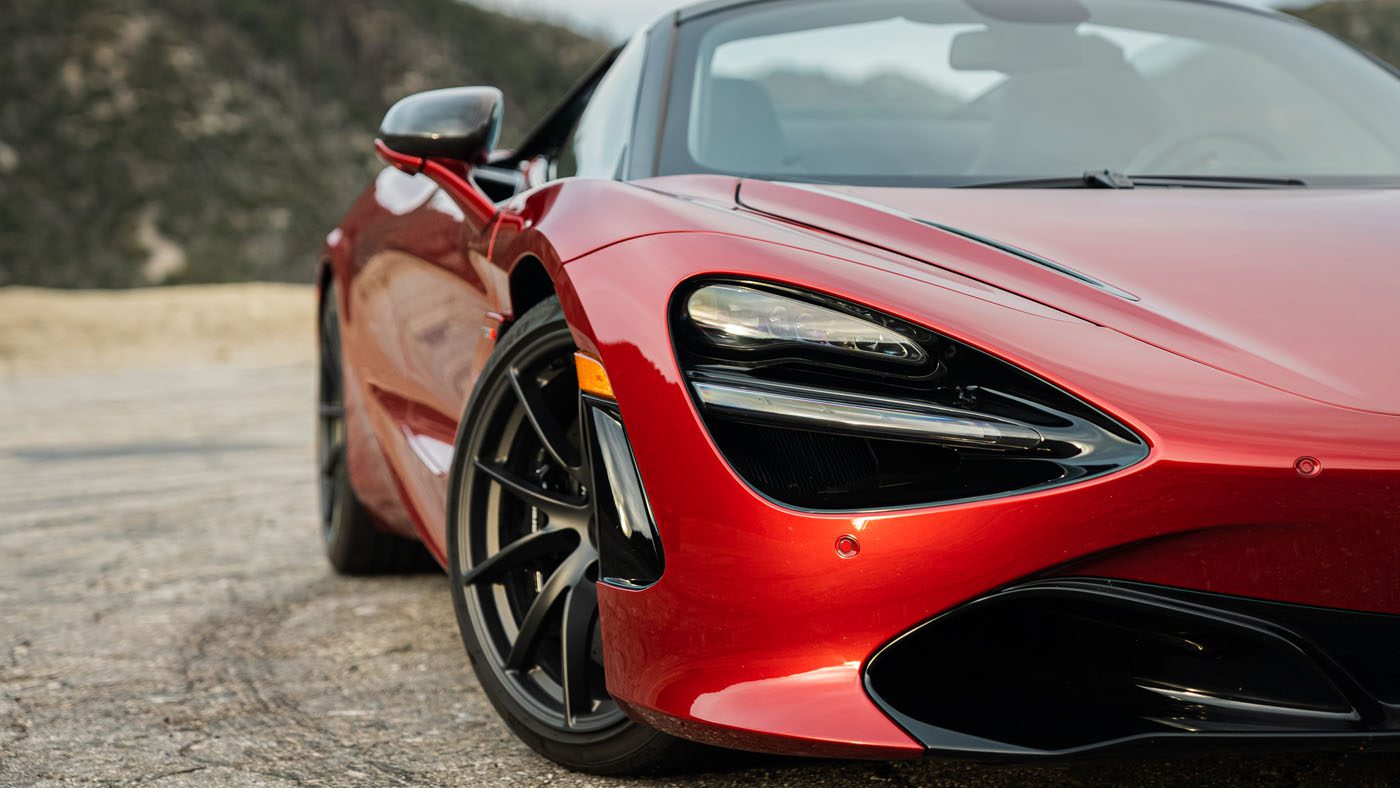
The 2022 McLaren 720S Spider is far from the prettiest thing on four wheels. However, there’s a real sense that it’s less styled and more shaped by aerodynamics. Take the hollow headlights, for example, which allow air to flow through to a few hidden coolers. A quick look at the lower front valance reveals even more intakes, seemingly disguised by the gloss black paint. Even the doors have a trick up their sleeve, helping channel air around the car.
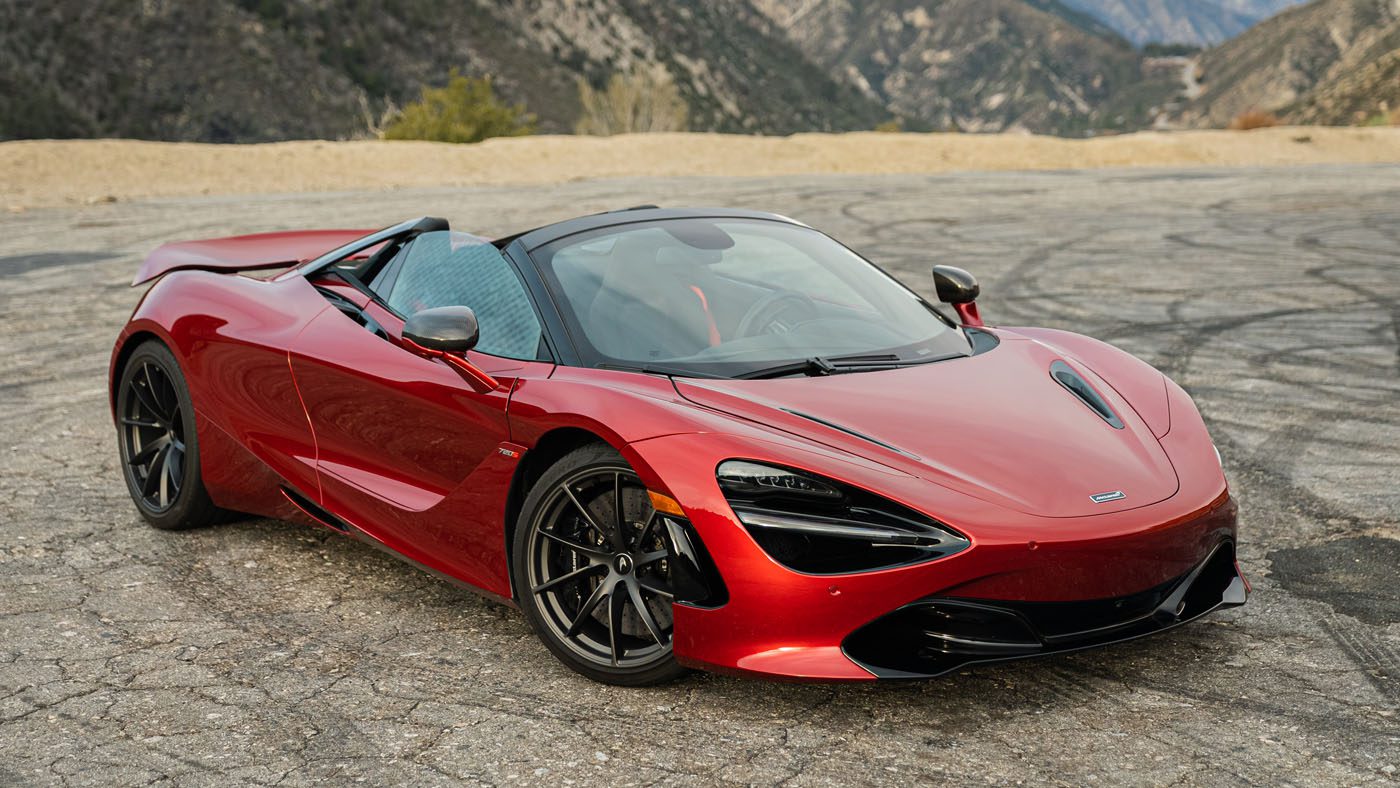
Step around to the rear, and the things heat up thanks to the massive adjustable rear wing. While it mainly generates downforce as you accelerate, the wing doubles as an air brake when you stomp on the stop pedal. Aside from its sheer size, its many positions give the 720S a distinct look, whether you’re stopped at a light or blasting through the canyons. Perhaps the best part of the 720S’s design is the twin exhaust tips that shoot out of the front bumper, flanked by two thin LED taillights reminiscent of those in the P1.
Also Read – Ferrari F8 Tributo Review: Pushing Street Limits
My tester’s Amaranth Red paint and matte black wheel combo work beautifully, effortlessly reflecting light with plenty of sparkles while teetering somewhere between orange and burgundy. While black wheels often get lost in a void, my tester’s set matches well with the rest of the black trim found throughout the car. Overall, there is no denying that the 720S looks purpose-built, regardless of the angle, and in this case, extreme attention to detail is perhaps even more impressive than just a pretty face.
No Drop Top Drawbacks
Convertibles almost always weigh more than their fixed-roof counterparts, and the 2022 McLaren 720S Spider is no different. However, none of that weight comes from additional chassis strengthening. Thanks to its carbon fiber monocoque construction, the 720S’s chassis remains just as stiff, even when without a roof. Instead, the added 108 lb comes from the retractable hardtop, which can fold away in 11 seconds up to 31 mph.
On the road, the 720S Spider’s twin-turbocharged 4.0-liter V8 works as a great equalizer thanks to its 710 hp and 568 lb-ft of torque output. With that much power, the Spider hits 60 mph in 2.8 seconds. However, the impressive part is that it’s no slower than the Coupe, marking no speed drawbacks. Flat out, it’ll reach 124 mph in 7.9 seconds before continuing to its 212 mph top speed.
There is nothing subtle about how the 720S Spider accelerates. With peak torque coming in at 5,500 rpm, there’s a slow build through the lower part of the rev range until its turbos spool up, and you get the full punch. Thanks to the seven-speed dual-clutch transmission sending continuous power to those rear wheels, the 720S doesn’t let up once it hits boost.
Also Read – Lamborghini Huracan EVO RWD Spyder Review: Proper Supercar Theatrics
As I mentioned in the intro, this car redefined what speed meant to me years ago, and practically nothing has changed since. Despite stiff competition from across the globe, 720S sits on the performance throne as far as its segment is concerned.
Throw it into a corner, and the 720S Spider only gets better. Thanks to a fully independent suspension, it’s tough to unsettle the car as none of its wheels are physically connected. This allows you to take even the roughest roads at speed while retaining complete stability. Speaking of stability, there is no way to tell you’re in a convertible with the top up. There is no lack of rigidity or drawback in terms of handling dynamics. Additionally, its active dampers allow the 720S to be easily the most comfortable supercar I’ve ever driven.
Raw performance aside, the 720 Spider’s party piece is its steering. While most of its competitors rely on electric power steering, McLaren has stuck to a hydraulic setup. The result is excellent feedback through the wheel. It’s also quick, making the car’s front end feel agile and light.
Lastly, we’ve got the brakes. While the large air brake in the rear certainly helps out, McLaren gives you carbon-ceramic stoppers as standard. You have to stomp on the pedal to get their peak performance. Once hooked up, the 720 Spider’s brakes offer tremendous performance that’s seemingly endlessly repeatable.
A Truly Daily Drivable Supercar
Many supercars now double as potential daily drivers, and the McLaren 720S Spider may be the best one. While its independent suspension and adaptive dampers play a significant role, its overall comfort is supplemented by a comfortable, well-appointed interior. For starters, McLaren purposely lowers the height of the door sill, making it easier to get in and out of the driver’s seat.
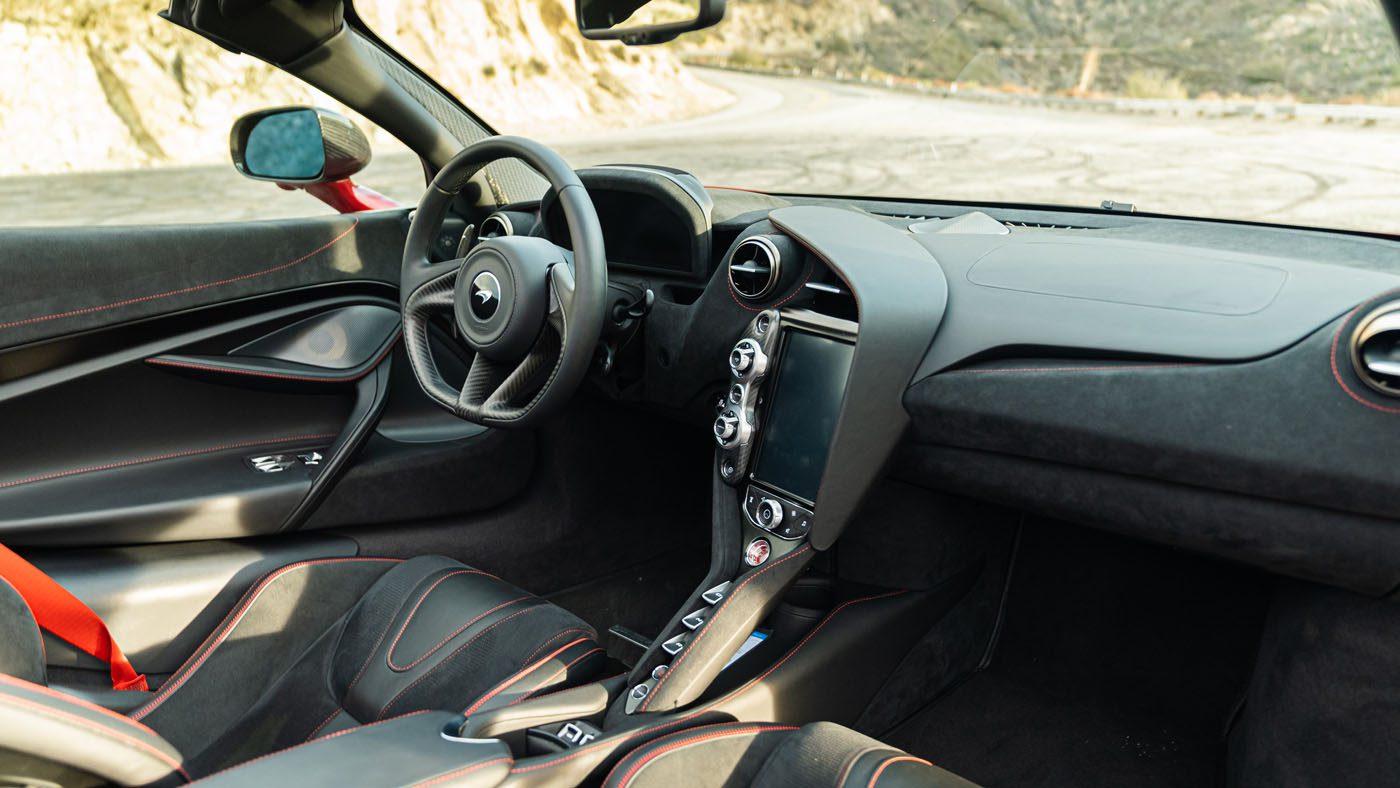
Once inside, my tester’s leather and suede interior continue the performance theme with a comfortable edge. The seats are spacious enough if you’re carrying a couple of extra pounds while keeping you perfectly in place through tight corners. Additionally, they’re far from rock hard, meaning even longer road trips should be a breeze.
In front of the driver, there’s a swiveling digital instrument cluster that changes as you move through different driving modes. In track mode, the screen pitches down, revealing a smaller screen on top with just your revs and speed. The whole act of the screen moving is exciting to see, almost marking a special occasion when going for a drive.
While the vertically oriented screen in the middle houses McLaren’s sleek infotainment system, it lacks Apple CarPlay or Android Auto connectivity, a real bummer since this car’s closest competitors at least offer smartphone connectivity as an option.
On the move, the 720S Spider’s interior is surprisingly quiet. Thanks to using a hardtop instead of a soft one, there’s good sound isolation, although you’ll always be a quick throttle push away from sweet turbo noises. All around, the 720S builds the daily drivability side of its character without detracting from its central role as a supercar in any way.
Big Performance Comes With A Big Price Tag
As great as the 2022 McLaren 720S Spider is to drive and live with, that performance comes at a significant sum. In the US, this car has a starting price of around $318,000. However, with optional extras such as the carbon fiber trim, my tester’s price hovers closer to $375,000.
After spending a few days behind the wheel, it’s clear to me that the 720S Spider delivers on just about every front. Whether it’s outright performance or livability, this McLaren shines as completely worth its price tag. Additionally, there’s no penalty for choosing the Spider variant. Instead, you gain the sweet sounds of a turbocharged V8 right behind your ears. Above all else, my biggest takeaway is that despite not having driven one for years and driving just about everything else since then, the 720S is still easily one of the most impressive vehicles I’ve ever driven.
See All McLaren 720S Spiders For Sale
Tags: 2022 ReviewsFeatured
ADVERTISEMENT
Ford Mustang Mach-E Review: More Than Just Its Stats
by Gabriel Vega
in Ford News, Mustang, Reviews
On paper, the Ford Mustang Mach-E isn’t a clear winner. With slower 0-60 times than a Model Y and lower range figures, the Tesla should be the obvious choice. However, after spending a week with the Mach-E, it’s clear that its greatest strengths aren’t stats to brag about. Instead, this electric Ford nails the details owners will care about daily by providing a driving experience that is equal parts comfortable and refined, leaving no obvious signs that this is the American carmaker’s first attempt at an electric crossover.
The exact Mach-E I’ve been driving is a dual-motor Premium trim fitted with the 98.8-kilowatt-hour battery delivering an estimated range of 270 miles. All in, this electric crossover comes with an as-tested price of just over $50,000.

Retro Cues For The Future
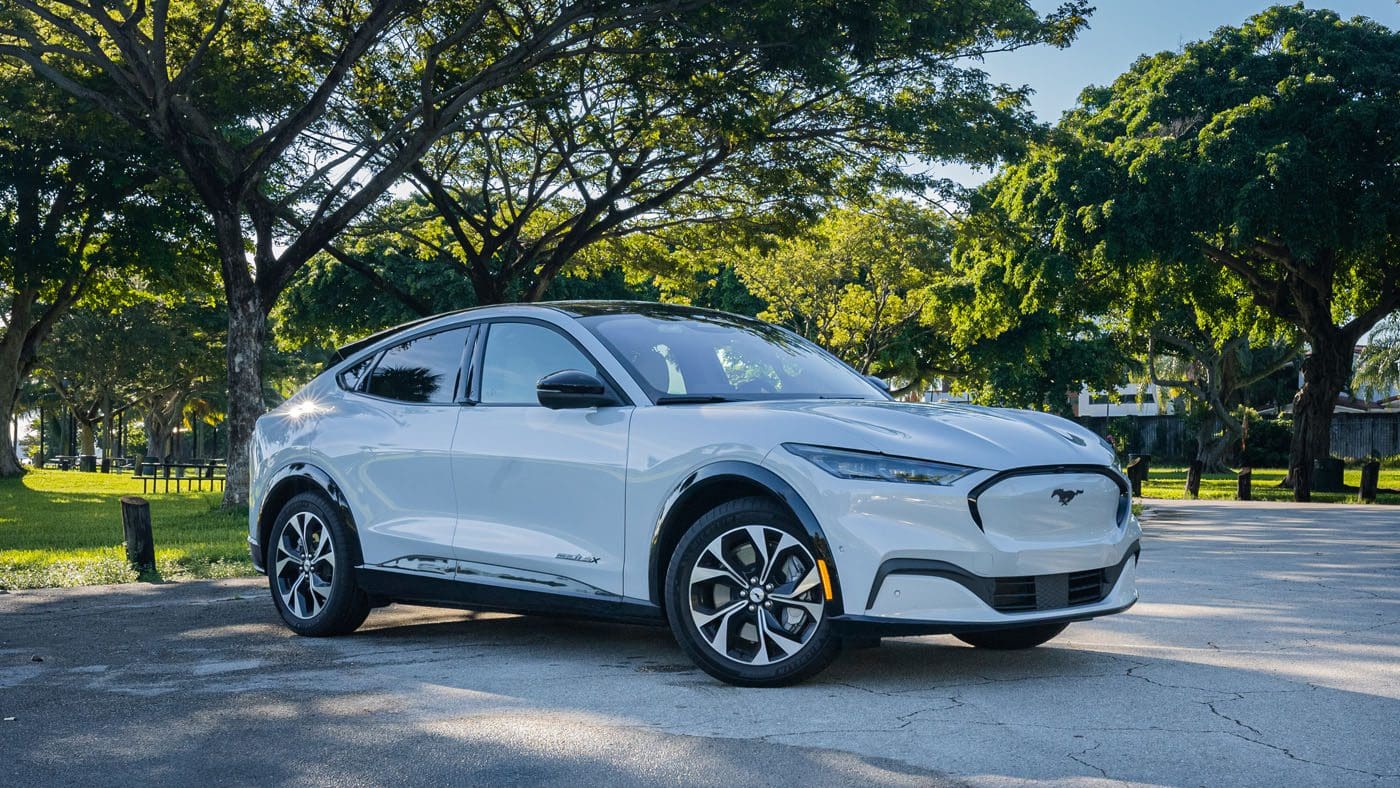
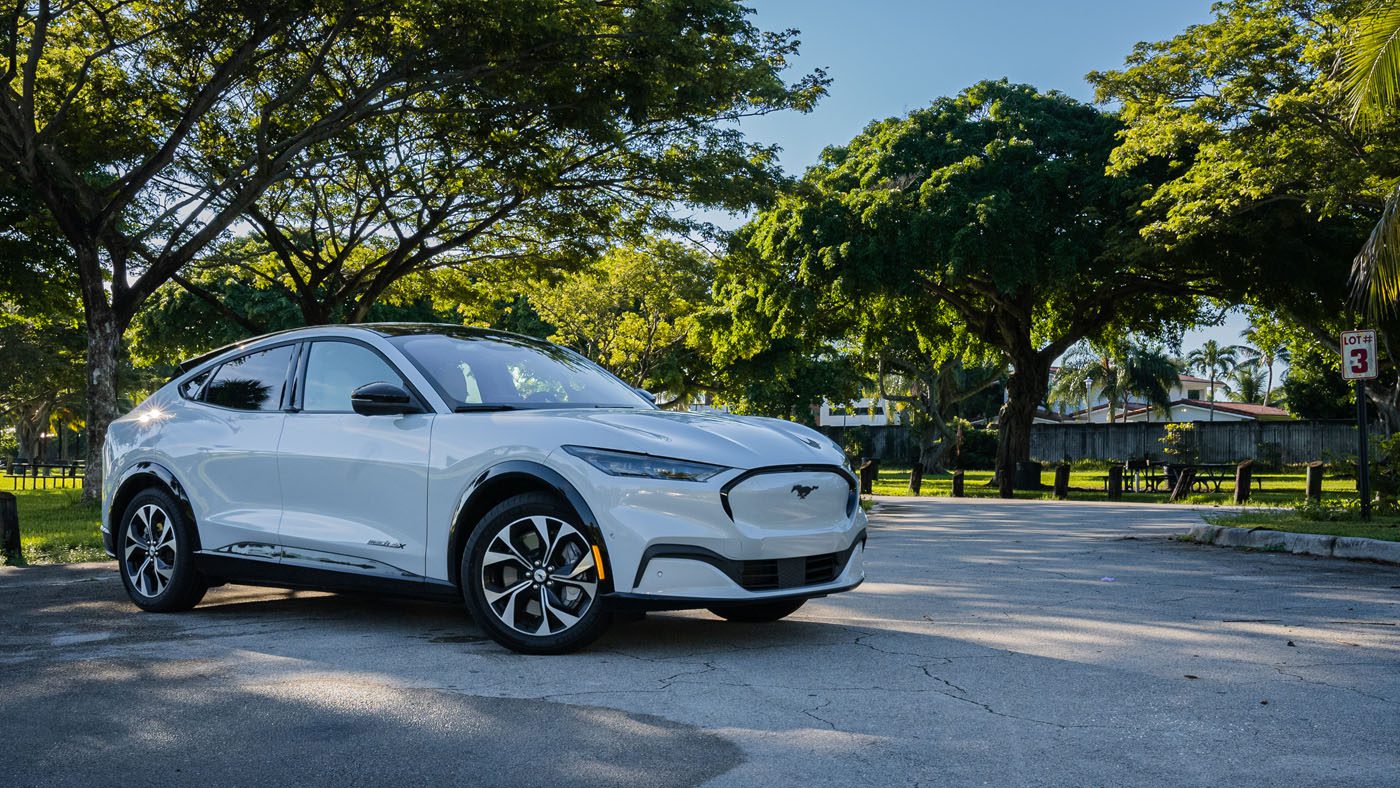
Despite being an electric crossover, the Ford Mustang Mach-E’s visual connection to its muscle car sibling is instantly recognizable. With widened rear arches, sharp creases on its hood, and taillights that come straight from a 60s Mustang, there is enough retro styling here for the Mach-E to establish itself as a performance-oriented crossover.
While it may want to look as aggressive as possible, aerodynamic efficiency is the name of the game, especially if it wants to deliver the best range and performance figures possible. While its overall shape looks quite close to its competitors, Ford’s design team employs clever visual tricks to keep the Mach-E looking as sharp as possible. A close look at the Mach-E’s sloping roofline reveals one such trick.
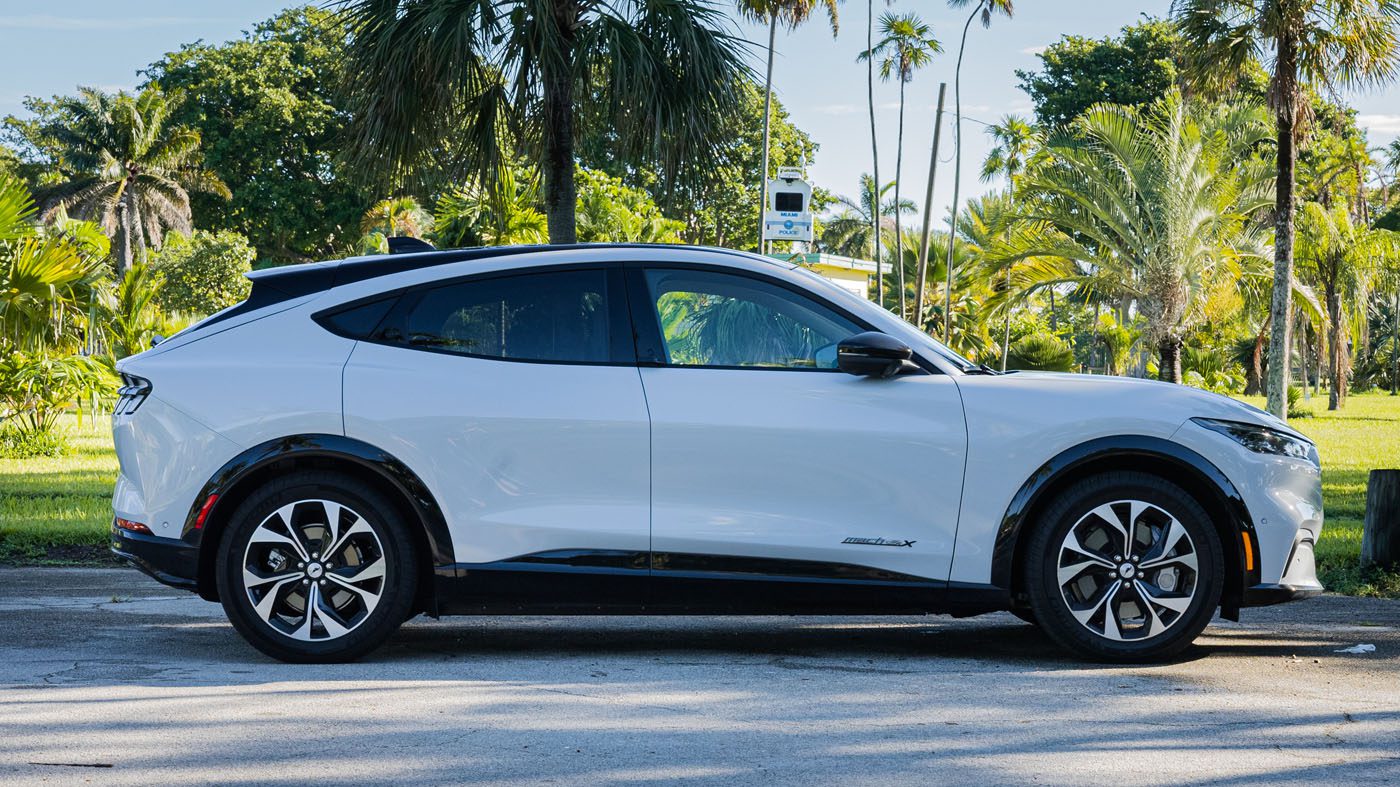
Thanks to a gloss black roof paired with a contrasting body color, the very top of the Mach-E visually vanishes, giving the impression of a more aggressively sloped roof. While this makes the Mach-E look sleeker, it delivers an aesthetic benefit without losing efficiency or interior space.
Like the muscle car upon which it takes inspiration, you won’t find a single Ford badge on the outside of the Mach-E, only the classic Mustang logo. This is a plus as this electric crossover does away with unnecessary badges, only playing to its sleek overall design.
Compared to a Tesla Model Y or Volkswagen ID.4, I’d take the Mach-E every time. By blending in retro styling cues with forward-thinking design, this electrified Mustang delivers an aesthetic that is both efficient and genuinely nice to look at.
More Than Just Its Stats
Powering my Ford Mustang Mach-E Premium tester is the model’s extended range 98.8-kilowatt-hour battery, delivering an estimated range of around 270 miles. In practice, this estimate was incredibly accurate, sometimes delivering even greater range figures than advertised. This electric powertrain produces 332 hp and 417 lb-ft of torque sent to all four wheels thanks to a dual-motor configuration.
Despite not being the top GT trim, this AWD Mach-E delivers all the real-world performance anyone will ever need. Flat out, the AWD Mach-E will reach 60 mph in around 5.5 seconds, about 0.7 seconds slower than an equivalent Model Y and around on par with an equivalent ID.4. In the real world, these differences are meaningless. The Mach-E feels just as fast as its closest competitors from a red light with a strong initial shove that dies down considerably once at speed.
While they may be similar in performance, the electrified Ford stands out with its handling dynamics, well above both the Tesla and the Volkswagen. Around town, the Mach-E is incredibly comfortable, quickly soaking up even significant imperfections on the road. However, on the move, even without adaptive dampers, the Mustang remains stable and planted, with its most important limiting factor being its low rolling resistance tires. In contrast, its competitors are equally comfortable on the road but suffer when they pick up speed.
Get on the highway, and the Mach-E’s benefits continue to shine with a quiet and refined cabin that lets in minor road or wind noise. Coupled with the supple suspension, the Mustang pulls ahead by supplementing its comfort with refinement.
Segment-Leading Build Quality
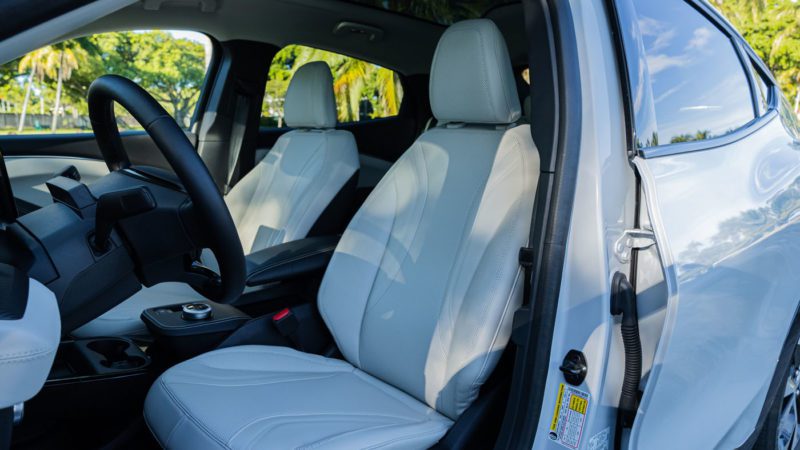
The idea of refinement continues in the interior, where the Ford Mustang Mach-E shines with its build quality. During my time with my tester, nothing was out of alignment or making unusual noises. Despite using extensive plastics for the interior, Ford disguised them cleverly by employing different textures and soft-touch materials throughout. Even at its $50,000-plus as-tested price, this Mach-E feels like a vehicle in its price category should.
Comfort-wise, the Mach-E’s seats offer ample adjustability and are road-trip ready, proving quite comfortable even on longer drives. There’s even ample space throughout the cabin for tall adults in both the front and rear rows, thanks in large part to the roof’s visual trickery.
In terms of tech, the main centerpiece of the interior is the vertically oriented 15.5-inch infotainment screen. To me, this is the only main drawback of the Mach-E as its interior is less sleek than its exterior, with a massive screen slapped in the middle. While it does offer Apple CarPlay and Android Auto connectivity, Ford’s native infotainment system is pleasant to use and easy to navigate. In front of the driver, you’ll find a comparatively tiny, 10.2-inch display that gives you essential info such as available range and speed.
Is The Mach-E The One To Buy?
As mentioned in the intro, the Ford Mustang Mach-E doesn’t immediately shine on paper. If the fastest 0-60 time and longest range are of utmost concern, then the Tesla Model Y is your best bet. However, the Mach-E nails the aspects buyers will appreciate the most daily, such as comfort and refinement while delivering strong performance. We also can’t forget that an even faster GT trim is available with added benefits such as larger wheels and tires, adaptive suspension, and stronger brakes, albeit at a higher price point.
If it were my $50,000 to spend with the current crop of electric crossovers available, the Mach-E would be the winner. However, as this segment heats up with tons of new competitors on the horizon, this electrified Mustang will have stiff competition in the years to come.
Tags: 2022 ReviewsFeatured
2021 Chevrolet Corvette Convertible Review: Drop Top Without Drawback
by Gabriel Vega
in Chevrolet, Corvette, Reviews
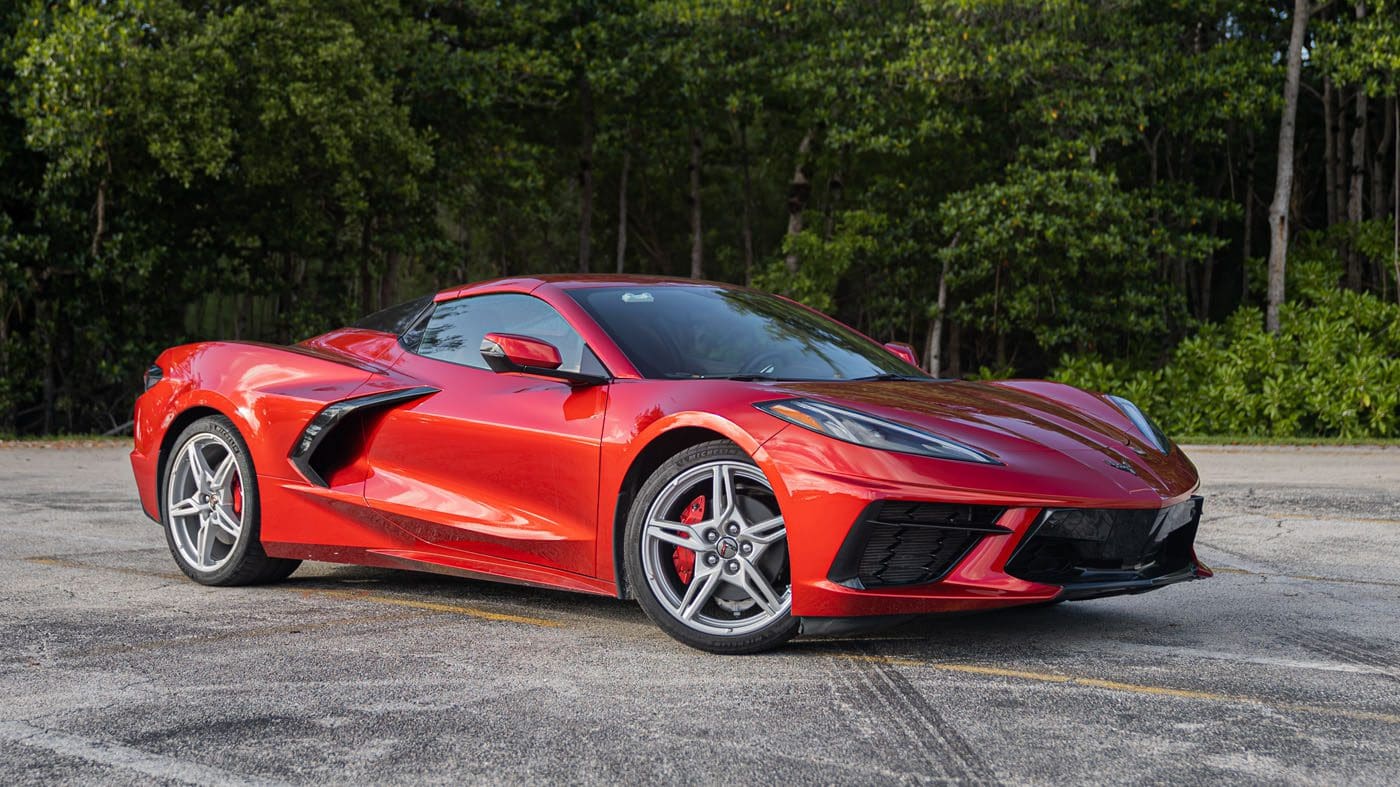
Since its introduction in the mid-1960s, the Targa top has served as a way to offer open-top motoring without losing structural rigidity or gaining unwanted weight, as most convertibles often do. Flash forward nearly 60 years, and these old drawbacks aren’t necessarily the norm anymore. Enter the 2021 Chevrolet Corvette Convertible with its mid-engine layout, composite materials, and clever engineering, which embodies just that, a genuinely open-air driving experience from a good performance car that offers little drawback.
The tester I’ve been driving is a range-topping 3LT, starting at $79,945, including a $1,095 destination fee. While the famed $5,995 Z51 Performance Package is missing, a week on the road didn’t leave me wishing for it. In fact, after several hundred miles behind the wheel, the drop-top Stingray has convinced me it’s the one to buy.
A Secret Convertible
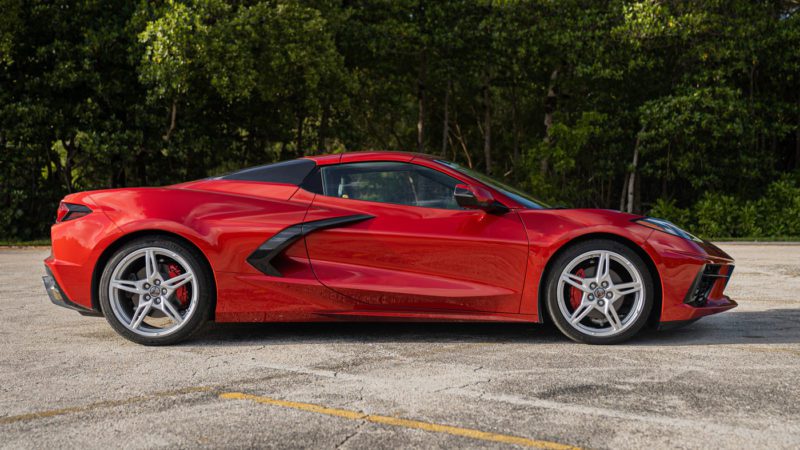
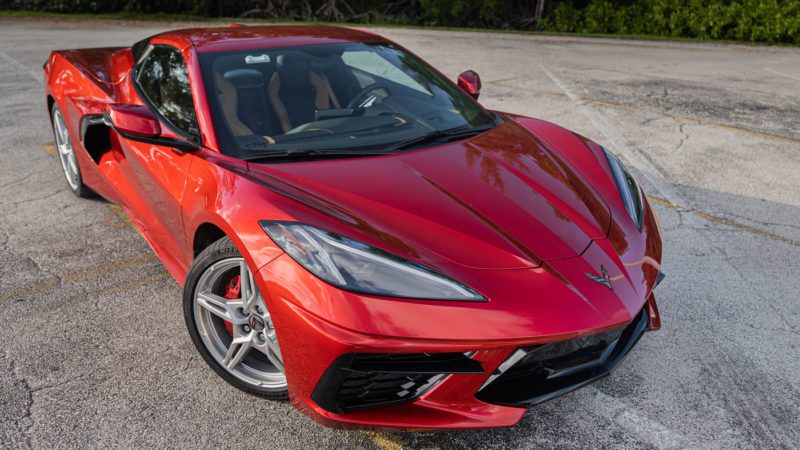
Walk by a 2021 Chevrolet Convertible, and chances are you won’t notice its roof folds at all. That’s because instead of sticking with the soft top it used in the last-gen, Chevy opted to give the Stingray a metal roof. Visually, this ties in the coupe and convertible together, revealing subtle differences at first glance. Step closer, and you’ll notice that the actual differences are pretty significant.
For starters, instead of having a sloping roofline characterized by a big solid piece of glass, you’ve now got a small rear-facing window flanked by two prominent structural components. While the convertible loses the glass panel that allows onlookers to take a peek at the engine, these stylistic changes change the car’s aesthetics for the better, giving it a more exotic look.
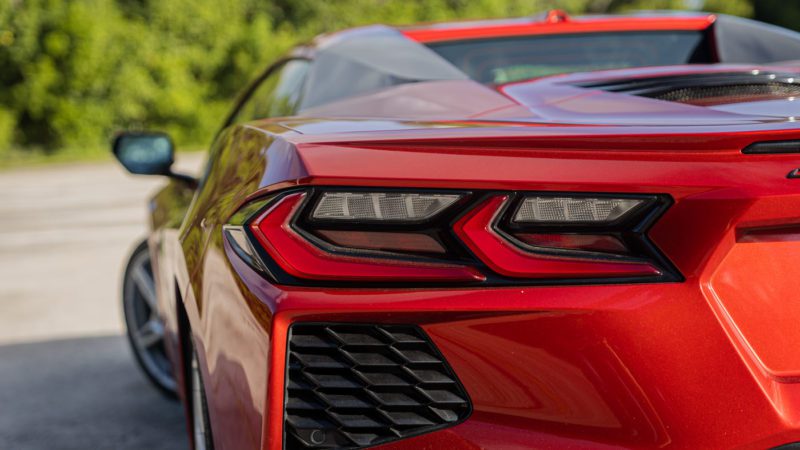
I wasn’t a big fan of the C8’s design initially, or even when my tester first showed up a few months back. My biggest initial complaint was that it looked a bit too angular in the front but simultaneously boxy in the rear without delivering the proper wide stance associated with mid-engined sports cars. However, after my week with it, my opinion changed quite drastically. I found myself appreciating just how much the C8 stands out, even in a city like Miami and its supercar surplus. While it’ll still split opinions for years to come, the C8 Corvette undoubtedly looks special.
Still A True Sports Car
On the road, the 2021 Chevrolet Corvette Convertible is pure magic. Losing the roof doesn’t result in botched handling dynamics or significant performance losses. Chevy claims that the C8’s chassis is so stiff that turning it into a convertible didn’t require additional strengthening. While the addition of the metal folding roof adds around 80 lb, practically unnoticeable in the real world.
Let’s not forget, the Corvette still has a naturally-aspirated 6.2-liter V8 delivering 490 hp and 465 lb-ft of torque. While that may not sound like a lot in today’s horsepower hungry world, that’s still good enough to rocket the drop-top C8 to 60 mph in just 3.0 seconds. Add that aforementioned Z51 Performance Package, and that time drops to 2.9 seconds, meaning even with the added weight, it’s still one of the quickest cars on the road.
Thanks to an excellent eight-speed dual-clutch transmission, the C8 can capitalize on every ounce of power it has to offer, meaning it’s lightning quick, regardless of the situation. Additionally, the transmission is silky smooth around town, staying relatively undetectable in most conditions, making the Stingray a great daily driver.
The use of magnetic ride control and four-wheel independent suspension means that the Corvette is genuinely comfortable, not just for a mid-engined sports car. The C8 soaks up bumps impressively in its softest, remaining smooth, even through crowded and poorly maintained city streets. In its sportiest mode, everything tightens up considerably, delivering excellent grip, high-speed stability, and an enjoyable driving experience.
The Convertible C8’s handling dynamics can be attributed to its unique suspension setup, implemented to cope with its added heft. This addition works well in practice, allowing the drop-top to drive just as well as its Targa top sibling.
A Striking Interior To Match
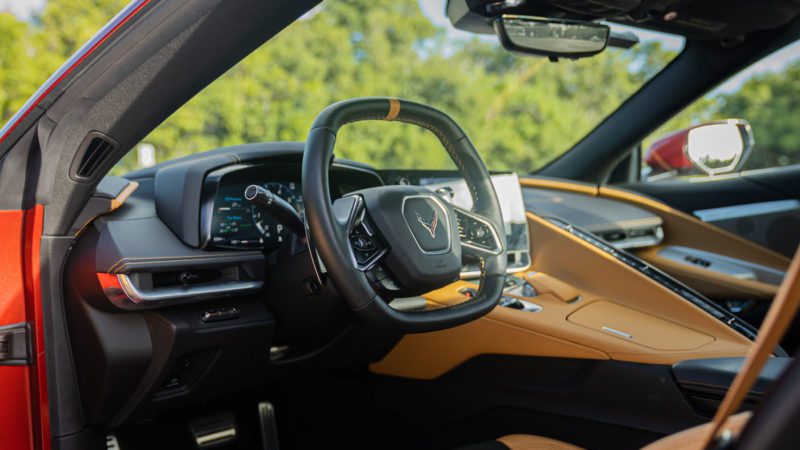
The 2021 Chevrolet Corvette’s over-the-top nature continues in the interior, where a large row of buttons seemingly divides the driver and passenger. At first, finding the right button felt like looking for a needle in a needle stack. However, after spending some time behind the wheel, I learned the position of the switches, and the ergonomics became less of a problem.
Perhaps even more striking is the squared-off steering wheel. While I completely understand that it has to be that shape to get a clear view of the digital dash in front of you, it still looks a bit unusual. However, from an ergonomics perspective, I found no issues with it, meaning even tight maneuvers were relatively easy to execute.
Tech-wise, the C8 offers up many goodies from a user-friendly infotainment system, Apple CarPlay connectivity, endless cameras, active safety systems, and even a heads-up display. The addition of so much tech only adds to the daily drivability of the Corvette.
While the aforementioned adaptive suspension system helps comfort, my tester’s carbon-backed GT2 seats didn’t hold it back either. Despite being the most performance-oriented option available, these chairs offered great support and ample room, making long drives a breeze.
Is the 2021 Chevrolet Corvette Convertible worth its price?
While the 2021 Chevrolet Corvette in standard form is an absolute performance bargain, starting at $60,995, including destination fees, its convertible sibling comes at a premium. In base form, the convertible starts at $68,495, marking a $7,500 increase for that folding metal roof. Add on my testers, 3LT trim, and we end up a hair under $80,000.
After spending some time with it, I’d shell out the extra cash for the new convertible cars. The C8 still offers fantastic value, delivering a driving experience comparable with vehicles that cost twice as much. With impressive handling characteristics, ample tech, and impressive but approachable performance, the C8 remains one of the best sports cars on the market.
Tags: Featured
ADVERTISEMENT